
Best Adjustable Dumbbells for Home Gyms: 5 Picks Scored & Ranked
Five adjustable dumbbell sets ranked by algorithmic scoring across demand, trust, value, quality & durability. Find the right compact strength solution.
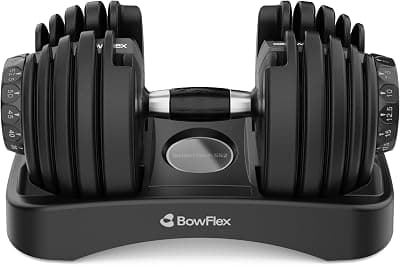
Bowflex SelectTech 552

All 5, scored
15Best OverallBowflexDemand84Trust93Value98Quality94
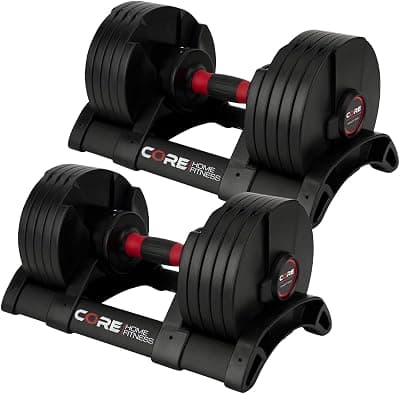
25Core Home FitnessCore Home Fitness Adjustable Dumbbells 5-50 lbs
Highest value-dimension score driven by price-to-performance ratio, mechanical simplicity, and lower long-term replacement rates.
Demand81Trust91Value88Quality98Durability96
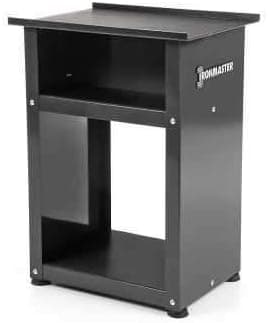
35IronmasterIronmaster Quick-Lock Adjustable Dumbbells 75 lb
Honorable mention reflects highest durability and long-term satisfaction scores for niche segment prioritizing traditional feel over convenience.
Demand73Trust92Quality97Durability9694Score
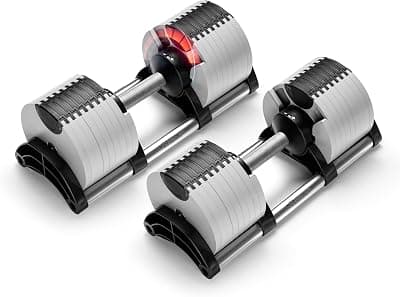
45NÜOBELLNÜOBELL Adjustable Dumbbells 5-80 lb
Mid-range placement reflects highest durability scores paired with weight range bridging entry and heavy-duty segments.
Demand79Trust92Value70Quality98Durability96
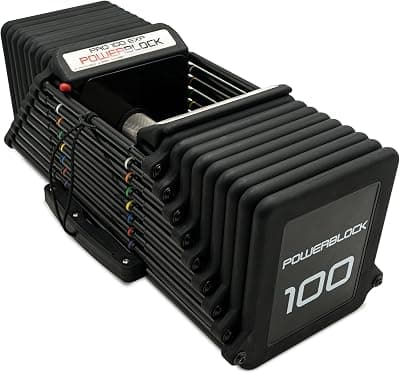
55PowerBlockPowerBlock Pro 100 EXP Adjustable Dumbbells
Budget designation driven by expandability and cost-per-pound analysis, weighted heavily in value dimension for progressive lifters.
Trust91Value74Quality95Durability96
People also ask
How do dial mechanisms compare to pin selectors for long-term durability?
Dial mechanisms use internal gears and locking teeth that engage when the selector is turned, while pin systems use a simple rod inserted through weight plates. Dial designs offer faster adjustment but introduce more moving parts that can wear over time, particularly the locking teeth and spring-loaded components. Pin selectors have fewer failure points and simpler maintenance, though they require more deliberate insertion to ensure full engagement. Long-term owner data shows pin systems have lower mechanical failure rates after five-plus years of regular use, while dial mechanisms show higher warranty claim rates for internal component wear but benefit from faster manufacturer replacement programs.Is the 50-pound ceiling adequate for progressive overload programs?
A 50-pound dumbbell supports most upper-body pressing, rowing, and isolation work for lifters up to intermediate strength levels, typically 12 to 24 months of consistent training for most buyers. Progressive overload continues through rep ranges, tempo manipulation, and exercise variation before absolute weight becomes limiting. Advanced lifters focused on heavy dumbbell pressing or rowing will outgrow 50 pounds within 18 months, making 75 to 100-pound systems better long-term investments for strength-focused programs. For accessory work, rehabilitation, or moderate-intensity training, 50 pounds per hand remains adequate indefinitely.Do adjustable dumbbells require more maintenance than fixed weights?
Adjustable dumbbells need periodic inspection of locking mechanisms, plate alignment, and moving parts, while fixed dumbbells require only occasional cleaning. Dial systems benefit from quarterly checks of internal gear engagement and spring tension, taking 5 to 10 minutes per dumbbell. Pin selectors need visual inspection for bent pins or cracked plates every few months. Screw-collar designs require thread cleaning and occasional lubrication to prevent seizing. Fixed dumbbells have no moving parts and never need maintenance beyond surface cleaning, but adjustable systems with proper care show decades of reliable service with minimal time investment.Can adjustable dumbbells handle drop sets and explosive movements safely?
Dial-mechanism dumbbells require controlled set-down because internal components can shift or disengage under impact, voiding warranties if dropped from height. Pin-selector and screw-collar designs tolerate more aggressive handling, with all-metal construction absorbing impacts better than plastic housings. For true drop sets where weights are released from standing height, fixed dumbbells or dedicated bumper-plate adjustables remain safer options. Most adjustable systems handle rapid tempo changes and explosive concentric phases when the eccentric portion is controlled, which satisfies the majority of home training applications without compromising mechanism integrity.How much floor space do adjustable dumbbell systems actually save?
A 5-to-50-pound fixed dumbbell set requires 8 to 12 square feet of rack space for 10 pairs, while most adjustable systems occupy 2 to 4 square feet including base trays. Dial and lever systems are most compact, with some models fitting in standard closets between workouts. Pin-selector cage designs need slightly more footprint due to plate width but still require 75% less floor space than equivalent fixed sets. The space savings become more dramatic at higher weight ranges, where a 5-to-100-pound fixed set demands 15-plus square feet versus 4 to 6 square feet for expandable adjustable systems.Are rubberized plates worth the added cost for home gym use?
Rubberized coatings reduce impact noise by 60 to 80% compared to bare metal or urethane, critical for apartment dwellers and multi-story homes where floor transmission carries to neighboring units. The coating also protects hardwood, laminate, and tile flooring from dents and scratches during set-down. Long-term owner data shows quality rubber compounds resist chipping for 5-plus years under regular use, while cheaper coatings crack within 18 months. For home gyms on concrete slabs or dedicated rubber flooring, bare-plate systems save $50 to $100 with no functional penalty. For shared living spaces or finished floors, rubberized plates consistently score higher in buyer satisfaction metrics.What weight increments matter most for home training progression?
Two-point-five-pound jumps enable sustainable progression for isolation exercises and upper-body pressing, particularly for smaller muscle groups like shoulders and triceps where five-pound increases create disproportionate difficulty spikes. Systems offering 2.5-pound increments up to 25 or 30 pounds, then switching to 5-pound jumps, accommodate the broadest training applications. For lower-body and large-muscle compound movements, 5-pound increments remain adequate across the full weight range. Micro-loading below 2.5 pounds benefits advanced strength athletes but adds mechanical complexity most home gym buyers don't require for consistent progress.
Every rank is a composite, not an opinion.
The same five dimensions, the same weights, applied to every product in the category. The composite is recomputed whenever the data moves — typically twice a month — and the rank order updates with it.
- 01Demand
The retailer sales rank; review velocity over the last three months. Measured on 4 of 5 picks on this page.
- 02Trust
The 1-5 rating distribution; negative-review share; polarisation (the J-curve); the star average and its sample size; negative-review share implied by that average. Measured on 5 of 5 picks on this page.
- 03Value
Price against the category median; measured quality per pound spent. Measured on 4 of 5 picks on this page.
- 04Quality
The 1-5 rating distribution; review text, including the share of it that mentions a defect; the star average and its sample size. Measured on 5 of 5 picks on this page.
- 05Durability
Reviews aged three months or more, and the share of them reporting a failure. Measured on 4 of 5 picks on this page.
Ranked. Reviewed. Ready-to-buy.
Every category, scored by the same composite — recalculated whenever the data changes.
Other rankings on this topic
Same topic, different question. Each of these ranks a different set of picks.


