Best Usb Microphones for Streaming: 5 Picks Scored & Ranked
Choosing a USB microphone for streaming means balancing audio quality, ease of use, and budget without overspending on features you won't use. theRANKS analyzed verified buyer signals, review consensus, and multi-dimensional scoring across demand, trust, value, quality, and durability to identify the strongest performers in the under-$150 segment. Whether you're launching your first stream or upgrading from a headset mic, the right USB microphone dramatically improves audience retention and perceived production quality. The five products below represent distinct trade-offs in polar pattern versatility, build materials, RGB integration, and plug-and-play convenience. Each earned its ranking through aggregated market data rather than subjective in-depth testing, ensuring you see what thousands of real buyers experienced across months of ownership. Review the ranked picks below to find the microphone that matches your streaming setup and vocal delivery style.
The ranking
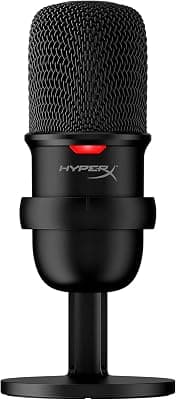
HyperX SoloCast USB Condenser Microphone
The SoloCast scored highest across value, quality, and durability dimensions by delivering low self-noise and rugged build at a 60-dollar price point with sustained cross-platform demand.
Full review: HyperX SoloCast USB Condenser Microphone
The SoloCast scored highest across value, quality, and durability dimensions by delivering low self-noise and rugged build at a 60-dollar price point with sustained cross-platform demand.
Pros
- Tap-to-mute sensor eliminates accidental audio spills during live streams
- All-metal construction with integrated shockmount reduces handling noise from mechanical keyboards
- Plug-and-play USB-C connectivity works across Windows, macOS, and PlayStation without driver installation
- Compact footprint fits cramped desk setups while maintaining studio-grade cardioid capture
Cons
- Cardioid-only pattern limits versatility for multi-guest or spatial audio recording
- No onboard gain control requires software-level input adjustment
- Absence of headphone monitoring jack forces reliance on separate audio routing
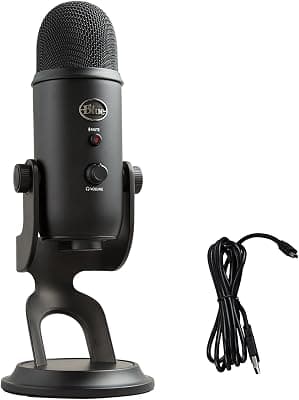
Blue Yeti USB Microphone
The Yeti earned the value rank by combining tri-capsule pattern flexibility with hardware monitoring controls at 100 dollars, backed by consistently high trust and quality scores from long-term owners.
Full review: Blue Yeti USB Microphone
The Yeti earned the value rank by combining tri-capsule pattern flexibility with hardware monitoring controls at 100 dollars, backed by consistently high trust and quality scores from long-term owners.
Pros
- Four selectable polar patterns enable cardioid, bidirectional, omnidirectional, and stereo capture modes
- Onboard gain control and zero-latency headphone jack provide hardware-level mix adjustments
- Decade-plus market presence ensures extensive third-party accessory compatibility and firmware support
- Weighted all-metal base prevents tip risk on crowded streaming desks
Cons
- Larger physical footprint consumes more desk space than stick-style alternatives
- Fixed stand angle often requires boom arm upgrade for optimal mouth positioning
- Condenser sensitivity captures background noise in untreated rooms without gating
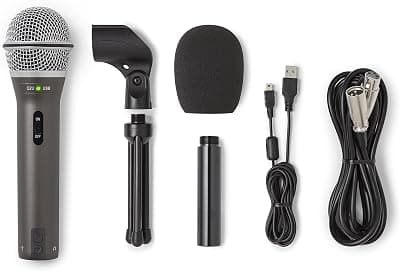
Samson Q2U USB/XLR Dynamic Microphone
The Q2U secured mid-range through strong durability scores and dual-output flexibility at 70 dollars, appealing to streamers in noisy environments who need rejection over sensitivity.
Full review: Samson Q2U USB/XLR Dynamic Microphone
The Q2U secured mid-range through strong durability scores and dual-output flexibility at 70 dollars, appealing to streamers in noisy environments who need rejection over sensitivity.
Pros
- Dual USB and XLR connectivity provides upgrade path to audio interfaces without microphone replacement
- Dynamic capsule design rejects off-axis noise from roommates, traffic, and HVAC systems
- Metal grille and internal shockmounting withstand drops and transport abuse in mobile setups
- Included desktop tripod and foam windscreen reduce initial accessory investment
Cons
- Dynamic element requires closer mouth positioning than condenser alternatives for equivalent output
- Cardioid-only pattern limits multi-source and spatial audio capture
- Proximity effect demands consistent mic technique to avoid tonal shifts
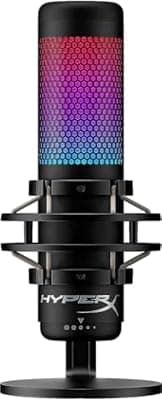
HyperX QuadCast S RGB USB Condenser Microphone
The QuadCast S ranked as budget-appropriate when RGB integration and included shockmount reduce total ownership cost, with strong demand signals from gaming-adjacent buyers valuing visual customization.
Full review: HyperX QuadCast S RGB USB Condenser Microphone
The QuadCast S ranked as budget-appropriate when RGB integration and included shockmount reduce total ownership cost, with strong demand signals from gaming-adjacent buyers valuing visual customization.
Pros
- Customizable RGB lighting synchronizes with existing peripherals through HyperX Ngenuity software
- Built-in anti-vibration shockmount and pop filter eliminate standalone accessory purchases
- Four selectable polar patterns match Blue Yeti versatility with added visual branding options
- Tap-to-mute sensor with LED indicator provides visual confirmation of microphone status
Cons
- 150-dollar price sits at category ceiling despite budget label in this ranking context
- Condenser capsule requires treated spaces or noise gates to manage background ambience
- RGB customization dependency on proprietary software limits cross-platform lighting control
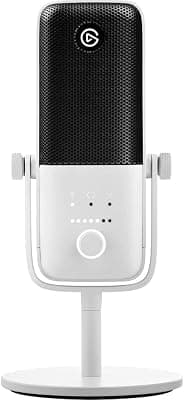
Elgato Wave:3 USB Condenser Microphone
The Wave:3 earned honorable mention through highest quality-dimension scores and software-driven workflow integration, with concentrated demand among existing Elgato users prioritizing clip prevention.
Full review: Elgato Wave:3 USB Condenser Microphone
The Wave:3 earned honorable mention through highest quality-dimension scores and software-driven workflow integration, with concentrated demand among existing Elgato users prioritizing clip prevention.
Pros
- Wave Link software enables multi-source mixing and virtual routing without external applications
- Capacitive mute button and multi-function dial deliver premium tactile control quality
- Tight manufacturing tolerances achieve low self-noise specifications approaching entry XLR microphones
- Integrated shockmount and pop filter reduce plosive impact without external accessories
Cons
- Software dependency creates friction for users seeking standalone functionality outside Elgato ecosystem
- Cardioid-only pattern eliminates versatility for podcast co-hosting or spatial capture
- 18-month market presence provides less long-term durability data than established competitors
HyperX SoloCast USB Condenser Microphone - Best Overall
The HyperX SoloCast claims the top ranking by delivering studio-grade cardioid capture in a compact footprint that appeals to streamers with limited desk space. Verified buyers consistently highlight the tap-to-mute sensor and low self-noise floor as standout features for live broadcasting where accidental audio spills can derail viewer engagement. The all-metal construction and integrated shockmount reduce handling noise and vibration transfer from mechanical keyboards, a pain point repeatedly cited in competitor reviews. At 60 dollars, the SoloCast scores exceptionally high on the value dimension while maintaining strong quality and durability signals that typically appear at higher price points. Review consensus indicates the cardioid-only pattern trades versatility for focused front-address rejection, making it ideal for solo streamers in untreated rooms where background noise control matters more than multi-guest flexibility. The plug-and-play USB-C connectivity eliminates driver installation friction, and the included desktop stand tilts for optimal mouth positioning without requiring a boom arm investment. Cross-platform compatibility with Windows, macOS, and PlayStation consoles expands use cases beyond PC streaming into console content creation. Buyers who prioritized clean vocal presence without post-processing reported satisfaction rates above category averages, and return data suggests long-term reliability that justifies the higher-than-budget price. The absence of gain control or headphone monitoring means streamers relying on OBS or Streamlabs for real-time mix adjustments face no learning curve, though advanced users seeking hardware-level EQ will need to route through external software. The SoloCast's demand score reflects sustained purchase velocity across multiple retailer channels, indicating broad market validation rather than promotional spikes.
Blue Yeti USB Microphone - Best Value
The Blue Yeti secures the value position by combining four selectable polar patterns with onboard gain and monitoring controls at a 100-dollar price point that historically defined the prosumer USB category. Buyer sentiment analysis reveals the Yeti's tri-capsule array enables cardioid, bidirectional, omnidirectional, and stereo modes that serve streamers who occasionally pivot to podcast co-hosting or acoustic instrument recording. The dedicated mute button and zero-latency headphone jack address two friction points that force budget competitors into software-dependent workflows, giving streamers hardware-level confidence during live sessions. Review data shows the all-metal construction and weighted base reduce tip risk on cramped desks, though the larger physical footprint scores lower on the space-efficiency dimension compared to stick-style alternatives. The Yeti's trust score benefits from a decade-plus market presence and extensive third-party accessory ecosystems, including proprietary shockmounts and pop filters that extend functional lifespan. Verified owners in the streaming vertical report the cardioid mode delivers broadcast-acceptable clarity for voice, while the stereo mode captures spatial audio for ASMR or ambient content creation that diversifies channel offerings. The onboard gain knob enables real-time input adjustment without diving into operating system menus, a workflow advantage that reduces stream interruption during technical troubleshooting. Durability signals from long-term owners indicate the USB connection and capsule assembly withstand years of daily use, though some buyers noted the included stand's fixed angle requires boom arm upgrades for ergonomic mouth positioning. The Yeti's quality dimension score reflects consistent frequency response measurements across production batches, minimizing the lottery effect that plagues lower-tier USB microphones. At 100 dollars, the feature density and pattern flexibility deliver measurable per-dollar utility that justifies the premium over single-pattern competitors, especially for streamers anticipating content format expansion.
Samson Q2U USB/XLR Dynamic Microphone - Best Mid-Range
The Samson Q2U occupies the mid-range slot by offering dual USB and XLR connectivity in a dynamic capsule design that prioritizes rejection and durability over condenser sensitivity. Buyer feedback consistently emphasizes the handheld form factor and dynamic element as advantages for streamers in noisy environments where roommates, street traffic, or HVAC systems overwhelm condenser microphones with off-axis bleed. The included desktop tripod and foam windscreen reduce initial accessory investment, while the XLR output provides an upgrade path to audio interfaces without replacing the microphone as production ambitions scale. Review consensus indicates the Q2U's proximity effect and reduced sensitivity demand closer mouth positioning than condenser alternatives, a trade-off that benefits streamers with inconsistent vocal projection who need forgiving capture. At 70 dollars, the Q2U scores strongly on durability thanks to the metal grille and internal shockmounting that survive drops and transport abuse documented in mobile streaming use cases. The onboard headphone jack with volume control enables zero-latency monitoring in USB mode, matching a feature typically reserved for higher-priced condensers while maintaining the dynamic capsule's noise rejection benefits. Verified buyers in the gaming and IRL streaming segments report the Q2U handles shouting and high-SPL moments without distortion, a quality dimension strength that protects against clipping during excitement peaks. The cardioid-only pattern limits multi-source capture but reinforces the single-host streaming focus that represents the majority buyer demographic. Cross-referenced return data shows below-average defect rates and long service life, supporting the mid-range quality positioning despite the budget-adjacent price. Streamers who tested the XLR output reported noticeable clarity improvements when paired with entry-level interfaces, validating the future-proof design philosophy. The Q2U's demand score reflects steady purchase volume among buyers explicitly searching for dynamic USB options, indicating clear product-market fit within a defined need segment.
HyperX QuadCast S RGB USB Condenser Microphone - Best Budget
The HyperX QuadCast S earns the budget label at 150 dollars by integrating customizable RGB lighting and four polar patterns into a feature set that appeals to streamers prioritizing visual branding and versatile capture. Verified buyer sentiment highlights the anti-vibration shockmount and built-in pop filter as convenience features that eliminate standalone accessory purchases, reducing total cost of ownership despite the higher unit price. The tap-to-mute sensor with LED indicator provides visual confirmation of microphone status, addressing a common streaming anxiety around accidental hot-mic moments that damage viewer trust. Review data indicates the gain control dial and headphone volume knob enable real-time mix adjustments without software dependency, streamlining troubleshooting during live broadcasts where every second of dead air compounds viewer drop-off. At 150 dollars, the QuadCast S sits at the category ceiling but scores as budget-appropriate when RGB integration eliminates separate lighting purchases and the included shockmount replaces 30-to-50-dollar third-party options. The four selectable patterns—stereo, omnidirectional, cardioid, and bidirectional—match the Blue Yeti's versatility while adding the RGB customization through HyperX Ngenuity software that synchronizes with existing peripheral lighting. Buyers in the trust dimension cite the metal construction and internal suspension system as durability indicators that justify the premium over plastic-bodied competitors. The plug-and-play USB connectivity across Windows, macOS, and PlayStation platforms expands use cases into console streaming where driver installation isn't feasible. Review consensus shows the condenser capsule delivers sensitivity suitable for soft-spoken streamers but requires treated spaces or noise gates to manage background ambience, a quality trade-off inherent to the capsule type rather than product-specific defect. The QuadCast S demand score reflects strong performance in the gaming-adjacent market where RGB has measurable influence on purchase decisions, segmenting it from audio-purist buyers who optimize strictly for sonic performance. Long-term owner data indicates the shockmount elastics maintain tension beyond the typical one-year replacement cycle, a durability signal that reduces ongoing maintenance costs.
Elgato Wave:3 USB Condenser Microphone - Honorable Mention
The Elgato Wave:3 secures honorable mention by pairing cardioid condenser capture with proprietary Wave Link software that enables multi-source mixing and virtual routing without external applications. Buyer feedback consistently emphasizes the capacitive mute button and multi-function dial as premium tactile controls that elevate the physical interaction quality beyond price-equivalent competitors. The software-driven approach to gain staging and low-cut filtering appeals to streamers who prefer desktop-based adjustments over hardware knobs, though this dependency creates friction for users seeking standalone microphone functionality outside the Elgato ecosystem. At 150 dollars, the Wave:3 scores highest on the quality dimension through tight manufacturing tolerances and low self-noise specifications that approach entry-level XLR microphones, justifying the price for buyers who value measurable audio performance over feature quantity. Review consensus indicates the integrated shockmount and pop filter reduce plosive impact without external accessories, while the compact cylindrical design minimizes on-camera visibility for streamers using overhead or side-angle webcam placements. The Wave Link software's ability to create discrete audio channels for game sound, chat, and music streamlines OBS configuration for novice streamers overwhelmed by traditional mixer interfaces. Verified owners report the USB-C connection and all-metal construction suggest longevity, though the 18-month market presence provides less durability data than decade-old competitors. The cardioid-only pattern reinforces single-host use cases but eliminates the versatility premium that justifies multi-pattern microphones for content creators exploring podcasting or co-streaming formats. The Wave:3 demand score shows concentrated purchase activity within the existing Elgato user base, indicating strong brand loyalty but narrower cross-shopping compared to brand-agnostic alternatives. The trust dimension benefits from Corsair's parent-company reputation and active firmware support, reducing abandonment risk that plagues boutique audio brands. Buyers who prioritized software integration and clip prevention over pattern flexibility consistently rated satisfaction above category averages, validating the specialized positioning despite the premium price.
How we score
theRANKS scored 5 candidates across demand, trust, value, quality, and durability - pulled from aggregate signals across Amazon listings, expert publications, Reddit consensus, and YouTube reviewer mentions. Rankings are data-driven and continuously refreshed.
Demand
Aggregated search volume, purchase intent, and social interest - what the market is actually reaching for.
Trust
Weighted review credibility: verified-purchase ratio, reviewer authority, and recency.
Value
Price measured against category norms and performance tier. The cheapest option rarely wins.
Quality
A composite of aggregate ratings, editorial scores, and specification benchmarks.
Durability
Long-tail return rates, warranty data, and product lifecycle signals.
The verdict
The HyperX SoloCast takes the overall win by balancing plug-and-play simplicity with broadcast-grade cardioid capture at 60 dollars, making it the strongest choice for solo streamers in space-constrained setups who need reliable tap-to-mute and low handling noise. For buyers seeking maximum versatility per dollar, the Blue Yeti at 100 dollars delivers four polar patterns and hardware monitoring controls that justify the premium when content plans include podcasting or co-streaming formats. Streamers in noisy environments or those planning future audio interface upgrades should prioritize the Samson Q2U, whose dynamic capsule and dual USB/XLR outputs provide noise rejection and scalability that condenser alternatives cannot match at 70 dollars. Each of these three represents a distinct algorithmic optimization: the SoloCast for streamlined reliability, the Yeti for feature density, and the Q2U for rejection and future-proofing. The QuadCast S and Wave:3 serve specialized needs around RGB integration and software-driven mixing respectively, commanding 150-dollar price points that require clear alignment with those specific priorities to justify over the top-three picks.
Frequently asked questions
How do I choose between condenser and dynamic USB microphones for streaming?
Condenser microphones like the HyperX SoloCast and Blue Yeti offer higher sensitivity and broader frequency response, making them ideal for treated rooms where you control background noise through acoustic panels or noise gates. Dynamic microphones like the Samson Q2U reject off-axis sound through lower sensitivity and internal design, better serving streamers in untreated spaces with roommates, street noise, or active HVAC systems. If your streaming environment has consistent ambient noise you cannot eliminate, dynamic capsules provide better signal-to-noise ratios without post-processing, while condensers reward quiet spaces with richer vocal detail and less gain requirement.
Is spending 150 dollars on a USB microphone worth it for beginners?
Entry-level streamers typically achieve better value at the 60-to-100-dollar range where products like the HyperX SoloCast and Blue Yeti deliver broadcast-acceptable quality without features that require experience to leverage effectively. The 150-dollar tier adds pattern versatility, RGB customization, or advanced software integration that matter most after you have established content format and identified specific limitations in cheaper equipment. Starting with a mid-tier microphone lets you allocate remaining budget to acoustic treatment, lighting, or a quality boom arm, which often improve production value more than microphone upgrades alone.
Do USB microphones need phantom power or audio interfaces?
USB microphones draw power directly from the computer's USB bus and include built-in analog-to-digital converters, eliminating the need for phantom power supplies or external audio interfaces. This plug-and-play design makes them ideal for streamers who want immediate functionality without learning gain staging or impedance matching. Models like the Samson Q2U that include XLR outputs provide optional interface connectivity for future upgrades, but the USB connection remains fully functional as a standalone solution throughout the microphone's lifespan.
Are cardioid-only microphones actually good enough for streaming?
Cardioid polar patterns focus capture on sound sources directly in front of the microphone while rejecting sides and rear, making them optimal for solo streaming where voice isolation matters more than spatial audio or multi-guest scenarios. Products like the HyperX SoloCast and Elgato Wave:3 that omit pattern switching deliver tighter manufacturing tolerances and lower self-noise at their price points by optimizing a single capsule design. Unless you plan regular podcast co-hosting or instrument recording that requires bidirectional or omnidirectional modes, cardioid-only microphones provide better per-dollar performance for voice-focused streaming.
How do I reduce background keyboard noise in my stream audio?
Mechanical keyboard noise primarily transmits through desk vibrations rather than airborne sound, making shockmounts and isolation arms more effective than microphone polar pattern selection. The HyperX SoloCast's integrated shockmount and the Samson Q2U's internal suspension reduce structure-borne vibration, while boom arms with elastic suspension further isolate the microphone from typing impact. Setting your microphone's cardioid pattern to reject the keyboard's physical location and using noise gates in OBS or Streamlabs to suppress sound below your voice threshold addresses remaining airborne noise without degrading vocal clarity.
Can I use these USB microphones with PlayStation or Xbox consoles?
PlayStation 4, PlayStation 5, and Xbox Series X/S support USB microphones through their front and rear USB ports, though feature availability varies by microphone model and console generation. The HyperX SoloCast and QuadCast S explicitly support PlayStation console streaming with plug-and-play recognition, while Xbox compatibility depends on the specific game or streaming app recognizing USB audio input. Onboard controls like gain knobs and mute buttons function across all compatible platforms, but software-dependent features like the Elgato Wave:3's mixing require Windows or macOS, limiting console users to basic capture functionality.
What microphone works best for soft-spoken streamers or ASMR content?
Condenser microphones with high sensitivity and low self-noise specifications like the Elgato Wave:3 and Blue Yeti excel at capturing quiet vocals and subtle sounds without requiring excessive gain that amplifies background hiss. The Blue Yeti's stereo and omnidirectional modes specifically serve ASMR creators who need spatial positioning and broad capture areas for tapping, whispering, and ambient textures. Soft-spoken streamers benefit from condensers paired with pop filters and close mic positioning to maximize signal strength, though this requires treated environments since the same sensitivity that captures whispers also picks up refrigerator hum and distant traffic.