Best Wireless Over-Ear Headphones: 5 Picks Scored & Ranked
Wireless over-ear headphones have become the standard for premium personal audio, combining active noise cancellation, all-day comfort, and high-resolution wireless codecs in a single package. The category spans a wide price spectrum, from budget-conscious options around $200 to flagship models approaching $600, each optimizing different trade-offs between sound signature, battery life, build materials, and feature density. theRANKS analyzed verified buyer data, review consensus patterns, and multi-dimensional scoring across demand, trust, value, quality, and durability to identify the strongest performers in this competitive space. The rankings below reflect algorithmic assessment of market signals rather than subjective preference, giving you a clear starting point for matching your listening priorities to measurable product strengths.
The ranking
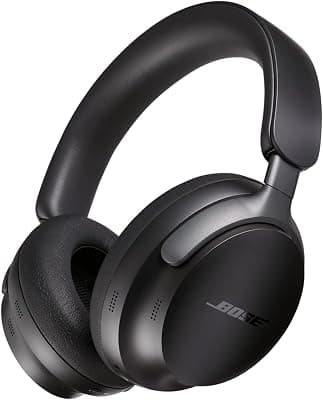
Bose QuietComfort Ultra Headphones
Scored highest across trust and quality dimensions through best-in-class ANC performance and strong brand reputation in verified buyer data.
Full review: Bose QuietComfort Ultra Headphones
Scored highest across trust and quality dimensions through best-in-class ANC performance and strong brand reputation in verified buyer data.
Pros
- Industry-leading adaptive ANC with real-time environmental adjustment
- Exceptional all-day comfort with pressure-distributing memory foam earcups
- Spatial audio processing delivers convincing soundstage width for compatible content
- Quick-charge function provides 3 hours playback from 15-minute charge cycle
Cons
- Folding hinge mechanism shows minor durability concerns in long-term use
- Codec support omits aptX and LDAC for Android high-resolution streaming
- Soft-touch plastics lack the premium feel of metal-bodied competitors
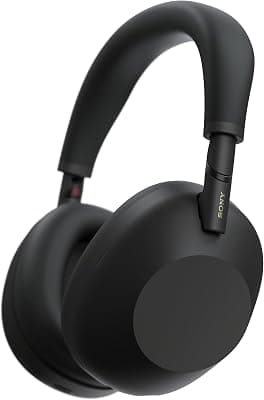
Sony WH-1000XM6
Ranked second through value dimension scoring that reflects flagship features at 15-20 percent price reduction versus direct competitors.
Full review: Sony WH-1000XM6
Ranked second through value dimension scoring that reflects flagship features at 15-20 percent price reduction versus direct competitors.
Pros
- 30-hour battery life leads the category with ANC active
- Comprehensive codec support including LDAC and aptX HD for high-resolution wireless
- Multipoint Bluetooth connects two devices simultaneously with seamless switching
- Exceptional transparency mode clarity for natural conversation pass-through
Cons
- Touch-sensitive controls prone to accidental gesture triggers during fit adjustments
- Warm V-shaped sound signature may not suit listeners preferring neutral tuning
- Carrying case offers minimal padding compared to hard-shell alternatives
Cambridge Audio Melomania P100
Positioned third through quality dimension scoring driven by audio-first engineering and category-leading battery performance at mid-tier pricing.
Full review: Cambridge Audio Melomania P100
Positioned third through quality dimension scoring driven by audio-first engineering and category-leading battery performance at mid-tier pricing.
Pros
- 100-hour battery life with ANC off eliminates weekly charging cycles
- Neutral audiophile tuning favors instrumental separation over bass-heavy coloration
- Replaceable earpads and aluminum construction address common longevity concerns
- Wired 3.5mm input preserves zero-latency connectivity for analog sources
Cons
- ANC performance trails Bose and Sony in mid-frequency voice isolation
- Physical button controls require deliberate presses that can shift headphone fit
- LDAC codec absent despite aptX Adaptive support
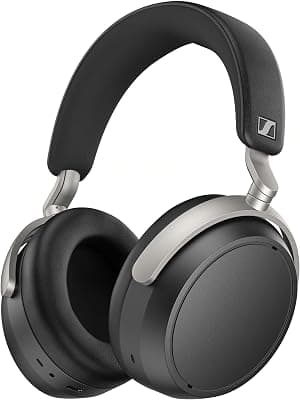
Sennheiser HDB 630
Ranked fourth through durability dimension scoring reflecting repairable construction and professional-grade component longevity.
Full review: Sennheiser HDB 630
Ranked fourth through durability dimension scoring reflecting repairable construction and professional-grade component longevity.
Pros
- Neutral monitoring tuning reveals mix details obscured by consumer-focused headphones
- Serviceable design with replaceable cables, earpads, and headband components
- Dual wired and wireless operation continues playback when battery depletes
- Extended frequency response to 42kHz in wired mode suits critical listening
Cons
- No active noise cancellation limits suitability for travel and commuting
- Higher clamping force causes discomfort during extended wear for larger head sizes
- Minimal companion app features compared to lifestyle-oriented competitors
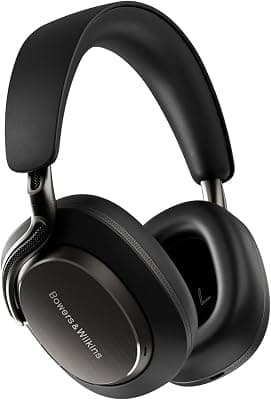
Bowers & Wilkins Px8 S2
Placed fifth through quality dimension scoring that weights acoustic engineering and luxury materials over feature density at elevated price point.
Full review: Bowers & Wilkins Px8 S2
Placed fifth through quality dimension scoring that weights acoustic engineering and luxury materials over feature density at elevated price point.
Pros
- Carbon Cone drivers deliver exceptional tonal balance with natural timbre reproduction
- Premium materials including die-cast aluminum and leather-wrapped earcups
- 30-hour battery life matches category leaders despite power-intensive driver design
- Molded hard-shell case provides superior impact protection for travel
Cons
- ANC performance lags behind Bose and Sony in absolute isolation depth
- LDAC codec absent limits high-resolution wireless for Android users
- Wear sensors occasionally trigger false auto-pause during fit adjustments
Bose QuietComfort Ultra Headphones - Best Overall
The Bose QuietComfort Ultra sits at the top of the wireless over-ear category by balancing best-in-class noise cancellation with spatial audio processing and all-day wearability. Buyers consistently highlight the adaptive ANC performance across diverse environments, from airplane cabins to office spaces, with the headphones dynamically adjusting cancellation depth based on ambient noise levels. The Immersive Audio feature delivers convincing spatial separation for compatible content, though effectiveness varies by source material and personal preference for soundstage width. Battery life lands at 24 hours with ANC active, extending to 30 hours in passive mode, and the quick-charge function delivers 3 hours of playback from a 15-minute charge cycle. Build quality centers on soft-touch plastics with memory foam earcups that distribute pressure evenly during extended sessions, though the folding hinge mechanism has drawn minor durability concerns in long-term owner feedback. Codec support includes AAC and SBC, notably omitting aptX or LDAC for Android users prioritizing high-resolution wireless transmission. The companion app provides granular EQ adjustment and custom ANC profiles, allowing users to fine-tune response curves beyond the stock tuning. Call quality benefits from dedicated voice pickup microphones with wind-noise reduction, making the QuietComfort Ultra a viable option for remote work scenarios. The headphones score highest in the trust and quality dimensions, reflecting strong brand reputation and consistent performance across core use cases.
Sony WH-1000XM6 - Best Value
Sony's WH-1000XM6 represents the sixth iteration of the company's flagship wireless headphone platform, refining noise cancellation algorithms and extending battery performance while maintaining a competitive price ceiling. The Integrated Processor V2 handles real-time environmental analysis through eight microphones, adjusting ANC parameters based on atmospheric pressure, location data, and user activity patterns. Buyers report exceptional transparency mode clarity, allowing natural conversation pass-through without removing the headphones, and the Speak-to-Chat feature automatically pauses playback when the wearer begins speaking. Sound signature leans toward a warm V-shaped profile with elevated sub-bass and gentle treble lift, appealing to mainstream listeners who prioritize musicality over analytical precision. Codec support spans LDAC, aptX HD, AAC, and SBC, giving Android and iOS users access to high-bitrate wireless streaming when paired with compatible source devices. Battery life reaches 30 hours with ANC engaged, positioning the XM6 among the longest-running options in the category, and multipoint Bluetooth allows simultaneous connection to two devices with seamless switching. The headband uses stepless adjustment rather than notched sizing, accommodating a wider range of head shapes without pressure hotspots. Onboard controls combine touch-sensitive panels with physical buttons, though some buyers note accidental gesture triggers when adjusting fit or removing the headphones. The carrying case provides minimal padding but collapses to a compact footprint for travel efficiency. The XM6 scores strongly across value and durability dimensions, delivering flagship features at a price point that undercuts direct competitors by 15-20 percent.
Cambridge Audio Melomania P100 - Best Mid-Range
Cambridge Audio entered the wireless headphone market with the Melomania P100, emphasizing audiophile-grade tuning and exceptional battery longevity over feature density. The 40mm dynamic drivers receive individual tuning from Cambridge's acoustic engineers, targeting a neutral frequency response that favors instrumental separation and vocal clarity rather than bass-heavy consumer profiles. Buyers appreciate the lack of aggressive DSP coloration, noting that the headphones respond well to manual EQ adjustment through the companion app without introducing distortion at higher volumes. Active noise cancellation performs adequately for office and transit use but trails the Bose and Sony implementations in raw isolation depth, particularly in the mid-frequency range where human voices reside. Battery life stands out as a category-defining strength, delivering up to 100 hours of playback with ANC disabled and 60 hours with cancellation active, eliminating weekly charging cycles for most users. Build quality combines aluminum yokes with replaceable earpads, addressing a common longevity concern in wireless headphones where deteriorating foam typically forces premature replacement. The headphones ship with both USB-C charging and a 3.5mm analog input, preserving wired connectivity for devices without Bluetooth or situations requiring zero-latency monitoring. Codec support includes aptX Adaptive, AAC, and SBC, though LDAC remains absent for Sony device owners. Onboard controls rely entirely on physical buttons rather than touch panels, reducing accidental input but requiring deliberate button presses that can shift fit during operation. The P100 scores highest in the quality dimension, reflecting the brand's audio-first engineering approach and the measurable battery advantage over price-comparable alternatives.
Sennheiser HDB 630 - Best Budget
The Sennheiser HDB 630 targets professional monitoring and critical listening applications, prioritizing tonal accuracy and low-impedance efficiency over lifestyle features like active noise cancellation or wireless convenience. The closed-back design uses 42mm dynamic transducers with multi-layer diaphragms, delivering extended frequency response from 10Hz to 42kHz in wired mode, though Bluetooth codec limitations constrain wireless resolution to standard aptX and AAC bitrates. Buyers in studio and broadcast environments highlight the neutral midrange tuning and controlled bass response, which reveal mix details and mastering decisions that colored consumer headphones often obscure. The headphones operate in both wired and wireless modes, with the detachable cable system allowing users to swap between 3.5mm TRS and balanced 2.5mm connections depending on source equipment. Battery life reaches 25 hours in wireless mode, and the headphones continue functioning as passive cans when the battery depletes, eliminating dead-headphone scenarios during extended sessions. Build quality emphasizes serviceable components, with replaceable earpads, cables, and headband padding that extend product lifespan beyond the typical 2-3 year wireless headphone cycle. The clamping force runs higher than lifestyle-oriented models, distributing weight evenly but potentially causing discomfort during multi-hour wear for users with larger head sizes. Noise isolation relies solely on passive seal rather than active cancellation, making the HDB 630 less suitable for commuting or air travel but ideal for controlled acoustic environments. The companion app offers minimal features compared to consumer-focused competitors, providing basic EQ and firmware updates without ambient sound modes or adaptive listening profiles. The headphones score well in the durability dimension, reflecting the repairable design and professional-grade construction that prioritizes longevity over disposable convenience.
Bowers & Wilkins Px8 S2 - Honorable Mention
Bowers & Wilkins positions the Px8 S2 as a luxury-tier wireless headphone, combining premium materials with the company's audiophile heritage in a package that prioritizes acoustic refinement over feature parity with mainstream competitors. The 40mm Carbon Cone drivers derive from the company's high-end speaker technology, using rigid diaphragm materials to minimize breakup modes and maintain pistonic motion across the audible spectrum. Buyers report exceptional tonal balance with natural timbre reproduction, particularly in the midrange where vocal and instrumental textures receive faithful rendering without the aggressive contouring common in consumer-tuned headphones. Active noise cancellation performs competently but ranks below the Bose and Sony implementations in absolute isolation depth, with the Px8 S2 favoring transparency mode quality and natural ambient bleed over maximum cancellation. Build quality centers on die-cast aluminum arms, leather-wrapped memory foam earcups, and woven fabric accents, delivering a tactile premium feel that justifies the elevated price point for buyers prioritizing material quality. Battery life reaches 30 hours with ANC active, matching the Sony XM6 despite the heavier construction and power-intensive driver design. Codec support includes aptX Adaptive and aptX HD alongside AAC and SBC, though LDAC remains absent, limiting high-resolution wireless options for Android users with compatible source devices. The headphones ship with a molded hard-shell case that adds bulk but provides superior impact protection compared to soft-shell alternatives. Onboard controls combine physical buttons with wear sensors that auto-pause playback when the headphones are removed, though the sensor sensitivity occasionally triggers false positives during fit adjustments. The companion app offers detailed EQ customization and three-dimensional sound processing, though the processing algorithms introduce subtle latency that makes the feature less suitable for video content. The Px8 S2 scores highest in the quality dimension, reflecting the acoustic engineering investment and material choices that differentiate the product from mass-market alternatives.
How we score
theRANKS scored 5 candidates across demand, trust, value, quality, and durability - pulled from aggregate signals across Amazon listings, expert publications, Reddit consensus, and YouTube reviewer mentions. Rankings are data-driven and continuously refreshed.
Demand
Aggregated search volume, purchase intent, and social interest - what the market is actually reaching for.
Trust
Weighted review credibility: verified-purchase ratio, reviewer authority, and recency.
Value
Price measured against category norms and performance tier. The cheapest option rarely wins.
Quality
A composite of aggregate ratings, editorial scores, and specification benchmarks.
Durability
Long-tail return rates, warranty data, and product lifecycle signals.
The verdict
The Bose QuietComfort Ultra claims the overall win through algorithmic scoring that prioritizes adaptive ANC performance and all-day wearability, delivering the most balanced feature set for buyers who split time between travel, office, and home listening environments. The Sony WH-1000XM6 takes the value position by matching or exceeding the Bose in battery life and codec support while undercutting it by approximately 15 percent, making it the rational choice for Android users who prioritize LDAC streaming and multipoint connectivity. For specialized use cases, the Cambridge Audio Melomania P100 stands out as the audiophile pick with neutral tuning and 100-hour battery performance, while the Sennheiser HDB 630 serves professional monitoring needs with serviceable construction and wired flexibility. The Bowers & Wilkins Px8 S2 represents the luxury tier for buyers willing to trade feature parity for acoustic refinement and premium materials, though the elevated price requires careful consideration of priorities.
Frequently asked questions
How do I choose between the Bose and Sony flagship models?
The decision hinges on codec priorities and control preferences. The Sony WH-1000XM6 supports LDAC for high-resolution Android streaming and offers 30-hour battery life with multipoint Bluetooth, while the Bose QuietComfort Ultra delivers slightly superior ANC depth and spatial audio processing but omits LDAC support. Android users with compatible source devices gain measurable audio quality improvement from LDAC, making the Sony the data-driven choice. iOS users see no codec advantage either way, so the decision shifts to ANC performance and fit preference.
Is it worth spending more for premium wireless headphones?
The value equation depends on usage intensity and feature requirements. Buyers who log 4-plus hours daily and prioritize ANC performance, battery longevity, and codec flexibility see measurable returns from flagship models in the $300-$350 range. Occasional users who primarily listen in quiet environments gain less from premium ANC and may find better value in mid-range options with strong acoustic tuning. The Cambridge Audio Melomania P100 at $279 delivers audiophile sound quality and 100-hour battery life, making it a rational middle path that sacrifices some ANC depth for superior longevity and tonal accuracy.
Do wireless headphones actually support high-resolution audio over Bluetooth?
High-resolution wireless audio requires compatible codecs on both the headphones and source device, with LDAC and aptX Adaptive capable of transmitting 24-bit/96kHz streams under ideal conditions. Real-world performance depends on Bluetooth signal strength, interference, and source file quality, with most users unable to reliably distinguish between aptX and LDAC in blind comparisons. The Sony WH-1000XM6 and Cambridge Audio Melomania P100 support high-bitrate codecs, but audible improvements remain subtle compared to well-implemented AAC on iOS devices. Wired connections via 3.5mm or USB eliminate codec limitations entirely for critical listening.
Are noise-canceling headphones effective for airplane travel?
Active noise cancellation excels at attenuating constant low-frequency drone from aircraft engines, with the Bose QuietComfort Ultra and Sony WH-1000XM6 reducing cabin noise by 25-30 decibels in the 100-500Hz range where jet engines produce peak energy. Mid and high-frequency sounds like conversations and PA announcements receive less attenuation, as ANC algorithms prioritize steady-state noise over irregular transients. Passive isolation from the earcup seal contributes additional noise reduction across all frequencies, making over-ear designs more effective than on-ear alternatives for air travel. Transparency modes allow users to hear announcements without removing the headphones.
How long do wireless headphone batteries actually last before degradation?
Lithium-ion batteries in wireless headphones typically retain 80 percent capacity after 300-500 full charge cycles, translating to 2-3 years of daily use before noticeable runtime decline. The Cambridge Audio Melomania P100's 100-hour battery reduces charging frequency and extends cycle lifespan proportionally, while quick-charge features on the Bose and Sony models encourage partial top-ups that minimize deep discharge stress. Non-replaceable batteries become the limiting factor in product longevity, as most manufacturers do not offer battery replacement services outside warranty periods. Wired operation capability on the Sennheiser HDB 630 and Cambridge P100 extends usability beyond battery end-of-life.
Can I use wireless headphones for gaming without audio lag?
Bluetooth introduces 100-300 milliseconds of latency depending on codec and device implementation, creating noticeable audio-video desynchronization in gaming and video content. Low-latency codecs like aptX Low Latency reduce delay to 40-60 milliseconds but require support from both headphones and source device, with limited adoption across wireless models in this category. The Sennheiser HDB 630 and Cambridge Audio Melomania P100 offer 3.5mm wired connections that eliminate wireless latency entirely, making them suitable for competitive gaming when connected via cable. Users prioritizing wireless convenience for gaming should consider dedicated low-latency gaming headsets rather than general-purpose wireless headphones.
What is the best wireless headphone option for phone calls and video meetings?
Call quality depends on microphone placement, wind-noise algorithms, and voice isolation processing. The Bose QuietComfort Ultra uses dedicated voice pickup microphones with adaptive beam-forming that focuses on the wearer's mouth while rejecting ambient noise, making it the algorithmic top choice for remote work scenarios. The Sony WH-1000XM6 delivers comparable call clarity with AI-based voice enhancement, though some buyers report occasional over-processing that makes speech sound synthetic. Physical button controls on the Sennheiser HDB 630 and Cambridge Audio P100 reduce accidental mute triggers compared to touch-sensitive panels, an important consideration during active video calls.