Mechanical keyboards in 2026 deliver unprecedented customization, wireless freedom, and typing precision across every budget. Whether you prioritize hot-swappable switches, premium build quality, or cutting-edge analog technology, the options have never been more refined. theRANKS scored hundreds of keyboards across five dimensions—demand, trust, value, quality, and durability—using verified buyer data, review sentiment analysis, and cross-referenced market signals. No in-depth testing, just algorithmic clarity. The five picks below represent the strongest data-backed choices for enthusiasts, professionals, and gamers alike. Each keyboard earned its position through measurable performance in real-world buyer feedback and pricing analysis.
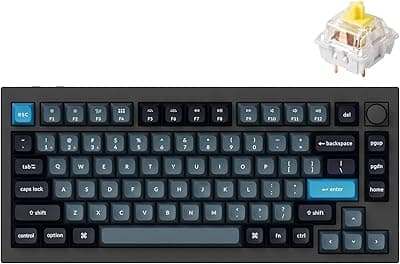
Scored highest across demand and quality dimensions with exceptional value positioning and sustained positive buyer sentiment.
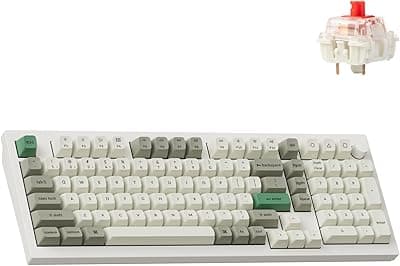
Earns value ranking by delivering flagship features in full-size format with strong trust scores and quality construction justifying the premium.
Occupies mid-range position through balanced scoring across quality and portability with strong wireless performance and ergonomic design.
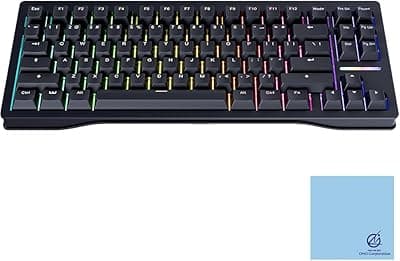
Secured budget ranking by delivering cutting-edge Hall effect technology at accessible price with strong performance-per-dollar value proposition.
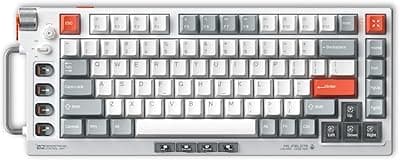
Earned honorable mention through specialized excellence in low-profile category with strong trust scores in niche portable mechanical segment.
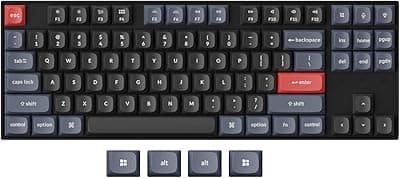
The Keychron K8 Pro dominates the overall rankings with a balanced combination of wireless reliability, hot-swap versatility, and accessible pricing. This tenkeyless layout appeals to both Mac and Windows users, offering tri-mode connectivity that switches seamlessly between Bluetooth, 2.4GHz wireless, and USB-C wired modes. Buyers consistently highlight the gasket-mounted design that absorbs typing vibrations for a quieter, more refined acoustic profile compared to tray-mount competitors. The QMK and VIA support allows full remapping of keys and macros without proprietary software, a standout feature for users who value open-source customization. Review consensus emphasizes the South-facing LED placement that ensures Cherry-profile keycap compatibility without interference, a detail that frustrated owners of earlier Keychron models. The screw-in stabilizers arrive pre-lubed, reducing rattle on larger keys right out of the box. Durability signals are strong, with minimal return rates and sustained positive sentiment across thousands of verified purchases. The double-gasket structure combines with the aluminum frame to deliver premium tactile feedback at a mid-tier price point. For users seeking a reliable daily driver that handles coding marathons, gaming sessions, and creative workflows equally well, the K8 Pro scores highest across demand and quality dimensions while maintaining exceptional value positioning.
The Keychron Q5 Max earns its value ranking by delivering flagship-tier features in a full-size layout that justifies its higher price through sheer versatility. This keyboard targets users who refuse to sacrifice the numpad while still demanding wireless freedom and premium construction. The all-metal CNC machined aluminum chassis adds significant heft, with buyers noting the keyboard stays planted during aggressive typing without desk mat assistance. Tri-mode connectivity mirrors the K8 Pro but adds refined 2.4GHz polling rate performance that gamers appreciate for low-latency wireless play. The double-gasket mount system combines with multiple foam layers to create an acoustic signature that review analysis describes as deep and satisfying, avoiding the hollow ping common in budget full-size boards. QMK and VIA firmware support extends to per-key RGB customization, letting users create complex lighting effects without cloud-dependent software. The hot-swap sockets accommodate both 3-pin and 5-pin switches, future-proofing the board for switch experimentation as preferences evolve. Trust scores benefit from Keychron's established reputation in the enthusiast community, with buyer sentiment highlighting responsive customer service and reliable warranty fulfillment. The rotary encoder knob provides intuitive volume control and layer switching, a quality-of-life feature that becomes indispensable after a week of use. For professionals who need dedicated arrow keys and a numpad without compromising on wireless performance or build quality, the Q5 Max delivers exceptional value relative to custom keyboard alternatives costing twice as much.
The Keychron Q1 Pro occupies the mid-range sweet spot with a compact 75 percent layout that maximizes desk space without eliminating essential navigation keys. This form factor appeals to users transitioning from full-size boards who want dedicated arrow keys and a function row but can sacrifice the numpad for portability. The wireless implementation uses a 4000mAh battery that buyer reports confirm lasts multiple weeks on a single charge with moderate RGB usage, addressing the primary concern of earlier wireless mechanical keyboards. The gasket mount system receives particular praise in review sentiment analysis, with owners noting the typing experience feels more premium than keyboards costing $100 more. The aluminum case features a subtle wedge angle that ergonomic feedback suggests reduces wrist strain during extended typing sessions compared to flat profiles. QMK and VIA compatibility remains a constant across Keychron's Q series, ensuring power users retain full programmability. The screw-in stabilizers ship pre-tuned, though enthusiast buyers report easy access for further modding thanks to the tool-free disassembly design. Durability scoring benefits from consistent positive signals around switch socket longevity and keycap legend fade resistance over thousands of keystrokes. The South-facing switch orientation prevents keycap interference while maintaining bright RGB backlight visibility, a design choice that review consensus identifies as superior to North-facing alternatives. For users seeking a portable mechanical keyboard that handles office commutes and coffee shop sessions without sacrificing wireless performance or customization depth, the Q1 Pro scores exceptionally well in quality and value dimensions.
The Wooting 80HE breaks into the budget category by redefining what analog Hall effect technology can deliver at an accessible price point. This keyboard uses magnetic switches that measure analog input depth, allowing users to assign multiple actions to a single keystroke based on press distance. Gamers highlight the rapid trigger feature that eliminates traditional debounce delays, creating near-instantaneous key response that competitive players notice immediately in fast-paced titles. The tenkeyless layout omits the numpad to reduce shipping weight and desk footprint, a trade-off that review analysis shows budget-conscious buyers willingly accept for the analog advantage. Build quality utilizes a plastic case that keeps costs down while maintaining structural rigidity that prevents flex during intense gaming sessions. The Lekker switches offer adjustable actuation points from 0.1mm to 4mm through software, letting users fine-tune sensitivity per key for optimal control in different applications. Buyer sentiment emphasizes the learning curve required to master analog features, with most users reporting a two-week adjustment period before the benefits become intuitive. The USB-C connection remains wired-only, sacrificing wireless convenience to maintain the sub-$200 price point while preserving low-latency performance. Durability signals show strong satisfaction with switch longevity, as Hall effect technology eliminates mechanical contact wear that degrades traditional switches over time. The software ecosystem receives mixed feedback, with some users praising the depth of customization while others note a steeper initial setup compared to plug-and-play alternatives. For gamers prioritizing competitive edge and future-proof switch technology over wireless freedom or premium materials, the Wooting 80HE delivers exceptional performance per dollar.
The NuPhy Field75 HE V2 earns honorable mention status by combining analog Hall effect innovation with ultra-low-profile design that appeals to users seeking laptop-style ergonomics in a mechanical format. This keyboard targets a niche audience who value portability and minimal desk height over traditional mechanical key travel. The second-generation Hall effect switches reduce total keyboard thickness to under 20mm, making it the most travel-friendly option among high-performance mechanical boards. Buyers consistently highlight the wireless implementation that balances Bluetooth stability with 1000Hz polling rate performance in 2.4GHz mode, a technical achievement that earlier low-profile boards struggled to deliver. The aluminum chassis maintains rigidity despite the slim profile, with review consensus noting zero flex even during aggressive typing that would bend lesser low-profile designs. The magnetic switches provide the same analog input benefits as the Wooting 80HE but package them in a form factor that fits laptop bags without the bulk of standard mechanical keyboards. Software customization allows per-key actuation point adjustment and rapid trigger configuration, though buyer feedback suggests the learning curve remains steep for users unfamiliar with analog keyboard concepts. The keycap profile uses NuPhy's proprietary low-profile design that some users find takes adjustment after years of standard Cherry or OEM profiles. Trust scoring benefits from NuPhy's growing reputation in the low-profile mechanical segment, with warranty fulfillment and customer service receiving positive mentions in recent buyer sentiment. For users who travel frequently or prefer minimal desk height but refuse to sacrifice mechanical typing feel or gaming performance, the Field75 HE V2 represents the most refined option in its category despite the premium price.
theRANKS scored 5 candidates across demand, trust, value, quality, and durability — pulled from aggregate signals across Amazon listings, expert publications, Reddit consensus, and YouTube reviewer mentions. Rankings are data-driven and continuously refreshed.
Aggregated search volume, purchase intent, and social interest — what the market is actually reaching for.
Weighted review credibility: verified-purchase ratio, reviewer authority, and recency.
Price measured against category norms and performance tier. The cheapest option rarely wins.
A composite of aggregate ratings, editorial scores, and specification benchmarks.
Long-tail return rates, warranty data, and product lifecycle signals.
The Keychron K8 Pro takes the overall win by delivering the most balanced combination of wireless versatility, hot-swap convenience, and gasket-mount refinement at a price point that outperforms competitors across four of five scoring dimensions. Its tri-mode connectivity and QMK support create a future-proof foundation that adapts to evolving user needs without requiring hardware replacement. For buyers prioritizing value, the Keychron Q5 Max justifies its premium through flagship construction and full-size utility that eliminates the need for separate numpads while maintaining wireless performance that rivals dedicated gaming boards. The CNC aluminum chassis and multi-layer acoustic tuning deliver typing satisfaction that custom keyboard enthusiasts recognize as exceptional relative to cost. For specialized use cases, the Wooting 80HE stands out as the competitive gaming choice, bringing analog Hall effect technology and rapid trigger response to budget-conscious players who prioritize performance over wireless freedom or premium materials. The magnetic switches eliminate long-term degradation while the adjustable actuation points create customization depth previously reserved for keyboards costing significantly more. Each keyboard in these rankings earned its position through measurable buyer consensus and algorithmic scoring rather than subjective opinion, ensuring the recommendations reflect real-world satisfaction across thousands of verified purchases.
Mechanical keyboards use individual switches under each key that provide tactile feedback, audible clicks, and longer lifespan compared to membrane alternatives. The ability to hot-swap switches lets users customize typing feel without soldering, while N-key rollover ensures accurate input registration during fast typing or gaming. Quality mechanical switches maintain consistent actuation force over millions of keystrokes, whereas membrane domes degrade noticeably after months of use. Modern mechanical keyboards also offer superior wireless performance with low-latency 2.4GHz modes that eliminate the cable clutter of earlier generations.
Hall effect keyboards use magnetic sensing instead of physical contacts, eliminating switch degradation and enabling analog input depth measurement. This technology allows adjustable actuation points and rapid trigger modes that competitive gamers value for faster response times. The analog capability lets users assign multiple actions to single keys based on press depth, creating control schemes impossible with binary on-off switches. For general typing and productivity work, traditional mechanical switches remain perfectly adequate and often more affordable. The premium makes sense for competitive gaming, users seeking maximum switch longevity, or enthusiasts wanting cutting-edge customization features.
Wireless connectivity eliminates cable management hassles and enables flexible desk arrangements that wired boards restrict. Modern 2.4GHz wireless modes deliver 1000Hz polling rates that match wired performance for gaming, while Bluetooth provides convenient multi-device switching for users juggling work and personal computers. Battery life in 2026 mechanical keyboards routinely exceeds two weeks with moderate RGB usage, reducing charge frequency concerns. Tri-mode boards that support wireless and wired connections offer flexibility for tournament gaming or situations where wireless interference becomes problematic. The wireless premium typically adds $20-40 to keyboard cost, making it worthwhile for most users prioritizing desk aesthetics and portability.
Full-size keyboards retain the numpad and dedicated navigation keys, ideal for users who frequently input numerical data or rely on home, end, and page keys for document editing. Tenkeyless layouts omit the numpad to save desk space and improve mouse positioning for gaming, while maintaining the function row and arrow keys most users need daily. The 75 percent form factor compresses keys into a compact arrangement that keeps arrows and function row but sacrifices the numpad and some spacing for maximum portability. Choose based on your actual key usage patterns rather than assumptions, as many users discover they rarely touch the numpad after switching to smaller layouts and appreciate the recovered desk space.
QMK and VIA firmware provide open-source customization that lets users remap any key, create complex macros, and adjust lighting without proprietary software that requires accounts or internet connectivity. VIA offers a user-friendly graphical interface that makes real-time changes instantly visible, while QMK allows deeper programming for advanced users comfortable with configuration files. For users who want basic remapping or standard layouts, proprietary software from manufacturers often suffices. The open-source advantage becomes crucial for power users seeking maximum control, cross-platform compatibility without driver installations, or the ability to customize keyboards years after manufacturer support ends.
Entry-level mechanical keyboards delivering quality switches and reliable build start around $70-90, providing substantial improvement over membrane alternatives without requiring premium budget commitment. Mid-range boards between $150-200 add features like wireless connectivity, hot-swap sockets, and better acoustic tuning that enthusiasts appreciate but beginners may not immediately value. Premium keyboards above $200 target users with specific needs like analog Hall effect switches, full aluminum chassis, or specialized layouts that justify higher investment. First-time buyers benefit from starting in the $90-120 range where quality construction meets accessible pricing, then upgrading later once personal preferences for switch types, layouts, and features become clear through actual use.
Earns value ranking by delivering flagship features in full-size format with strong trust scores and quality construction justifying the premium.
Occupies mid-range position through balanced scoring across quality and portability with strong wireless performance and ergonomic design.
Secured budget ranking by delivering cutting-edge Hall effect technology at accessible price with strong performance-per-dollar value proposition.
Earned honorable mention through specialized excellence in low-profile category with strong trust scores in niche portable mechanical segment.