Head-to-Head
Jump Starter vs Battery Charger: Which to Keep for Cold Mornings
One tool gets you moving in seconds, the other fixes the battery overnight. For a no-start on a freezing morning, only one belongs in your trunk.
// KEY TAKEAWAYSWhat to know
- A jump starter starts the engine in seconds and needs no outlet or second vehicle; a charger needs wall power and hours.
- A battery charger refills a drained battery; a jump starter does not recharge it, so it only treats the symptom.
- The jump starter wins for most drivers on cold mornings because the failure happens away from an outlet.
- Keep a charger instead if your car sits for weeks, you park in a garage with power, or you store seasonal vehicles.
You turn the key on a 15-degree morning and get a slow, grinding crank, then a click. You have a meeting in 40 minutes, and the only outlet is in a garage you do not park in. That scenario decides this comparison faster than any spec sheet.
Cold hits a car from two sides at once. AAA's Automotive Research Center reports that a car battery loses about 35 percent of its strength at 32°F and about 60 percent of its power at 0°F. At the same time, AAA says starting an engine in cold conditions can require as much as twice the normal current.
A jump starter and a battery charger both answer a dead battery, but they solve different problems. This comparison covers what each does well, where each falls short, and which one earns the spot in your trunk or garage.
Why cold mornings expose a weak battery
Key takeaway - Cold cuts available power and raises the engine's demand, so an aging battery fails on the first freezing morning.
A lead-acid starting battery makes power through a chemical reaction, and cold slows that reaction. One automotive guide notes the weather explains the seasonal timing but does not identify a failed part by itself. A battery that cranked fine in October can fail on the first hard freeze.
Age is the usual reason. AAA Minneapolis puts the average automotive battery lifespan at three to five years and lists a battery more than three years old as a warning sign. Dim headlights and a slow crank are others.
This matters for the purchase because the two tools respond differently to a weakened battery. A jump starter gets a weak battery through one cold start. A charger restores a discharged but serviceable battery, but it cannot fix severe internal damage, a shorted cell, or other permanent failure. Knowing which situation you are in frames everything below.
Jump starter: pros and cons for a no-start morning
Key takeaway - A jump starter wins on speed and independence but treats the symptom, and the pack itself needs upkeep.
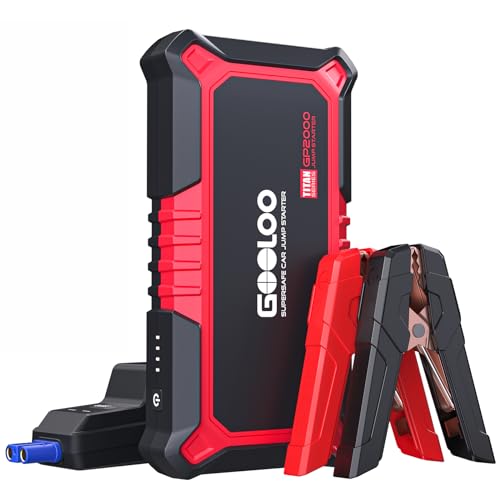
A jump starter is a portable battery pack with clamps. EcoFlow describes it as a high-powered device that delivers an immediate burst of energy and, unlike a charger, does not require a wall outlet. ToolTroopers adds that it works without jumper cables or a second vehicle, and lists time to work as seconds.
The pros are speed, portability, and independence. You can use it in a parking lot, a driveway, or a trailhead. Many models add USB ports, a flashlight, or an air compressor.
The cons are real. Fanttik points out that a jump starter does not fix the dead battery; the goal is a start, not a recharge. The pack also needs its own charging, and one comparison says lithium-ion packs lose capacity over time and usually need replacing after 2 to 5 years. A pack left uncharged in a freezing trunk will not help you, so top it off periodically.
Battery charger: pros and cons for winter
Key takeaway - A charger restores and protects the battery, but it needs an outlet and hours, so it cannot rescue a car right now.
A battery charger plugs into a wall outlet and refills the battery slowly. Buture's comparison says a charger takes 4 to 12 hours to fully charge a depleted car battery, and its focus is charging quality rather than speed.
The pros center on battery health. Many modern smart chargers include a maintenance or float mode that reduces charging once the battery is full, which a jump starter does not do. That suits a car that sits for weeks, or seasonal vehicles like a motorcycle, boat, or RV. Keeping the battery charged also matters in the cold: one guide says a battery at about 50 percent charge can freeze around 0°F, while a fully charged one resists freezing far lower.
The cons are plain. A charger cannot start your car on the spot, and it needs an outlet. If you park on the street or in an unpowered lot, it does nothing for you at the moment of failure.
Head to head on a freezing morning
Key takeaway - The jump starter wins the stranded-on-the-street case; the charger wins the car-sitting-in-the-garage case.
Run the same scenario through both tools. The car clicks at 7 a.m., you are parked outside, and you need to leave. A jump starter clamps on and, per Buture's figures, can start the car in 3 to 10 seconds. A charger needs an extension cord, an outlet, and an overnight wait before the car is ready.
Now change the scenario. The car sits in your garage for three weeks over the holidays. The charger or maintainer keeps the battery topped up, and the jump starter does nothing until the day it fails.
The tools also hand off to each other. ToolTroopers notes that after a jump, the alternator typically begins replenishing the battery, and another guide says a full recharge takes a charger or a long drive of 45 minutes or more. For drivers who want to compare pack options, the ranking of the best jump starters lays out the choices side by side.
When to pick the charger instead
Key takeaway - Choose the charger if you park near an outlet, make short trips, or store vehicles through winter.
A battery charger is the better single purchase in specific situations. If you park in a garage with an outlet, your cold-morning failures happen where a charger can reach. If you drive short trips, the battery rarely gets a full recharge from the alternator, and one comparison says a charger is what delivers that complete recharge.
A charger also makes sense if you store a vehicle for the winter. ToolTroopers lists RVs, motorcycles, boats, and ATVs among the best uses. And if your battery is deeply discharged but not damaged, only a charger puts the energy back.
The caveat is the type you buy. Fanttik, citing Consumer Reports, notes that maintainers hold a charge level rather than bring a dead battery back, so a flat battery needs a charger built to replenish charge. Check the product description before you buy.
What to look for before you buy a jump starter
Key takeaway - Match the pack to your engine size, read the amp rating, and keep the pack charged because cold also drains lithium-ion.
If the jump starter is your pick, three checks matter in cold weather. First, match the pack to your engine. Vantrue says larger packs carry higher-capacity batteries and suit trucks and SUVs, so a four-cylinder commuter and a diesel pickup need different packs.
Second, read the peak amp rating as a starting point. Gooloo lists a typical jump starter burst as 200 to 1000 amps, and larger engines in colder climates call for the upper end. Third, plan for cold storage. Cold also hurts lithium-ion packs; AAA's winter guidance says they can lose up to 20 percent of their capacity in cold weather.
Once you know your engine size and where you park, the best jump starters ranking is the fastest way to narrow the field.
The takeaway
The jump starter wins for most buyers who can only keep one tool, because cold-morning failures happen wherever you parked, not next to an outlet. It starts the car in seconds, needs no second vehicle, and rides in the trunk. Its limit is that it does not recharge the battery, so a repeat no-start means the battery needs testing or replacing.
The battery charger is still the right pick for a driver with a powered garage, a car that sits for weeks, or a stored motorcycle, boat, or RV. It is the only one of the two that restores a drained battery and holds it at full charge, which is also the best protection against freezing. If you can afford both, the pairing covers the emergency and the cause.
Your next step: browse the best jump starters we ranked and match the pack to your engine before the next cold snap.
the best jump starters we ranked
Read the ranking// FREQUENTLY ASKEDQuick answers
- Is a jump starter better than a battery charger for cold weather?
- For most drivers, yes. A jump starter gets the engine running in seconds with no outlet or second car, which fits a no-start in a parking lot or on the street. A charger fits a garage with power. If your car cranks slowly at 15°F outside your home, the jump starter is the safer single tool.
- Can a jump starter charge my car battery?
- No. A jump starter supplies a short burst of high current to crank the engine and is not designed to recharge the battery. After the engine starts, the alternator begins replenishing charge, but a full recharge takes a battery charger or a long drive. A deeply discharged battery still needs a charger.
- Can a battery charger start a dead car?
- Not immediately. A charger delivers low, steady current and takes hours to refill a depleted battery, so it cannot supply the surge needed to crank an engine right now. Plug it in overnight and the car may start in the morning, but if you must leave in ten minutes, it will not help.
- Do I need both a jump starter and a battery charger?
- Owning both gives complete coverage. The jump starter handles roadside emergencies and the charger handles recovery and long-term maintenance. A driver who stores a motorcycle for winter and commutes in a truck benefits from both. If you can only buy one, pick based on where your car sits overnight.
- How much does a jump starter cost compared with a battery charger?
- One comparison lists jump starters as the higher-priced category, with chargers lower, though prices vary widely by model and capacity. Larger packs for trucks and SUVs cost more than compact ones. Check current pricing on the ranking page, since figures change, and match capacity to your engine before comparing.
- Is a jump starter worth it if I only drive in winter occasionally?
- Yes, if you ever park away from an outlet. A jump starter sits in the trunk until the day a battery quits, and cold exposes weak batteries. A traveler heading through a mountain pass in January gains the most. Recharge the pack every few months so it works when needed.
- How long does a jump starter last?
- One comparison says jump starters contain lithium-ion batteries that lose capacity over time and usually need replacement after 2 to 5 years, depending on use and maintenance. Chargers have no internal battery, so that source says they last far longer. Recharge your pack periodically and store it according to the maker's instructions.