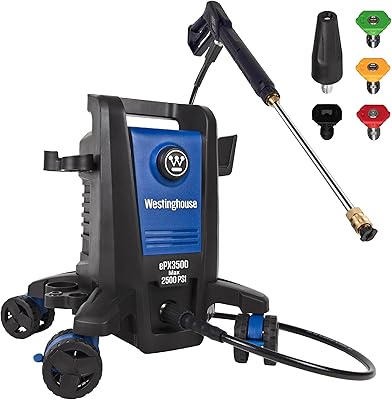
Trend Analysis
Why Pressure Washers Are Trending Among DIY Homeowners in 2026
DIY homeowners are driving pressure washer demand as electric models deliver driveway cleaning for a fraction of contractor costs.
// KEY TAKEAWAYSWhat to know
- North America's pressure washer market is forecast to grow at 5.65% annually from 2026 to 2031, outpacing all other regions.
- Professional driveway cleaning costs $100 to $350 while electric pressure washers retail between $200 and $400.
- Homeowners in suburban corridors invested in compact 1,800–2,000 PSI tools that protect siding and decks without contractor fees.
- DIY culture and home improvement trends significantly boost sales of electric pressure washers across residential segments.
- The rising popularity of the DIY trend has significantly contributed to pressure washer sales in the residential segment.
North America is forecast to clock the fastest continental growth at 5.65% annually from 2026 to 2031 in the pressure washer market. DIY culture, high disposable income, and the spread of express car-wash chains created steady throughput, but the residential segment reveals a sharper signal. Residential applications account for 44% of pressure washer usage, driven by home maintenance, vehicle cleaning, and outdoor surface care, with rising DIY culture and increased awareness of property maintenance fueling adoption. Homeowners recognize a simple equation: professional driveway cleaning costs $100 to $350, while electric models deliver comparable results for a one-time purchase between $200 and $400. That value proposition shifts annual cleaning from recurring expense to owned asset, and review volume and search interest confirm the migration.
The Cost Arbitrage Driving Electric Pressure Washer Adoption
Key takeaway - Electric pressure washers deliver driveway cleaning at a fraction of recurring contractor costs, with payback achieved in one season for multi-surface users.
The cost to pressure wash driveways ranges from $100 to $350 on average, depending on the driveway size and material. Professional services charge $0.42 to $0.52 per square foot, meaning a typical two-car driveway resets the odometer at two to three contractor visits per year. Electric pressure washers arrive at retail between $200 and $400, with best-selling models clustered around $300. Homeowners in suburban corridors invested in compact 1,800–2,000 PSI tools that protect siding and decks, eliminating the need to schedule professionals for patios, fences, and outdoor furniture. The payback period shrinks to one season when homeowners add vehicle washing and deck maintenance to the rotation. Rental fleets exist but introduce scheduling friction and per-day fees that accumulate faster than ownership costs. Retailers including the best pressure washers we ranked report consistent year-over-year growth in compact electric models tailored to DIY consumers.
Residential Segment Captures 44% of Market Demand
Key takeaway - Residential buyers now represent 44% of pressure washer demand, favoring compact electric models that deliver professional-level results without recurring service costs.
Residential applications account for 44% of pressure washer usage, driven by home maintenance, vehicle cleaning, and outdoor surface care, with homeowners using pressure washers for cleaning driveways, decks, fences, roofs, and garden equipment. The residential segment is set to grow at a 4.7% annual rate from 2025 to 2030, reflecting a shift from commercial and industrial dominance to homeowner-led growth. Residential users prefer compact, electric, and user-friendly models that balance performance with safety, avoiding the maintenance overhead and noise profile of gas-powered alternatives. DIY culture and home improvement trends significantly boost sales of electric pressure washers, with e-commerce platforms democratizing access to specifications, bundle comparisons, and doorstep delivery. The post-purchase experience reinforces adoption: homeowners discover secondary applications beyond the initial driveway project, expanding usage to vehicle washing, patio furniture, and seasonal gutter runoff cleanup.
North America Leads Global Growth at 5.65% Annual Rate
Key takeaway - North America's pressure washer market is growing faster than any other region, driven by suburban homeowners who treat electric models as multi-use investments.
North America ranked second in value and is forecast to clock the fastest continental growth at 5.65% annually from 2026 to 2031. The U.S. market alone was valued at $500 million in 2025 and is estimated to grow at a 5.9% annual rate from 2026 to 2035. DIY culture, high disposable income, and the spread of express car-wash chains created steady throughput, but the residential surge outpaces commercial channels. The popularity of DIY home improvement projects and the increasing number of construction activities further boost the market. Suburban homeowners prioritize outdoor maintenance that preserves property value and curb appeal, with pressure-washed driveways and patios delivering visible ROI during resale preparation. The same units that clean driveways handle seasonal tasks-removing pollen from siding, refreshing composite decking, and prepping outdoor spaces for entertaining-cementing their position as multi-use investments rather than single-purpose tools.
Electric Models Dominate DIY Channels at 1,800 to 2,000 PSI
Key takeaway - Electric pressure washers in the 1,800 to 2,000 PSI range dominate DIY sales, balancing sufficient cleaning power with surface-safe operation and plug-and-play convenience.
Homeowners in suburban corridors invested in compact 1,800–2,000 PSI tools that protect siding and decks, boosting unit turnover in DIY channels. Electric models dominated the market with the largest revenue share of 39.8% in 2024, reflecting buyer preference for plug-and-play operation without fuel mixing or pull-cord ignition. Models in this power range deliver sufficient cleaning force for driveways, patios, and vehicles while eliminating the risk of surface damage associated with contractor-grade gas units exceeding 3,000 PSI. Retailers stock electric washers with onboard detergent tanks, quick-connect nozzles, and kink-resistant hoses, reducing the learning curve for first-time buyers. The same homeowners who adopt the best cordless vacuums we ranked for indoor convenience recognize electric pressure washers as the outdoor parallel: battery or plug-in power, minimal maintenance, and instant availability without scheduling professionals.
E-Commerce Democratizes Access to Specifications and Bundle Pricing
Key takeaway - E-commerce platforms democratize pressure washer access by surfacing specifications, verified reviews, and bundle pricing that brick-and-mortar channels cannot match.
E-commerce further democratized access, enabling first-time buyers to research specifications, compare bundles, and schedule doorstep delivery. Online retailers surface detailed PSI and GPM ratings, nozzle configurations, hose length, and warranty terms that brick-and-mortar aisles obscure. Buyers cross-reference verified review volume to identify models that maintain pressure consistency across extended run times, filter genuine performance signals from marketing claims, and validate durability through multi-year ownership reports. Bundle pricing amplifies value perception: a pressure washer packaged with surface cleaners, extension wands, and foam cannons arrives at the same delivered cost as the base unit alone in physical stores. Indirect distribution channels held 56.9% market share in 2025 and are projected to grow at a 5.4% annual rate through 2035, driven by retail expansion and e-commerce platform growth. The shift mirrors broader outdoor power equipment trends, where homeowners prioritize specification transparency and doorstep delivery over in-store demos.
Post-Pandemic Hygiene Standards Sustain Residential Demand
Key takeaway - Post-pandemic hygiene awareness extends to outdoor surfaces, with homeowners adopting pressure washers to address mold, mildew, and organic debris on driveways and patios.
Growing awareness about hygiene and cleanliness, particularly after the pandemic era, has boosted the adoption of pressure washers for maintaining household environments. Homeowners apply cleaning protocols that originated indoors to outdoor surfaces, recognizing that driveways, patios, and walkways accumulate mold, mildew, and organic debris that degrade aesthetics and introduce slip hazards. Pandemic-era hygiene expectations persisted into 2025, accelerating purchases of mid-range electrics and contract-grade mobile rigs. The same households that upgraded HVAC filtration and adopted UV sanitizers extended cleaning cadence to exterior spaces, treating pressure washing as preventive maintenance rather than reactive repair. Seasonal pollen deposits, algae buildup on shaded concrete, and tire residue on garage floors migrate from tolerated nuisances to addressed tasks, expanding usage frequency and reinforcing purchase decisions beyond initial cost arbitrage alone.
The takeaway
The pressure washer trend among DIY homeowners reflects rational economics: electric models priced between $200 and $400 eliminate recurring contractor fees while delivering professional-grade results for driveways, patios, and vehicles. North America's 5.65% annual growth rate from 2026 to 2031 stems from suburban buyers who recognize multi-surface utility and treat these tools as investments rather than single-use purchases. Residential applications now account for 44% of pressure washer usage, confirming the migration from commercial dominance to homeowner-led demand. E-commerce platforms surface specifications and bundle pricing that physical retail cannot match, while post-pandemic hygiene standards sustain cleaning cadence beyond initial curb appeal motivations. Homeowners ready to compare specific models and pressure ratings should explore the best pressure washers we ranked to identify units that balance cleaning power, surface safety, and long-term durability.
the best pressure washers we ranked
Read the ranking →// FREQUENTLY ASKEDQuick answers
- How much does it cost to hire a professional to pressure wash a driveway?
- Professional driveway cleaning costs $100 to $350 on average, depending on the driveway size and material. Service providers charge $0.42 to $0.52 per square foot, meaning a typical two-car driveway resets costs at two to three visits per year. Heavily soiled surfaces with oil buildup or mold require additional detergents and manual scrubbing, increasing prices by 20 to 50 percent.
- What is the typical price range for electric pressure washers?
- Electric pressure washers retail between $200 and $400, with best-selling models clustered around $300. Models in the 1,800 to 2,000 PSI range deliver sufficient power for driveways, patios, and vehicles without the maintenance overhead of gas-powered alternatives. Bundle packages that include surface cleaners, extension wands, and foam cannons often arrive at the same delivered cost as base units in physical stores.
- Why are homeowners choosing electric pressure washers over gas models?
- Residential users prefer compact, electric, and user-friendly models that balance performance with safety. Electric washers eliminate fuel mixing, pull-cord ignition, and seasonal winterization, offering plug-and-play operation with lower noise levels. Homeowners in suburban corridors invested in compact 1,800–2,000 PSI tools that protect siding and decks, avoiding surface damage risks from contractor-grade gas units exceeding 3,000 PSI.
- How long does it take to recoup the cost of a pressure washer?
- Payback occurs within one season for homeowners who use pressure washers for multiple surfaces. Professional driveway cleaning costs $100 to $350, while electric models retail around $300. Adding vehicle washing, patio cleaning, and deck maintenance compresses payback to two or three uses. Rental fleets introduce per-day fees and scheduling friction that accumulate faster than ownership costs.
- What PSI rating is safe for residential driveways and patios?
- Homeowners in suburban corridors invested in compact 1,800–2,000 PSI tools that protect siding and decks. This power range delivers sufficient cleaning force for driveways, patios, and vehicles while eliminating surface damage risks. Concrete and asphalt tolerate higher pressures, but composite decking, vinyl siding, and painted surfaces require lower settings or wider nozzle angles to prevent etching and coating removal.
- Are electric pressure washers powerful enough for oil stains on driveways?
- Electric pressure washers in the 1,800 to 2,000 PSI range handle most driveway cleaning tasks, including light oil stains, when paired with appropriate detergents. Heavily soiled surfaces with deep oil buildup may require manual scrubbing with degreasers before pressure washing. Professional services charge 20 to 50 percent more for surfaces that need pre-treatment, reinforcing the value of regular maintenance with owned equipment.
- Why is the residential pressure washer market growing faster than commercial segments?
- Residential applications account for 44% of pressure washer usage, driven by home maintenance, vehicle cleaning, and outdoor surface care, with rising DIY culture and increased awareness of property maintenance fueling adoption. DIY culture and home improvement trends significantly boost sales of electric pressure washers, while e-commerce platforms democratize access to specifications and bundle pricing that physical retail cannot match.
- Is pressure washing worth it for homeowners who only clean driveways once a year?
- Homeowners who expand usage beyond annual driveway cleaning realize the strongest ROI. Electric pressure washers handle vehicle washing, patio furniture, composite decking, seasonal pollen removal from siding, and gutter runoff cleanup. The post-purchase experience reveals secondary applications that compress payback periods and justify ownership over rental or contractor visits. Multi-surface utility transforms single-purpose tools into year-round maintenance assets.
- What is driving North America's pressure washer market growth in 2026?
- North America is forecast to clock the fastest continental growth at 5.65% annually from 2026 to 2031. DIY culture, high disposable income, and the spread of express car-wash chains created steady throughput, but the residential surge outpaces commercial channels. Suburban homeowners prioritize outdoor maintenance that preserves property value and curb appeal, with pressure-washed driveways and patios delivering visible ROI during resale preparation.