//Pet SuppliesUpdated October 2026

Best Automatic Cat Litter Boxes: 5 Picks Scored & Ranked

Algorithmic rankings of automatic cat litter boxes. 5 picks scored across demand, trust, value, quality & durability from buyer signals and review…

93
theRANKS Score5 dimensions
//Top pickBest Overall
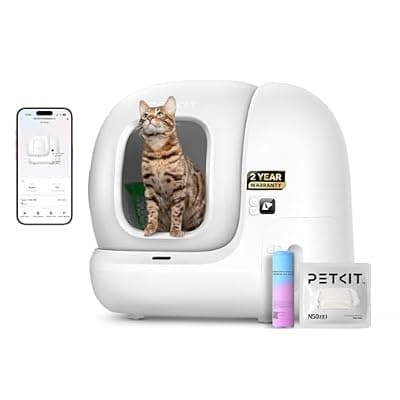
PETKIT

Algorithmically ranked based on its combination of quiet operation, odor management features, and flexible liner compatibility, balanced against the learning curve for cats adjusting to the enclosed drum system.

Typical$300
PETKIT PuraMax 2
Demand
86
Trust
92
Value
96
Quality
94
Buy on Amazon$300
//The full ranking

All 5, scored

  1. PETKIT PuraMax 2
    15
    Best Overall
    PETKIT

    PETKIT PuraMax 2

    Algorithmically ranked based on its combination of quiet operation, odor management features, and flexible liner compatibility, balanced against the learning curve for cats adjusting to the enclosed drum system.

    Demand
    86
    Trust
    92
    Value
    96
    Quality
    94
    93
    Score
    $299.99
    Buy
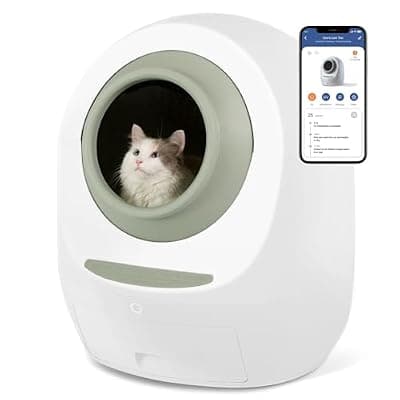
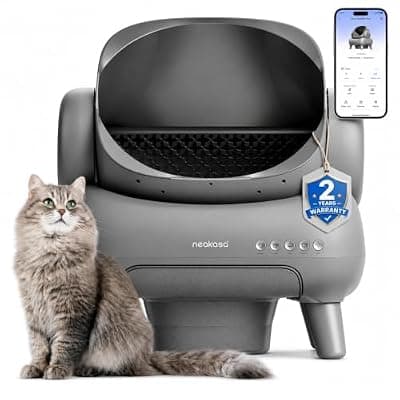
  2. Neakasa M1
    25
    Neakasa

    Neakasa M1

    Ranked for its large interior capacity and flexible litter compatibility, with sensor calibration and connectivity challenges factored into its scoring.

    Demand
    86
    Trust
    88
    Value
    92
    Quality
    92
    90
    Score
    $379.99
    Buy
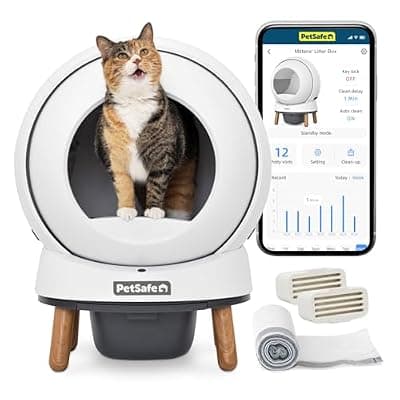
  3. PetSafe ScoopFree SmartSpin
    35
    PetSafe

    PetSafe ScoopFree SmartSpin

    Scored for its quiet tray-rotation mechanism and hands-off operation, with trade-offs in ongoing litter costs and occasional sensor sensitivity reflected in its ranking position.

    Demand
    80
    Trust
    83
    Value
    93
    Quality
    88
    88
    Score
    $340.00
    Buy
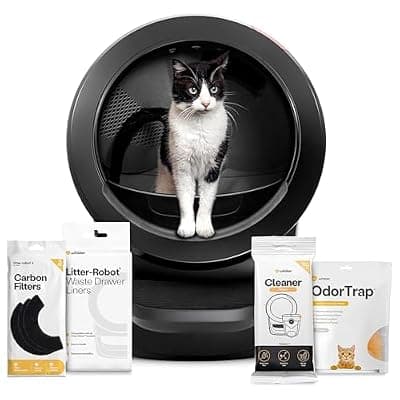
  4. Litter-Robot 4
    45
    Best Premium
    Whisker

    Litter-Robot 4

    Algorithmically ranked for its comprehensive feature set, health-tracking capabilities, and build quality, with footprint and price positioning balanced in its score.

    Demand
    85
    Trust
    89
    Value
    70
    Quality
    95
    86
    Score
    $749.00
    Buy
  5. Leo's Loo Too
    55
    Casa Leo (Smarty Pear)

    Leo's Loo Too

    Scored for its unique UV sterilization feature and odor-control design, with bulb replacement and app connectivity issues reflected in its ranking.

    Demand
    75
    Trust
    86
    Value
    71
    Quality
    90
    83
    Score
    $699.99
    Buy

People also ask

  1. How do I choose between rotating globe and rake-style automatic litter boxes?
    Rotating globe models fully enclose the litter area and use a tumbling motion to sift waste into a sealed drawer, making them quieter and better at containing odors but requiring more floor space. Rake-style units leave the litter more accessible and fit tighter spots, but they're typically louder during cleaning cycles and less effective at odor control. Your choice depends on whether you prioritize quiet operation and smell containment or a smaller footprint and easier litter top-ups.
  2. Is it worth paying more for UV sterilization features?
    UV sterilization adds a sanitation step that reduces bacteria buildup inside the unit, which can be valuable in smaller living spaces or for owners concerned about lingering smells and microbial growth. The trade-off is a longer cleaning cycle per use and the need to replace UV bulbs periodically. If odor control and hygiene are top priorities and you're comfortable with the added maintenance, the feature justifies the premium for many buyers.
  3. What type of litter works best in automatic boxes?
    Most rotating-globe models require clumping litter because the sifting mechanism depends on solid waste clumps separating cleanly from loose granules. Crystal litter is used in tray-based systems like the ScoopFree line, where moisture absorption and odor control replace clumping. Clumping clay offers the widest brand selection and lower monthly costs, while crystal litter reduces dust and extends time between tray changes but costs more per refill.
  4. Do automatic litter boxes actually reduce daily maintenance?
    Automatic boxes eliminate daily scooping by handling waste removal after each use, but they don't eliminate maintenance entirely. You'll still empty waste drawers every few days, refill litter weekly, and clean the interior monthly to prevent buildup. The time savings come from replacing 5-10 minutes of daily scooping with a single weekly task, which works well for busy schedules but won't appeal to owners who prefer daily in-depth monitoring of their cat's health.
  5. How long does it take cats to adjust to automatic models?
    Most cats adapt within a few days to a week, especially if you place the new unit beside the old box and let them transition gradually. Noise-sensitive or anxious cats may need longer, and some never fully adjust to enclosed globe designs or the motion of rotating mechanisms. Leaving the unit unplugged for the first few days so it functions as a regular box, then activating automation once your cat uses it confidently, improves acceptance rates in buyer experiences.
  6. Are sensors reliable for detecting when cats enter and exit?
    Weight sensors in most automatic boxes are calibrated for cats over a minimum threshold, typically 5 pounds, to avoid false triggers from kittens or debris. Buyers report high reliability once calibrated, though some units misfire if a cat re-enters immediately after exiting or if multiple cats use the box in quick succession. App-connected models let you adjust sensor sensitivity, which resolves most issues, but a small percentage of users troubleshoot calibration during the first week of use.
  7. What ongoing costs should I expect beyond the initial purchase?
    Beyond litter itself, expect to replace waste drawer liners weekly, carbon filters monthly in odor-control models, and UV bulbs annually if your unit includes sterilization. Tray-based systems like the ScoopFree require proprietary replacement trays every few weeks, which add up over time. Clumping-litter models offer more flexibility since you control the brand and refill frequency, keeping monthly costs closer to traditional box setups with the added expense of liners and filters.
//The Method

Every rank is a composite, not an opinion.

The same five dimensions, the same weights, applied to every product in the category. The composite is recomputed whenever the data moves — typically twice a month — and the rank order updates with it.

  1. 01
    Demand

    The retailer sales rank. Measured on 5 of 5 picks on this page.

  2. 02
    Trust

    The 1-5 rating distribution; negative-review share; polarisation (the J-curve). Measured on 5 of 5 picks on this page.

  3. 03
    Value

    Price against the category median; measured quality per pound spent. Measured on 5 of 5 picks on this page.

  4. 04
    Quality

    The 1-5 rating distribution. Measured on 5 of 5 picks on this page.

  5. 05
    Durability

    Not measured on any pick on this page — 5 pick(s) here carry no evidence for it.