
//Glass DildosUpdated November 2026

Glass vs Silicone Dildos: 4 Picks Scored & Ranked

Data-driven comparison of glass vs silicone dildos. 4 picks scored across demand, trust, value, quality & durability. Find the right material for you.

Top pickBest Overall
Lovehoney

Scored across trust, quality, durability, value, and demand.
Typical$39.99
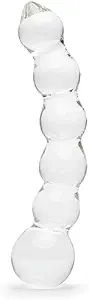
Lovehoney Sensual Glass Dildo
Buy on Amazon$39.99
//The full ranking

All 4, scored

Ranked by our composite score across five dimensions

  1. Lovehoney Sensual Glass Dildo
    14
    Best Overall
    Lovehoney

    Lovehoney Sensual Glass Dildo

    Scored across trust, quality, durability, value, and demand.

    $39.99
    Buy
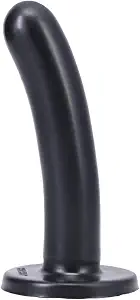
  2. Tantus Silk Small
    24
    Best Budget
    Tantus

    Tantus Silk Small

    Achieved best value ranking through exceptional trust and demand scores relative to cost, driven by Tantus's platinum-curing manufacturing leadership and strong first-purchase satisfaction data at entry pricing.
    $31.99
    Buy
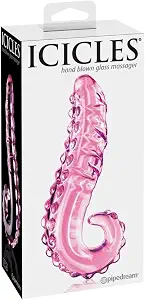
  3. Pipedream Icicles No. 24
    34
    Pipedream

    Pipedream Icicles No. 24

    Secured budget ranking by delivering core glass material advantages at accessible pricing, though trade-offs in manufacturing consistency and brand trust result in lower quality and durability scores than premium borosilicate models.
    $64.50
    Buy
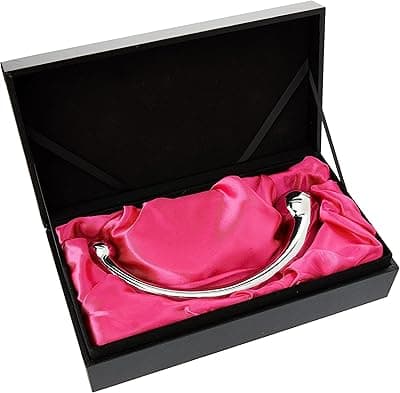
  4. Njoy Pure Wand
    44
    Best Premium
    Njoy

    Njoy Pure Wand

    Scored across trust, quality, durability, value, and demand.

    $150.00
    Buy

People also ask

  1. How do I choose between glass and silicone dildos?
    Glass delivers firm, unyielding pressure ideal for targeted stimulation and precise control, while silicone offers flexible, body-conforming comfort that adapts during use. If you prioritize temperature play and effortless cleaning with zero porosity concerns, glass excels through its thermal responsiveness and maintenance simplicity. Silicone suits users seeking forgiving insertion, warmth retention, and textured surfaces that glass cannot replicate. Consider your experience level, preferred sensation intensity, and whether you value rigid precision or adaptable softness during extended sessions.
  2. Is borosilicate glass worth the premium over standard glass?
    Borosilicate glass resists thermal shock and internal stress fractures significantly better than soda-lime glass used in budget products, directly impacting safety and longevity. Standard glass can develop microfractures from temperature changes or minor impacts that compromise structural integrity over time. The premium for borosilicate typically ranges from 30-50% but translates to multi-year lifespan advantages and reduced replacement risk. For intimate use where material failure presents safety concerns, borosilicate's fracture resistance justifies higher initial cost through extended durability and peace of mind.
  3. Can silicone dildos provide the same firm pressure as glass?
    Silicone's inherent flexibility means it cannot replicate glass's rigid, unyielding pressure regardless of density grade or manufacturing technique. Even firm-grade platinum-cured silicone compresses under pressure, distributing force across surface area rather than concentrating it at specific points like glass does. This difference fundamentally alters sensation: glass maintains constant firmness throughout use, while silicone adapts to body contours and applied pressure. Users seeking targeted, unwavering stimulation find glass irreplaceable, while those valuing comfort and reduced pressure points prefer silicone's give.
  4. Do glass toys actually break during normal use?
    Quality borosilicate glass toys rarely fracture during proper use, with breakage typically resulting from dropping onto hard surfaces or extreme temperature shock rather than in-body stress. Hand-blown budget glass shows higher failure rates due to internal stress variations from manufacturing inconsistencies. Proper care includes padded storage, avoiding sudden temperature extremes exceeding 40-degree shifts, and visual inspection for chips before each use to maintain safety across years of regular use.
  5. How long do silicone toys last compared to glass?
    Platinum-cured silicone from reputable manufacturers typically lasts three to seven years with proper care, while quality borosilicate glass can remain functional for decades if not fractured through impact. Silicone degrades gradually through repeated sterilization cycles, lubricant exposure, and UV light contact, eventually losing surface integrity and developing tackiness. Glass maintains its polished surface indefinitely under normal use but fails catastrophically if structural damage occurs. Cost-per-year analysis favors glass for long-term ownership, though silicone's lower upfront cost and forgiving comfort make replacement cycles more acceptable for many buyers prioritizing immediate value over decades-long investment.
  6. What lubricant works best with glass versus silicone?
    Glass is compatible with water-based, silicone-based, oil-based, and hybrid lubricants without material degradation concerns, offering maximum flexibility in product selection. Silicone toys require water-based or hybrid lubricants specifically formulated for silicone compatibility, as pure silicone lubricants can bond with toy surfaces and cause degradation over time. Glass's slick, non-porous surface requires less lubricant volume than silicone's matte textures, and cleanup involves simple rinsing without residue concerns. Oil-based lubricants work safely with glass but can damage certain condom materials, requiring consideration if barrier protection is needed during shared use scenarios.
  7. Are textured glass toys more difficult to clean than smooth ones?
    Textured glass maintains the same non-porous, bacteria-resistant properties as smooth glass, making cleaning equally straightforward despite surface variations. Spiral ridges or nub patterns may trap lubricant residue in crevices but release completely under running water or during standard toy cleaner application. Glass's impermeability means bacteria cannot colonize texture valleys the way they might in porous materials, allowing visual confirmation of cleanliness. Dishwasher-safe glass toys with texture can be sanitized on high-heat cycles, with water pressure reaching all surface areas. The cleaning time difference between textured and smooth glass is typically under 30 seconds, making texture selection a sensation preference rather than maintenance concern.
//The Method

Every rank is a composite, not an opinion.

The same five dimensions, the same weights, applied to every product in the category. The composite is recomputed whenever the data moves — and the rank order updates with it.

  1. 01
    Demand

    The retailer sales rank; review velocity over the last three months. Measured on 4 of 4 picks on this page.

  2. 02
    Trust

    The 1-5 rating distribution; negative-review share; polarisation (the J-curve). Measured on 4 of 4 picks on this page.

  3. 03
    Value

    Price against the category median; measured quality per pound spent. Measured on 4 of 4 picks on this page.

  4. 04
    Quality

    The 1-5 rating distribution; review text, including the share of it that mentions a defect. Measured on 4 of 4 picks on this page.

  5. 05
    Durability

    Reviews aged three months or more, and the share of them reporting a failure. Measured on 4 of 4 picks on this page.

Other rankings on this topic

Same topic, different question. Each of these ranks a different set of picks.