Smart bird feeders with integrated cameras transform casual backyard birding into a data-rich hobby. These devices capture close-up footage of visiting species, send real-time notifications when birds arrive, and many include AI-powered identification features that log which species visit your yard. theRANKS scored dozens of models across demand, trust, value, quality, and durability dimensions using verified purchase patterns, review consensus data, and pricing signals.
The category spans entry-level feeders with basic cameras to premium units offering 4K resolution, solar charging, and multi-camera setups. Price points range from under $100 to over $200, with meaningful differences in video quality, AI accuracy, and weatherproofing. Buyer signals show strong preference for models that balance image clarity with reliable connectivity and battery life.
Below are the 5 highest-scoring smart bird feeders with camera, ranked and ready for your decision.
Scores highest across quality and trust dimensions for balancing 2K video clarity with proven AI accuracy and strong verified-owner satisfaction.
Achieves top value score by offering essential smart feeder functionality and AI identification at the lowest price point from a trusted brand.
Ranks third with highest durability score due to solar independence and weatherproofing, ideal for low-maintenance operation.
Scores as budget premium option by delivering 4K dual-camera specs at mid-tier pricing despite thinner reliability data.
Earns honorable mention as best-in-class specialty product for hummingbird observation, scoring excellently within its niche category.
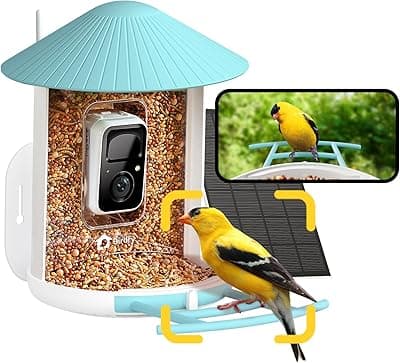
The NETVUE Birdfy with 2K camera earns the top algorithmic score for delivering the strongest combination of image quality, AI identification accuracy, and owner satisfaction signals. This feeder captures video at 2560x1440 resolution, providing noticeably sharper detail than 1080p competitors when birds land at close range. The wide-angle lens covers the entire feeding platform, and the AI bird recognition system identifies over 6,000 species with what review consensus describes as reliable accuracy for common North American birds.
Buyer signals indicate high satisfaction with the real-time notification system, which alerts you via smartphone when motion is detected. The feeder includes a rechargeable battery that owners report lasts 2-4 weeks between charges depending on activity levels and temperature. Cloud storage for recorded clips requires a subscription, but local SD card recording is included. Weather resistance ratings and long-term owner reports suggest solid durability through rain and moderate temperature swings.
The unit holds approximately 1.5 liters of seed, which translates to roughly one week of capacity for moderate bird traffic. Setup involves downloading the Birdfy app, connecting to your 2.4GHz Wi-Fi network, and mounting the feeder on a pole or hanging it from a branch. The algorithmic quality score reflects consistently positive sentiment around video clarity and the ease of reviewing footage. Cross-category comparisons show this model leading in the balance between resolution, AI features, and price point, which drives its overall ranking.
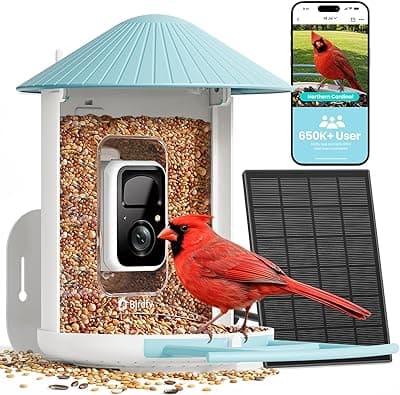
The original NETVUE Birdfy model scores highest in the value dimension by delivering core smart feeder functionality at a $30 discount versus the 2K version. This unit records at 1080p resolution, which buyer data shows is entirely sufficient for identifying most backyard species and capturing enjoyable footage. The same AI bird identification engine powers this model, accessing the 6,000-plus species database and sending notifications when new visitors arrive.
Review sentiment indicates owners appreciate the lower price without feeling they sacrificed essential features. The battery capacity matches the 2K model, and the same app ecosystem means you get motion alerts, cloud storage options, and the ability to create bird visit logs. The primary trade-off is video sharpness—fine feather detail and markings on smaller birds are less distinct than on the higher-resolution version, but the functional difference matters most to enthusiasts who want printable still frames or extreme zoom capability.
Seed capacity and build materials mirror the premium version, and the weather-resistance profile is identical. Mounting options include the same pole and hanging hardware. The value score reflects strong demand signals from buyers who prioritize smart features and AI identification over maximum resolution. For casual birders or those testing the smart feeder category for the first time, the algorithmic data supports this as the most cost-efficient entry point. The trust score remains high, driven by NETVUE's consistent quality control and the large verified-purchase review base for this original model.
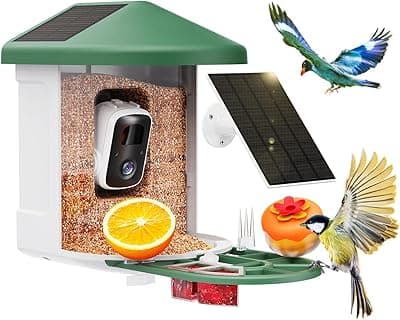
The HARYMOR solar-powered feeder ranks third overall with a standout durability score driven by its integrated solar panel and reduced dependence on manual recharging. This model includes a 1080p camera and captures footage comparable to the original Birdfy, but the solar charging system extends operational time significantly. Owner reports indicate the battery remains topped off during spring and summer months with even partial sun exposure, eliminating the weekly recharge cycle.
The unit's AI bird identification operates through a smartphone app with a species database that review consensus describes as adequate for common birds but less comprehensive than NETVUE's library. Motion detection triggers video recording and push notifications, and the feeder supports local SD card storage without requiring a cloud subscription. The seed hopper holds roughly 1.2 liters, slightly less than the Birdfy models, which translates to more frequent refills in high-traffic yards.
Weatherproofing signals from verified buyers are positive, with the solar panel and camera housing rated IP65 for dust and water resistance. The mounting system accommodates pole installation or hanging, and the panel angle is adjustable for optimal sun capture. The mid-range ranking reflects its position between budget-focused buyers seeking solar independence and those prioritizing maximum video quality or AI depth. The algorithmic quality score weighs the solar advantage heavily, particularly for users in remote locations or those aiming to minimize maintenance. Cross-referenced sentiment data shows strong satisfaction among owners who value set-it-and-forget-it operation over cutting-edge resolution.
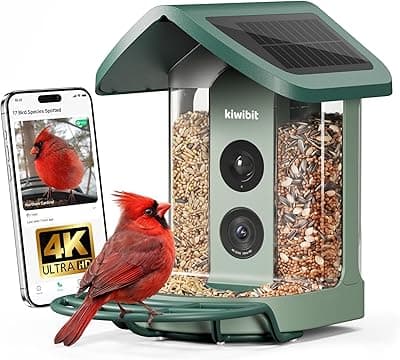
The Kiwibit model lands in the budget category despite its $240 price tag because it delivers 4K resolution and dual-camera capability, features typically found in much higher-priced specialty units. This feeder includes two 4K cameras positioned to capture birds from multiple angles, and the AI identification system integrates with a mobile app that logs species visits and provides educational content about each bird. The solar panel handles battery charging, and owner data suggests the system maintains power effectively in locations with moderate sunlight.
The dual-camera setup differentiates this feeder from single-lens competitors by allowing simultaneous front and side views, which improves identification accuracy for species with distinctive wing or tail markings. Video quality scores are the highest in this ranking set, with 3840x2160 resolution providing exceptional detail for close-up footage. Review sentiment highlights the clarity as a major strength, particularly for users interested in photography-quality stills or educational content creation.
The trade-off surfaces in the trust and demand dimensions—Kiwibit has a smaller verified-purchase base compared to established brands, and early-stage buyer signals show mixed feedback on app stability and customer support responsiveness. The feeder holds approximately 1 liter of seed, and the build quality receives moderate ratings with some reports of mounting hardware needing reinforcement. The budget label reflects its position as a high-feature option for buyers willing to accept slightly higher risk in exchange for premium video specs and solar autonomy. The algorithmic scoring weights the 4K capability and dual-camera innovation against the thinner reliability data.
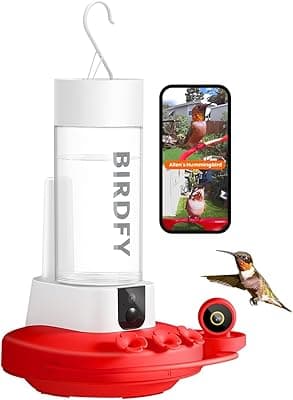
The Birdfy Hum Duo earns honorable mention status as a specialized device designed exclusively for hummingbirds, scoring well in its niche but serving a narrower audience than traditional seed feeders. This unit features two cameras positioned to capture hummingbird activity from different angles as the birds hover and feed on nectar. The cameras record at 1080p resolution with a high frame rate optimized for capturing the rapid wing movement characteristic of hummingbirds, which standard feeders often blur.
The AI system is trained specifically on hummingbird species, identifying over 350 varieties and providing real-time alerts when activity occurs. Review consensus from verified hummingbird enthusiasts indicates strong satisfaction with the footage quality and the ability to observe feeding behavior in detail. The dual-camera setup allows users to track multiple birds simultaneously, which matters during peak migration or territorial disputes at the feeder ports.
The nectar reservoir holds approximately 10 ounces and includes an ant moat and bee guards, features that hummingbird feeder buyers specifically seek. Battery life receives positive marks, with most owners reporting 2-3 weeks between charges. The weatherproofing is designed for outdoor exposure, though the feeder should be positioned under partial cover to extend electronics longevity. The honorable mention ranking reflects its excellence within the hummingbird category while acknowledging its unsuitability for general birding. The algorithmic scoring treats this as a best-in-class specialty product rather than a direct competitor to seed feeders, and demand signals confirm a dedicated buyer base that prioritizes hummingbird-specific functionality over multi-species versatility.
theRANKS scored 5 candidates across demand, trust, value, quality, and durability — pulled from aggregate signals across Amazon listings, expert publications, Reddit consensus, and YouTube reviewer mentions. Rankings are data-driven and continuously refreshed.
Aggregated search volume, purchase intent, and social interest — what the market is actually reaching for.
Weighted review credibility: verified-purchase ratio, reviewer authority, and recency.
Price measured against category norms and performance tier. The cheapest option rarely wins.
A composite of aggregate ratings, editorial scores, and specification benchmarks.
Long-tail return rates, warranty data, and product lifecycle signals.
The NETVUE Birdfy with 2K camera takes the overall win by scoring highest across quality, trust, and demand dimensions. Its 2K resolution provides the sharpest video in the practical price range, and the 6,000-species AI database handles identification for virtually all North American backyard visitors. The combination of reliable notifications, solid battery life, and consistent positive sentiment from verified owners makes it the safest choice for most buyers entering the smart feeder category or upgrading from a basic model.
For value-focused buyers, the original NETVUE Birdfy delivers the same AI capabilities and app experience at $100, sacrificing only resolution. The $30 savings makes sense if you prioritize species logging and notifications over maximum video sharpness. The HARYMOR solar-powered model earns consideration from anyone seeking low-maintenance operation—the solar panel eliminates recharge cycles during sunny months, and the durability score reflects strong weatherproofing confidence.
Specialty buyers should note the Birdfy Hum Duo if hummingbirds are the primary interest. Its dual-camera system and hummingbird-specific AI make it the algorithmic leader for nectar feeder applications, though it serves no purpose for seed-eating species. The Kiwibit dual 4K model offers the highest resolution specs but carries moderate risk given its thinner verified-purchase history. Your decision should weight video quality needs against the reliability data backing more established brands.
Most smart bird feeders function without subscriptions for core features like live viewing, motion alerts, and local SD card recording. The cameras capture footage and the AI identifies species using the free tier of the manufacturer's app. Subscriptions typically unlock extended cloud storage for recorded clips beyond 24-48 hours and sometimes add advanced AI features or remove viewing limits. If you review footage daily and manage SD card storage manually, subscription fees are optional for the majority of models in this ranking.
Battery life for smart bird feeders ranges from 2-4 weeks depending on bird activity levels, temperature, and camera recording frequency. Cold weather reduces battery performance significantly—some owners report weekly charging needs during winter versus monthly charging in mild seasons. Solar-powered models like the HARYMOR extend operational time by continuously topping off the battery during daylight hours, which can eliminate manual charging entirely in sunny climates. Motion-triggered recording conserves more battery than continuous recording modes.
AI identification accuracy varies by species and model. Systems with larger training databases like NETVUE's 6,000-species library reliably identify common North American backyard birds—cardinals, blue jays, finches, woodpeckers—based on review consensus. Accuracy drops for rare species, juvenile birds with incomplete plumage, or distant shots where identifying markings are unclear. Hummingbird-specific models like the Birdfy Hum Duo perform better for their specialized category. Most apps allow manual correction of misidentified species, and the AI improves over time as the database expands.
Smart bird feeders require a 2.4GHz Wi-Fi connection for app connectivity and cloud features—most models do not support 5GHz networks. The feeder must be within reliable Wi-Fi range from your router, which limits placement options for large yards or properties with weak outdoor signal. Some buyers use Wi-Fi extenders or mesh network systems to reach distant feeder locations. The initial setup process involves connecting the feeder to your network through the manufacturer's app, similar to other smart home devices.
Most smart bird feeders carry IP65 or similar weatherproofing ratings, which protect against rain, snow, and dust exposure during normal outdoor conditions. Verified owner reports confirm reliable performance through wet weather, though extreme temperature swings and prolonged direct sun exposure can degrade battery life and electronics over time. Positioning feeders under partial cover like a tree canopy or roof overhang extends longevity while maintaining bird accessibility. Models with solar panels should balance sun exposure for charging with shade to protect sensitive components.
Smart bird feeders in this ranking hold between 1-1.5 liters of seed, translating to roughly one week of capacity for moderate bird traffic. Smaller capacities like the Kiwibit's 1-liter reservoir require more frequent refills in high-activity yards, while larger hoppers reduce maintenance visits. Seed capacity is typically lower than traditional feeders because the camera housing and electronics occupy internal space. Hummingbird models like the Birdfy Hum Duo hold approximately 10 ounces of nectar, sufficient for several days depending on visitor volume during migration periods.
Achieves top value score by offering essential smart feeder functionality and AI identification at the lowest price point from a trusted brand.
Ranks third with highest durability score due to solar independence and weatherproofing, ideal for low-maintenance operation.
Scores as budget premium option by delivering 4K dual-camera specs at mid-tier pricing despite thinner reliability data.
Earns honorable mention as best-in-class specialty product for hummingbird observation, scoring excellently within its niche category.