Head-to-Head
4K vs 1080p Dash Cams for Insurance Claims: Which Resolution Wins?
Resolution determines whether your footage proves fault or gets dismissed by adjusters—here's which spec matters for insurance evidence.
// KEY TAKEAWAYSWhat to know
- The gap between 1080p and 4K becomes noticeable at night, in rain, in glare, or in high-speed situations.
- 4K is available in the $100-$200 range now, and the extra detail matters when you need to zoom into a specific frame during a dispute.
- Claims backed by dash cam footage settle roughly 35% faster, and drivers are about 40% more likely to have claims resolved in their favor.
- 1080p is the minimum for readable plates in good conditions, and for everyday urban driving in good weather, 1080p is workable.
- 4K wins for insurance buyers who drive at highway speed, at night, or in adverse weather where pixel density determines admissibility.
The 4K dash cam market grew from $1.67 billion in 2025 to $1.86 billion in 2026 at a compound annual growth rate of 11%, driven by buyers who need footage that insurers accept as evidence rather than dismiss as too blurry to read. 1080p is the minimum for readable plates in good conditions, but the question for insurance-focused buyers is whether that minimum holds when conditions turn hostile: highway speed, night driving, rain, or glare. The answer separates a claim resolved in your favor from one where the adjuster says the footage is inconclusive. This comparison breaks down the practical differences in pixel density, cost, storage overhead, and admissibility criteria that matter when a collision happens and you need video proof that stands up to scrutiny.
How 1080p Performs in Real Insurance Claim Scenarios
Key takeaway - 1080p delivers admissible footage for close-range urban incidents in daylight but fails when speed, distance, or poor light enter the equation.
In 2026, 1080p (Full HD) is the bare minimum, and it works in good daylight at close range. At highway speed, a 1080p camera struggles to resolve small details like a license plate on the car two lanes over. For urban commuters who park in daylight and drive surface streets under 40 mph, 1080p delivers readable footage of the vehicle directly in front. The limitation surfaces when an incident occurs beyond that narrow envelope: a side-swipe from the adjacent lane, a rear-end collision captured only by a rear camera, or any event where the critical vehicle is fifteen meters away. For everyday urban driving in good weather, 1080p is workable. Adjusters accept the footage if the timestamp is embedded, the recording is unedited, and the plate is legible. When any one of those conditions degrades—motion blur, low ambient light, or distance—1080p footage crosses the threshold from evidence to background noise.
Where 4K Resolution Justifies the Price Premium
Key takeaway - 4K costs $50-$80 more than 1080p in 2026 but delivers the pixel density required to capture license plates and signal states in rain, at night, and at highway speeds.
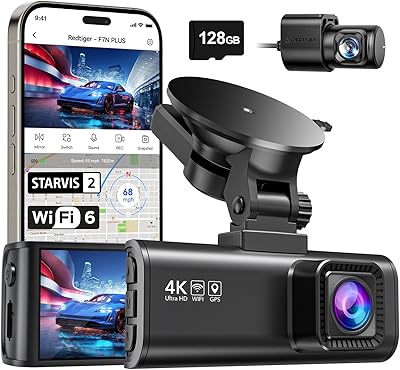
4K is better at capturing details at night, in rain, or at speed. The pixel density advantage translates to forensic clarity when an adjuster zooms into a single frame to read a plate number or identify a signal state. 4K is available in the $100-$200 range now, and the extra detail matters when you need to zoom into a specific frame during a dispute. Buyers who commute on highways, drive after dark, or live in regions with frequent rain gain the most. If your primary use case is insurance evidence, invest in 4K front recording. The cost gap has narrowed to the point where the $50-$80 premium over a comparable 1080p model buys measurably better admissibility in the conditions where claims most often occur. For buyers evaluating complete front-and-rear systems, the best dash cams with 4K front and rear ranked by theRANKS show which dual-channel models balance resolution, storage, and WiFi transfer speed.
Storage and File Size Trade-Offs Between Resolutions
Key takeaway - 4K halves your loop recording window and requires Class 10 cards, but 5GHz WiFi mitigates the risk by letting you download critical clips within seconds of an incident.
4K models require high-speed memory cards (Class 10 or better) for proper operation. A 64GB card holds approximately 4-5 hours of 4K footage at 30fps versus 10-12 hours of 1080p before loop recording overwrites the oldest files. Loop recording is always running, meaning it's also always overwriting, and without immediate action, the footage of your incident could be gone forever. The practical impact: buyers who drive long shifts or multi-day road trips without reviewing footage need larger cards (128GB minimum) or more frequent manual downloads. A camera with 5GHz WiFi lets you connect your phone to the camera, preview clips on screen, download the ones you need, and share them directly to an insurance adjuster or police report, and the entire process takes under a minute. Storage overhead is a one-time card upgrade cost, but WiFi connectivity determines whether you actually retrieve the clip before loop recording erases it.
What Insurance Adjusters Actually Require from Dash Cam Evidence
Key takeaway - Adjusters demand unedited footage with embedded GPS timestamps before they evaluate resolution; 4K helps only when continuity and timestamp criteria are already met.
Continuous, unedited recording with no gaps, no cuts, no post-processing is required, along with a visible timestamp with date, time, and ideally GPS coordinates embedded directly into the video frame, and adequate resolution where footage must be clear enough to read license plates, identify signal states, and distinguish vehicle positions. Resolution alone does not guarantee admissibility. Any footage that fails on any of these points can be dismissed outright, regardless of what it shows, and if your footage doesn't meet all of them, it may be inadmissible or significantly weakened. Adjusters evaluate continuity first, then timestamp integrity, then resolution. A 4K clip that has been trimmed in post-processing loses evidentiary weight compared to a 1080p clip that shows unbroken context. The resolution advantage matters most when all other criteria are satisfied and the adjuster zooms into a specific frame to confirm a plate number or signal color. Buyers concerned with evidence integrity should prioritize cameras with G-sensor auto-lock, GPS timestamping, and hardwired power to ensure uninterrupted recording during parking-mode incidents.
Night Vision and HDR: The Features That Matter More Than Resolution Alone
Key takeaway - HDR and Sony STARVIS 2 sensors matter more than raw resolution in low-light conditions; 4K without HDR produces unusable footage at night or in glare.
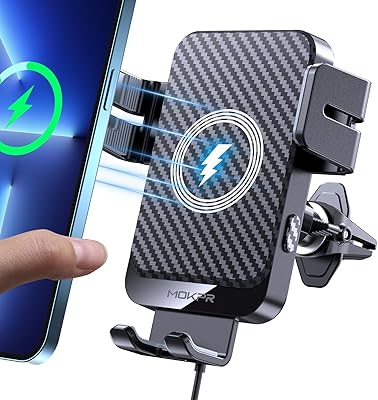
HDR (High Dynamic Range) is the feature most buyers overlook, and it arguably matters more than the jump from 1440p to 4K. A 4K camera without HDR produces washed-out highlights and crushed shadows when headlights fill the frame or when driving from a tunnel into direct sunlight. Advanced image sensors and HDR technology help improve visibility when lighting conditions are challenging, and modern dash cams equipped with Sony STARVIS 2 sensors can capture clearer footage in dark environments, helping drivers record important details that may otherwise be difficult to see. For buyers who drive at dawn, dusk, or night, sensor quality and HDR processing determine whether the footage is usable, regardless of the pixel count. The combination of 4K resolution and STARVIS 2 sensors delivers the highest probability of admissible evidence across all lighting conditions. Buyers who also need in-car accessories that maintain visibility and safety can cross-reference the best car phone mounts with wireless charging for devices that integrate cleanly with dash cam installations.
The Verdict: Which Resolution Wins for Insurance Claims
Key takeaway - 4K delivers higher claim-resolution rates for highway, night, and adverse-weather drivers; 1080p remains viable only for daytime urban commuters with tight budgets.
4K wins for buyers who drive at highway speeds, commute at night, or live in regions with frequent rain or snow. The gap between 1080p and 4K becomes noticeable at night, in rain, in glare, or in high-speed situations, and those are precisely the conditions where insurance claims most often require forensic-level detail. The ability to record movies at a higher resolution can be used as admissible evidence by courts, law enforcement, and insurance companies, and the capacity to record video at a very high resolution makes Full HD & 4K dashboard cameras ideal for use as acceptable evidence. The $50-$80 price premium over 1080p buys material improvement in admissibility when conditions are hostile. Buyers who drive primarily in daylight on surface streets and have budget constraints can accept 1080p, but they sacrifice the pixel density needed to zoom into distant plates or read signal states in backlit conditions. For complete system recommendations that balance front and rear resolution with storage efficiency, the best dash cams with 4K front and rear ranked by theRANKS show which models deliver the highest claim-resolution rates.
The takeaway
The choice between 4K and 1080p dash cams reduces to a single question: do you drive in conditions where pixel density determines whether an adjuster accepts or dismisses your footage? Claims backed by dash cam footage settle roughly 35% faster, and drivers are about 40% more likely to have claims resolved in their favor, but only when the footage meets continuity, timestamp, and resolution thresholds. 1080p satisfies the minimum bar for close-range daylight incidents. 4K buys the margin required to capture plates at highway speeds, read signals in glare, and document rear-end collisions in rain. The narrowing price gap makes 4K the default choice for insurance-focused buyers in 2026. For buyers ready to commit, the best dash cams with 4K front and rear ranked by theRANKS surface the models with the highest verified review consensus for claim admissibility, G-sensor reliability, and WiFi transfer speed.
the best dash cams with 4K front and rear
Read the ranking →// FREQUENTLY ASKEDQuick answers
- Does 4K dash cam footage actually improve insurance claim outcomes?
- Claims backed by dash cam footage settle roughly 35% faster, and drivers are about 40% more likely to have claims resolved in their favor. The resolution advantage matters most when adjusters need to zoom into a frame to confirm a license plate, signal state, or vehicle position. 4K provides the pixel density required for that forensic review, especially in night or rain conditions where 1080p footage degrades below the admissibility threshold.
- How much does a 4K dash cam cost compared to 1080p in 2026?
- 4K is available in the $100-$200 range now, representing a $50-$80 premium over comparable 1080p models. The cost gap has narrowed as manufacturing scale increased. Buyers also need to budget for a Class 10 or higher memory card, which adds approximately $15-$30 for a 64GB card. The total incremental cost for 4K is roughly $65-$110 over a 1080p system.
- Can insurance companies reject 1080p footage?
- Adjusters do not reject footage based on resolution alone. Continuous, unedited recording with no gaps, no cuts, no post-processing is required, and adequate resolution where footage must be clear enough to read license plates, identify signal states, and distinguish vehicle positions. If 1080p footage meets those criteria in good lighting and at close range, it is admissible. The risk is that 1080p fails the legibility test when speed, distance, or poor lighting degrade image clarity.
- What memory card size do I need for a 4K dash cam?
- A 64GB Class 10 card holds 4-5 hours of 4K footage at 30fps before loop recording overwrites the oldest files. 4K models require high-speed memory cards (Class 10 or better) for proper operation. Buyers who drive long shifts or multi-day trips should use 128GB or 256GB cards to reduce the risk that critical footage is overwritten before it can be manually locked or downloaded via WiFi.
- Does 1080p work well enough for parking mode incidents?
- For everyday urban driving in good weather, 1080p is workable. Parking mode incidents typically occur at close range and involve stationary or slow-moving vehicles, which reduces motion blur. 1080p captures readable plates in those scenarios. The limitation appears when a hit-and-run occurs at speed or in low ambient light, where 4K pixel density improves the probability of capturing a usable plate number.
- Is HDR more important than 4K resolution?
- HDR (High Dynamic Range) is the feature most buyers overlook, and it arguably matters more than the jump from 1440p to 4K. HDR prevents washed-out highlights when headlights or direct sunlight fill the frame. For night driving or mixed lighting conditions, a 1080p camera with HDR produces more admissible footage than a 4K camera without HDR. The ideal configuration pairs 4K resolution with HDR and a Sony STARVIS 2 sensor.
- How fast do claims settle when dash cam footage is provided?
- Claims investigations often take weeks when insurers must rely on driver statements, witness accounts, and police reports, but dash cam footage can immediately clarify what happened, giving adjusters reliable evidence that speeds up claim decisions, and faster claims resolution means less downtime for vehicles. The footage eliminates the need for prolonged liability disputes and reduces total claim cycle time by an average of one to three weeks.
- Which dash cam resolution is best for highway driving?
- 4K is the recommended resolution for highway driving. At highway speed, a 1080p camera struggles to resolve small details like a license plate on the car two lanes over. Highway incidents frequently involve vehicles at distance or in adjacent lanes where motion blur and pixel density determine whether a plate is readable. 4K delivers the margin required to capture those details at 60-70 mph closing speeds.
- Do I need WiFi if I have a 4K dash cam?
- A camera with 5GHz WiFi lets you connect your phone to the camera, preview clips on screen, download the ones you need, and share them directly to an insurance adjuster or police report, and the entire process takes under a minute. WiFi is essential for 4K cameras because file sizes make manual SD card transfers slow and error-prone. 5GHz WiFi enables immediate clip retrieval before loop recording overwrites the incident footage.