Best Dash Cams with 4K Front and Rear: 4 Picks Scored & Ranked

Ranked by our composite score across five dimensions

The picks in detail

5 dual-camera 4K dash cams scored across demand, trust, value, quality, and durability. Algorithmic rankings show which systems deliver the clearest…

Rove R2-4K Dual Dash CamBest Overall

No. 1 · Top pick

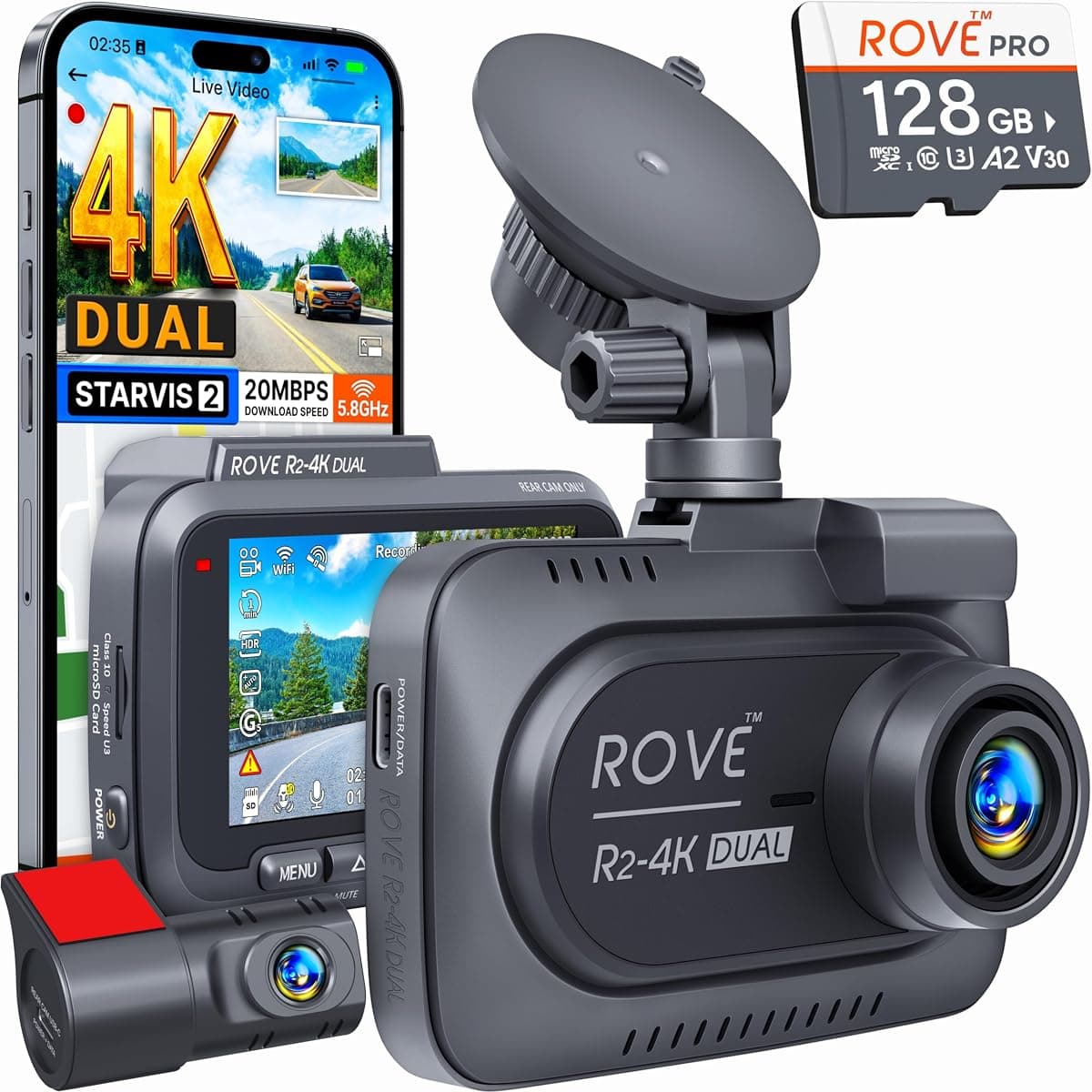
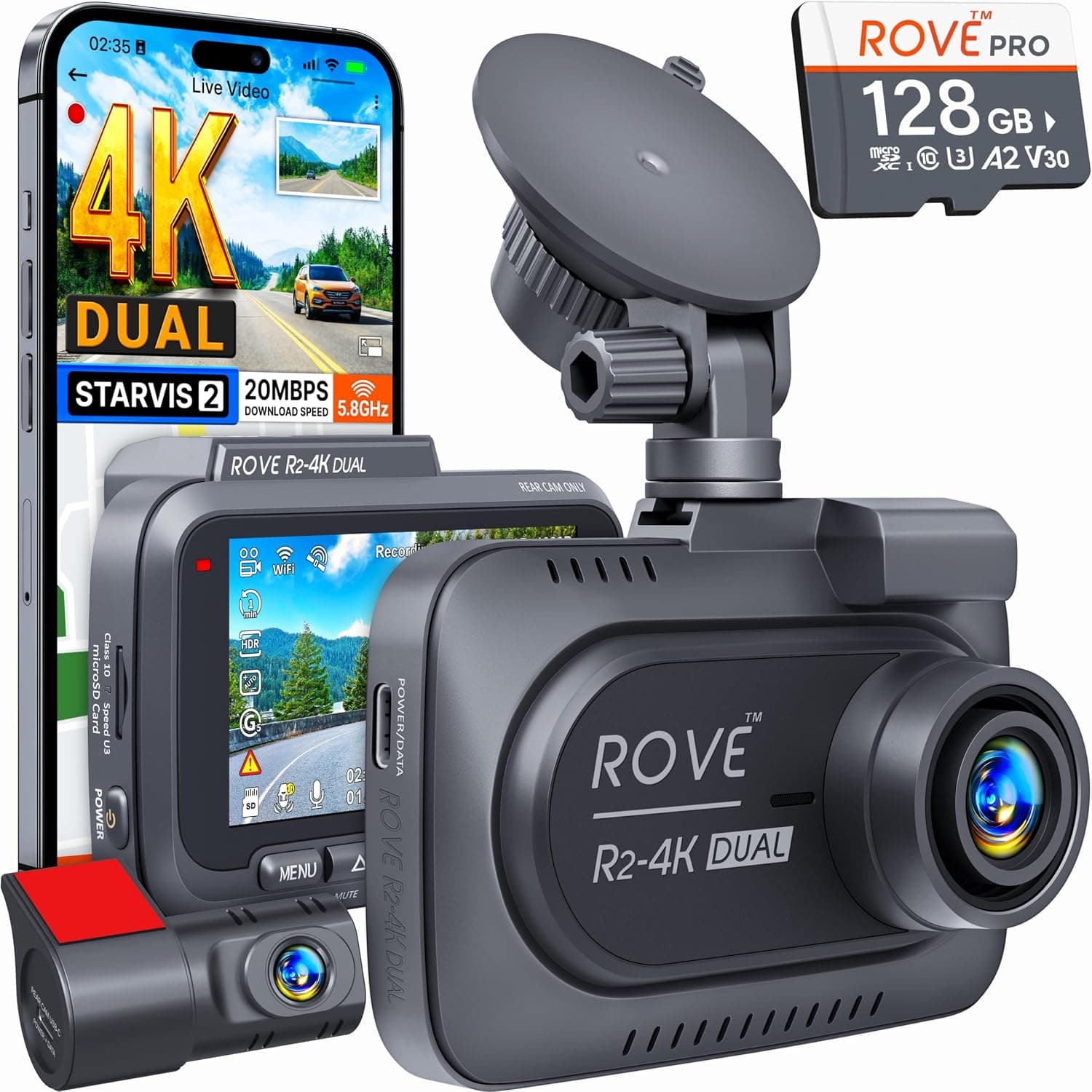
Rove R2-4K Dual Dash Cam

Rove

Why it ranked

Mid-range score reflects strong price-to-performance ratio for daylight driving with acceptable trade-offs in sensor sophistication and connectivity speed.

Strengths

  • Front 4K resolution at two-thirds the cost of STARVIS-equipped systems makes dual coverage affordable
  • Compact form factor hides behind most rearview mirrors without windshield obstruction
  • Included 32GB card provides week-long storage before loop overwrite begins
  • Reliable loop recording and impact detection operate without firmware glitches

Trade-offs

  • Night performance shows more grain and reduced dynamic range compared to Sony sensor models
  • GPS tagging requires separate add-on module not included in base price
  • 2.4GHz WiFi transfers large files slower than dual-band alternatives
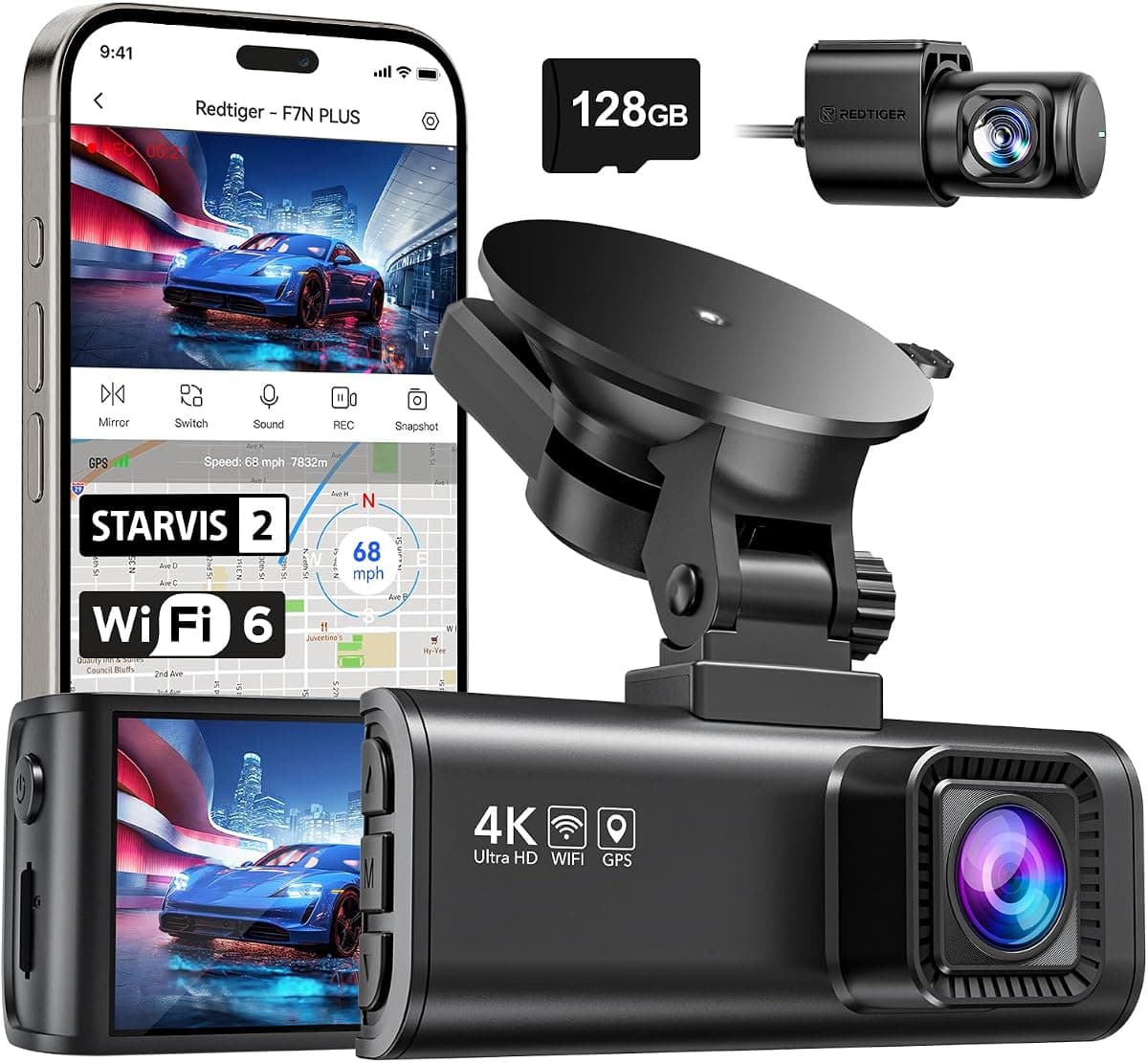
REDTIGER 4K Dash Cam Front Rear F7NP

No. 2

REDTIGER 4K Dash Cam Front Rear F7NP

REDTIGER

Why it ranked

Budget rank earned through lowest per-feature cost while maintaining true front 4K resolution and dual-camera coverage for basic insurance documentation.

Strengths

  • Dual 4K front and 1080p rear coverage at single-camera mid-tier pricing
  • Built-in GPS and WiFi eliminate need for add-on modules in base configuration
  • Included 32GB card and plug-and-play setup require no additional purchases for core functionality
  • Suction mount adheres reliably without adhesive commitment

Trade-offs

  • Dynamic range compresses in mixed lighting with more night noise than Sony sensor systems
  • Capacitor reliability decreases in extreme heat after 18-24 months of continuous use
  • Rear camera detail drops beyond two car lengths following distance
Viofo A229 Pro

No. 3

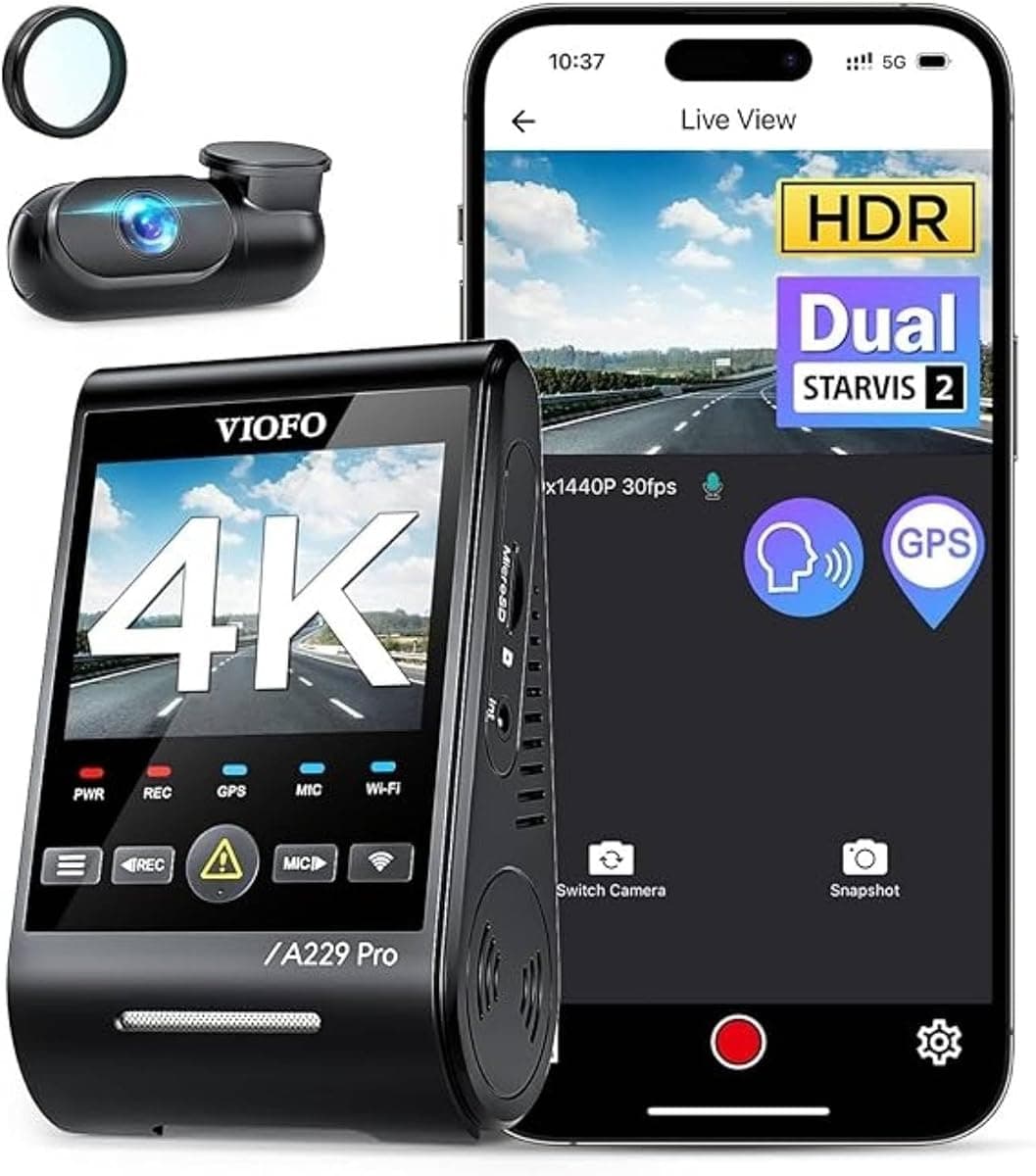
Viofo A229 Pro

Viofo

Why it ranked

Scored across trust, quality, durability, value, and demand.

Strengths

  • Sony STARVIS 2 sensor delivers exceptional low-light clarity and reduced noise in parking garages and rural roads
  • HDR processing balances bright skies against shadowed license plates without washing out detail
  • Capacitor design survives extreme temperature swings that degrade lithium batteries in competing models
  • 5GHz WiFi transfers large 4K clips to phones in seconds rather than minutes

Trade-offs

  • Premium pricing reflects advanced sensor and processing features
  • Hardwire kit for parking mode sold separately adds forty dollars to total cost
  • High bitrate recording fills microSD cards faster than lower-resolution competitors
Viofo A329SBest Premium

No. 4

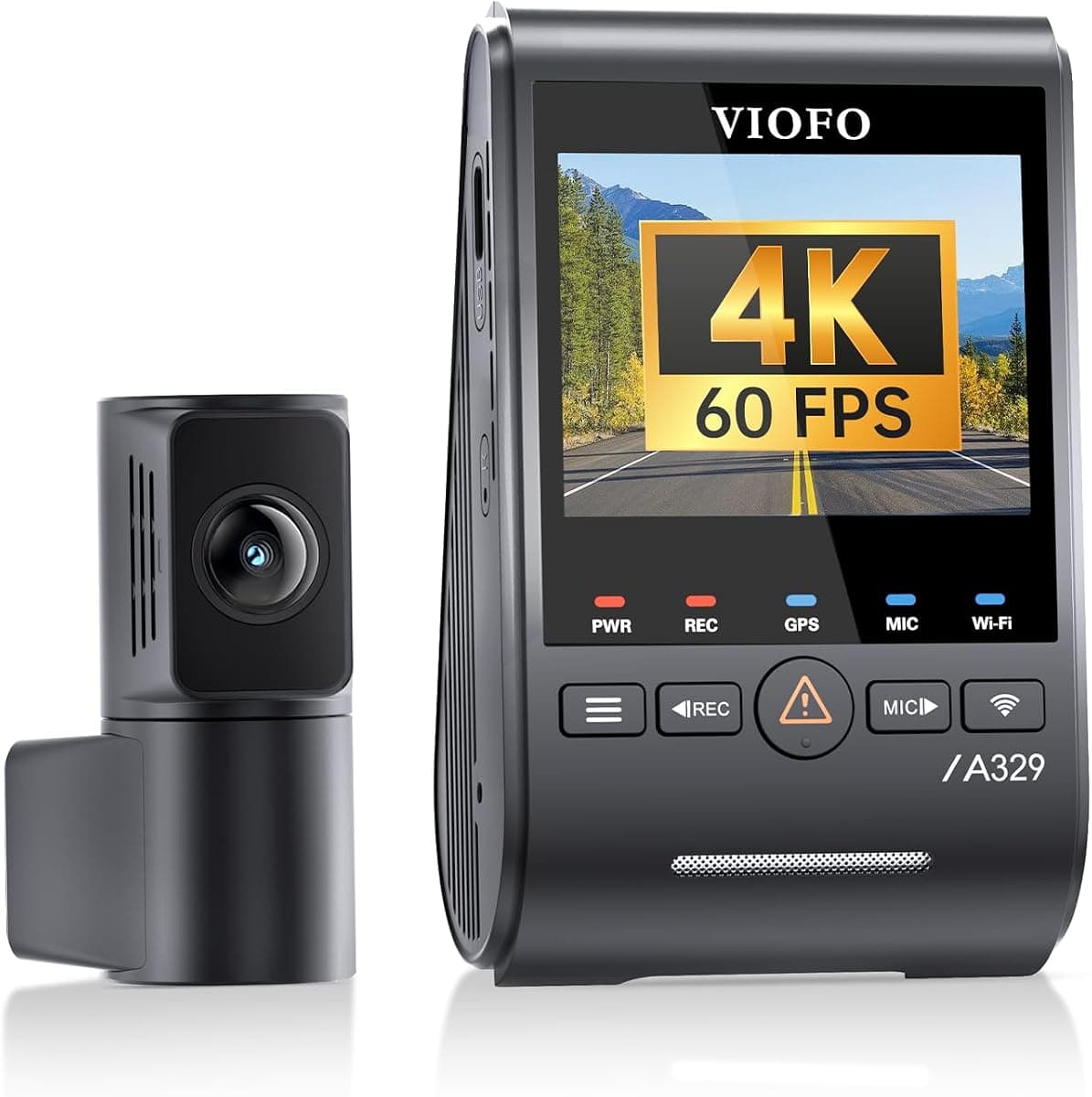
Viofo A329S

Viofo

Why it ranked

Scored across trust, quality, durability, value, and demand.

Strengths

  • 60fps front recording resolves fast-moving license plates and incident details that 30fps systems blur
  • Sony STARVIS 2 sensor maintains clarity through tunnel transitions and night driving with minimal lag
  • Cloud integration syncs critical clips automatically to prevent accidental deletion during post-incident stress
  • Capacitor withstands temperature extremes across tens of thousands of verified miles

Trade-offs

  • Slightly more shadow noise compared to HDR-equipped models in deep low-light conditions
  • Ten-dollar premium over 30fps Pro model narrows value gap during sales periods

Compare all 4 picks

Fact
Rove R2-4K Dual Dash Cam
No. 1Rove R2-4K Dual Dash CamBest OverallBuy on Amazon
REDTIGER 4K Dash Cam Front Rear F7NP
No. 2REDTIGER 4K Dash Cam Front Rear F7NPBuy on Amazon
Viofo A229 Pro
No. 3Viofo A229 ProBuy on Amazon
Viofo A329S
No. 4Viofo A329SBest PremiumBuy on Amazon
Price$149.99$149.99$279.99$399.99
Standout strengthFront 4K resolution at two-thirds the cost of STARVIS-equipped systems makes dual coverage affordableDual 4K front and 1080p rear coverage at single-camera mid-tier pricingSony STARVIS 2 sensor delivers exceptional low-light clarity and reduced noise in parking garages and rural roads60fps front recording resolves fast-moving license plates and incident details that 30fps systems blur
Main trade-offNight performance shows more grain and reduced dynamic range compared to Sony sensor modelsDynamic range compresses in mixed lighting with more night noise than Sony sensor systemsPremium pricing reflects advanced sensor and processing featuresSlightly more shadow noise compared to HDR-equipped models in deep low-light conditions
//The Method

Every rank is a composite, not an opinion.

The same five dimensions, the same weights, applied to every product in the category. The composite is recomputed whenever the data moves — and the rank order updates with it.

  1. 01
    Demand

    The retailer sales rank; review velocity over the last three months. Measured on 4 of 4 picks on this page.

  2. 02
    Trust

    The 1-5 rating distribution; negative-review share; polarisation (the J-curve). Measured on 4 of 4 picks on this page.

  3. 03
    Value

    Price against the category median; measured quality per pound spent. Measured on 4 of 4 picks on this page.

  4. 04
    Quality

    The 1-5 rating distribution; review text, including the share of it that mentions a defect. Measured on 4 of 4 picks on this page.

  5. 05
    Durability

    Reviews aged three months or more, and the share of them reporting a failure. Measured on 4 of 4 picks on this page.

Dash Cams FAQ

  1. How do I choose between 30fps and 60fps front recording?
    The 60fps front capture resolves license plates and impact details in fast-moving traffic where 30fps footage blurs critical frames. If you drive highways or dense urban corridors with frequent high-speed merges, the doubled frame rate prevents motion blur that obscures evidence during incident review. For suburban or rural driving under 45 mph, 30fps provides adequate temporal resolution while reducing file sizes and storage consumption. The ten-dollar premium for 60fps makes sense for commuters in metro areas where speed and traffic density create blur risk.
  2. Is HDR processing worth the extra cost for dashcams?
    HDR balances bright skies against shadowed license plates, preventing the overexposure that washes out critical details in mixed lighting. Drivers who regularly transition between tunnels and sunlight or park in structures with harsh overhead lighting see the clearest benefit. If you drive primarily at consistent times in predictable lighting, standard dynamic range captures adequate detail for insurance documentation. The hundred-dollar gap between HDR and non-HDR VIOFO models narrows when you consider lost footage from clipped highlights in standard systems.
  3. Do capacitor-based dashcams actually last longer than battery models?
    Capacitors withstand the 140-plus degree dashboard temperatures that degrade lithium batteries within 18-24 months of summer exposure. The trade-off is reduced parking mode duration without hardwire installation, but the thermal resilience prevents the total unit failure that leaves drivers unprotected after battery swelling or leakage.
  4. Can 1080p rear cameras capture license plates reliably?
    Rear 1080p resolution resolves plates clearly within two car lengths but loses detail beyond that distance depending on sensor quality and lens sharpness. For rear-end collision documentation and tailgater evidence, 1080p provides sufficient clarity since relevant vehicles occupy substantial frame area. The gap to 1440p or 4K rear becomes meaningful for hit-and-run scenarios where the offending vehicle appears smaller in frame, but most insurance claims center on close-proximity incidents where 1080p suffices.
  5. Should I buy the GPS module or hardwire kit first?
    GPS tagging embeds location and speed data in every clip, strengthening insurance claims and providing context for ticket disputes without recurring cost. Hardwire kits enable parking mode surveillance but add installation complexity and forty-dollar upfront cost. If your priority is incident documentation during active driving, GPS delivers immediate value in every trip. Parking mode makes sense for drivers in high-theft areas or those who've experienced prior vandalism, but GPS proves useful universally from day one.
  6. Do I really need dual-band WiFi on a dashcam?
    Dual-band WiFi transfers 4K clips in seconds rather than the multi-minute waits of 2.4GHz-only systems, eliminating the frustration of standing by your car while large files move to your phone. The speed difference becomes critical during post-incident stress when you need to share footage with police or insurance immediately. If you rarely review clips or can wait for transfers at home, single-band suffices. For drivers who need rapid evidence sharing at accident scenes, the 5GHz capability justifies any price premium.
  7. What microSD card speed and size should I pair with 4K dashcams?
    High-endurance cards rated for continuous recording prevent the corruption and write failures that plague standard cards under loop recording stress. A 128GB card provides roughly one week of 4K front and 1440p rear footage before overwrite begins, balancing cost against coverage duration. The bitrate of 4K 60fps systems demands U3 or V30 speed ratings minimum to prevent dropped frames. Avoid bargain cards regardless of capacity claims, as failed cards cost more in lost footage than the savings in upfront price.

theRANKS may earn affiliate commissions from qualifying purchases. How that works