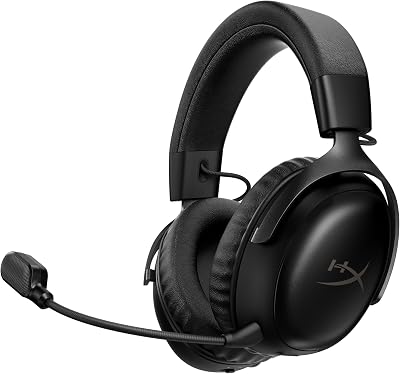
Head-to-Head
Wired vs Wireless Gaming Headset for Latency: Which Connection Wins?
Wired sits under 5ms, 2.4GHz wireless measures 10-25ms, and Bluetooth trails at 100-250ms—but which latency profile wins for ranked play?
// KEY TAKEAWAYSWhat to know
- Wired headsets deliver under 10ms latency through direct analog or USB connections with no encoding overhead.
- 2.4GHz wireless headsets measure 10-25ms latency, falling below the 40-50ms threshold where most players notice delay.
- Bluetooth connections introduce 100-250ms delay with standard codecs, making them unsuitable for competitive gaming.
- Many high-level players use 2.4GHz wireless for practice and online ranked matches without performance penalty.
- Tournament organizers require wired headsets for pro events due to reliability in RF-heavy venues, not latency concerns.
Latency benchmarks across review outlets show 2.4GHz wireless headsets deliver 10-25ms audio delay, while wired connections sit at near-zero latency under 5ms. The 15-20ms gap exists on spec sheets, but falls well below the 40-50ms threshold where most players start noticing delay. That shrinking margin has forced competitive gamers to rethink the wired-equals-better assumption that dominated for years.
The real decision split in 2026 is not wired versus wireless anymore. Bluetooth-only headsets remain unsuitable for gaming due to 100-250ms latency, but a good 2.4GHz dongle adds roughly 10-25ms, sitting under what most players can perceive. The question has shifted from whether wireless works for competitive gaming to which factors beyond latency drive the choice for your desk, your play style, and your budget.
Wired Connection Performance and Latency Profile
Key takeaway - Wired headsets measure under 10ms latency with zero encoding overhead, delivering the performance baseline for tournament-grade reliability.
Wired headsets transmit analog or digital signals directly via 3.5mm jack or USB, and because there is no encoding or transmission overhead, latency stays minimal at under 10ms. The signal travels from the DAC in your PC or console through the cable to the drivers with virtually no processing delay. That zero-overhead architecture delivers the performance baseline every other connection type gets compared against.
Tournament and esports environments default to wired setups because the audio signal matches what happens on screen in real time. No signal processing layer means no variable behavior from interference, battery state, or firmware quirks. Wired removes an entire layer of processing from the chain, which is why players who want the least room for delay still lean toward cables when precision matters most. For desks where the cable stays within arm's reach and battery management adds no value, wired eliminates variables you never have to think about.
2.4GHz Wireless Latency: How Close Is It to Wired?
Key takeaway - 2.4GHz wireless measures 10-25ms latency in premium models, performing within the imperceptible range for competitive and casual gaming alike.
Measured latency across six headsets shows 2.4GHz wireless hitting 15-40ms, with the best performers reaching 15-20ms—essentially indistinguishable from wired for gaming purposes. High-end 2.4GHz wireless headsets get close enough that most players will not notice the difference. The gap shrinks further when you account for the 40-60ms processing delay most games add regardless of your headset connection, meaning the headset choice becomes one variable among several.
For ranked matches and competitive play, 2.4GHz wireless performs well enough that many high-level players use wireless headsets during practice and online competition. Premium wireless achieves 10-15ms latency, competitive for most players. If you are wondering whether the best gaming headsets ranked by theRANKS can deliver competitive wireless performance, the data says yes. That leaves desk layout, device switching, and charging habits as the deciding factors rather than raw timing alone.
Bluetooth Audio Delay: Why It Still Falls Short
Key takeaway - Bluetooth introduces 100-250ms delay with standard codecs, too slow for competitive gaming and only viable for casual single-player or media use.
Standard Bluetooth connections suffer from 150-200ms latency, and in a fast-paced shooter that delay means you hear enemy footsteps long after they appear on screen. Unless your hardware supports aptX Low Latency, which brings delay down to around 40ms, Bluetooth is mathematically too slow for competitive gaming. Even the lower-latency Bluetooth codecs sit at 50-80ms, which ranks as borderline perceptible and viable for casual play only.
The compression Bluetooth applies to fit audio through its bandwidth also introduces quality trade-offs. Standard Bluetooth uses compression that reduces audio quality and introduces significant latency, making it a poor choice for serious, fast-paced gaming. Bluetooth works for media consumption, mobile pairing, and single-player story games where audio timing does not dictate reaction speed. For ranked play or rhythm-based titles, the 100-250ms gap disqualifies Bluetooth entirely, and that has not changed despite codec improvements over the past two years.
Practical Trade-Offs: Desk Setup, Reliability, and Battery Management
Key takeaway - Wired wins on value and zero-maintenance reliability; 2.4GHz wireless justifies its price when desk flexibility and device switching matter more than raw timing.
Buy wired if you play at one desk and want latency you never have to think about; buy 2.4GHz wireless if you switch between PC and console or if a cable across the desk drives you up the wall. Wired headsets cost less for equivalent sound quality, never need charging, and work across every platform with a 3.5mm jack or USB port. Wireless adds 50-150 grams of battery weight, requires dongle management, and introduces the long-term cost of battery degradation after two to three years of daily charging cycles.
Most major tournament organizers still require wired headsets for pro matches due to reliability in RF-heavy environments, not because wireless latency disqualifies performance. At home, 2.4GHz wireless removes cable snags, simplifies multi-device switching, and clears desk space without surrendering competitive viability. If your setup involves a console in the living room and a PC upstairs, or if you want one headset for gaming and video calls, wireless justifies the charging routine. When deciding between connection types, how to choose a wireless gaming headset based on latency versus battery life becomes the next filter after you rule out Bluetooth and confirm 2.4GHz meets your performance bar.
The takeaway
Wired wins outright on latency with sub-5ms performance and zero processing overhead, making it the definitive choice for tournament play and budget-conscious setups where cables do not interfere with desk flow. 2.4GHz wireless headsets now match wired in sound quality and offer near-imperceptible 10-25ms latency, making them the better all-around pick for most gamers in 2026. Bluetooth remains unsuitable for competitive gaming regardless of codec.
For competitive FPS, rhythm games, and players who value the peace of mind that comes from a connection that will never drop mid-round, wired delivers performance you never question. For everyone else—especially players switching between devices, managing a clean desk, or prioritizing freedom of movement during long sessions—2.4GHz wireless performs within the imperceptible range while solving real quality-of-life friction. If you are ready to pick a specific model, start with the best gaming headsets ranked and scored by theRANKS to see which wired and wireless options lead the category.
the best gaming headsets ranked and scored by theRANKS
Read the ranking →// FREQUENTLY ASKEDQuick answers
- Do wireless gaming headsets have noticeable latency in 2026?
- 2.4GHz wireless headsets deliver 10-25ms latency, well below what most people can perceive. Bluetooth headsets introduce noticeable delay at 100-250ms, so avoid Bluetooth for competitive gaming. For ranked play and online competition, 2.4GHz wireless performs without perceptible delay in the vast majority of scenarios.
- Is wired always better than wireless for competitive gaming?
- Wired headsets deliver 5-10ms latency with no interference, no battery concerns, and no dropouts. High-end 2.4GHz wireless headsets get close enough at 15-20ms that most players will not notice the difference. The choice comes down to whether you value absolute performance or convenience, desk flexibility, and device switching.
- How much does latency actually matter for casual gaming?
- 2.4GHz wireless offers the best balance of freedom and performance, with 15-40ms latency imperceptible in games where audio timing is not critical. For single-player RPGs, strategy games, and story-driven titles, even Bluetooth with aptX codecs at 50-80ms works acceptably. Latency becomes a deciding factor only when audio cues dictate reaction speed in competitive shooters or rhythm games.
- Why do tournament organizers still require wired headsets?
- Tournament and esports environments default to wired setups for reliability in RF-heavy venues with hundreds of wireless devices, not because 2.4GHz wireless latency disqualifies performance. Wired eliminates interference risk, pairing issues, and battery variables during high-stakes matches. At home, those environmental factors disappear, and 2.4GHz wireless performs without compromise.
- What latency threshold becomes noticeable during gameplay?
- If a gunshot occurs on screen and the sound follows within 30-40ms, your brain perceives them as simultaneous. Experienced players detect delays above 19-40ms, while casual gamers might not notice delays under 50ms. Wired sits under 10ms, 2.4GHz wireless lands at 10-25ms, and both fall below the perception threshold for most players.
- Does connection type affect sound quality or just latency?
- 2.4GHz wireless headsets now match wired in sound quality because modern wireless protocols transmit near-lossless audio with sufficient bandwidth for gaming-grade drivers. Bluetooth applies compression to fit within its lower bandwidth, which reduces fidelity compared to wired or 2.4GHz. For critical listening or competitive audio positioning, wired and 2.4GHz wireless perform identically; Bluetooth remains a step behind.
- How much does a wireless gaming headset typically cost compared to wired?
- Wired headsets start around 50-80 dollars for tournament-viable options and scale to 150-200 dollars for premium models. 2.4GHz wireless headsets with comparable sound quality and low-latency dongles typically cost 100-300 dollars due to the added wireless transmission hardware, battery, and charging circuitry. Budget-conscious players gain better value from wired; players prioritizing desk flexibility and device switching justify the wireless premium.
- Can I use a wireless headset in wired mode to eliminate latency?
- Many 2.4GHz wireless headsets include a 3.5mm or USB cable fallback, but performance varies by model. Some models disable all processing when wired and deliver true zero-latency passthrough; others still route audio through internal DAC circuitry and battery power, adding processing overhead even when cabled. Confirm cable-mode behavior in detailed spec sheets or reviewer testing before assuming a wired fallback restores true wired performance.