Bambu Lab
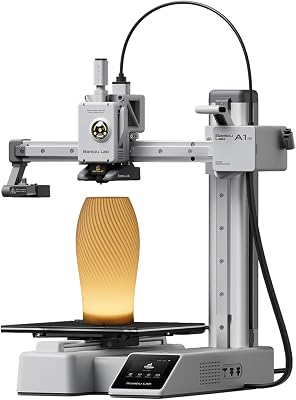
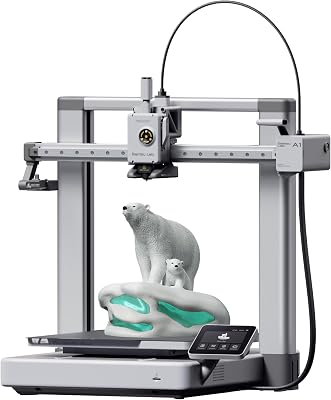
Bambu Lab A1 3D Printer, Ready-to-Use FDM 3D Printer
Explore Bambu Lab A1 3D Printer, Ready-to-Use FDM 3D Printer, including its pros and cons, and how it compares with other 3d printers. It is rated 4.6 out of 5 from 733 ratings on Amazon, as of November 8, 2026.
Check Price- +Full-auto calibration reduces setup complexity for beginners
- +Includes access to MakerWorld model library
Scored across trust, quality, value, and demand.
In the ranking
The Bambu Lab A1 positions itself as an accessible entry point into 3D printing, priced in the $250–$500 range where it competes directly with other beginner-focused machines. As an FDM printer, it uses the most common printing technology—making filament sourcing straightforward and troubleshooting guides readily available online.
The product description emphasizes several features aimed at reducing setup friction: full-auto calibration addresses one of the most intimidating aspects of 3D printing for newcomers, while active flow rate compensation handles real-time print quality adjustments. These automation layers are particularly relevant for beginners who might otherwise struggle with manual tuning between prints.
The integrated MakerWorld ecosystem suggests an all-in-one approach, bundling both hardware and a model library to eliminate the common beginner question: "What should I print first?" This integration can shorten the path from unboxing to first successful print.
The noise specification (≤48 dB) matters for home settings, where garage and bedroom 3D printing is common. At this noise level, the printer operates quieter than typical desktop equipment.
For this price band, the A1's emphasis on automation and ecosystem integration reflects current market expectations for beginner machines. Whether these specific features justify the investment depends on individual priorities—some beginners may value hand-on learning over convenience, while others prefer the reduced complexity.