Best 3d Printers for Beginners: 5 Top Picks

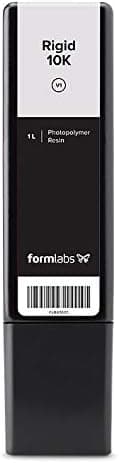
  1. Form 2 & 3 Rigid 10K 1L

    Form 2 & 3 Rigid 10K 1L

    Formlabs · Rating pending

    $1,051.74Buy on Amazon
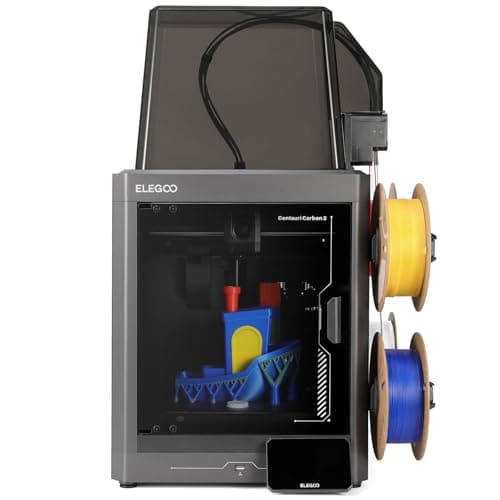
  2. ELEGOO Centauri Carbon 2 Combo 3D Printer, Multicolor

    ELEGOO Centauri Carbon 2 Combo 3D Printer

    ELEGOO · Rating pending

    $434.99Buy on Amazon
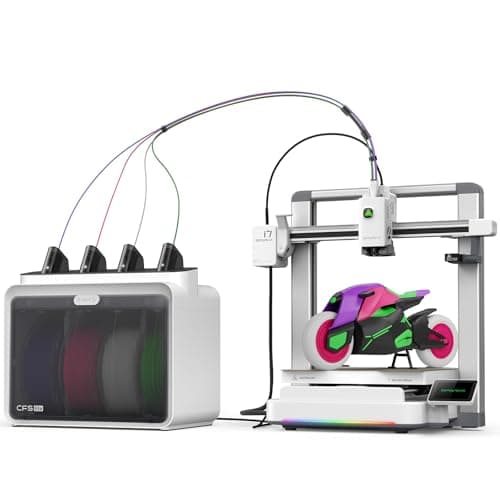
  3. Creality SPARKX i7

    Creality SPARKX i7

    Creality · Rating pending

    $349.00Buy on Amazon
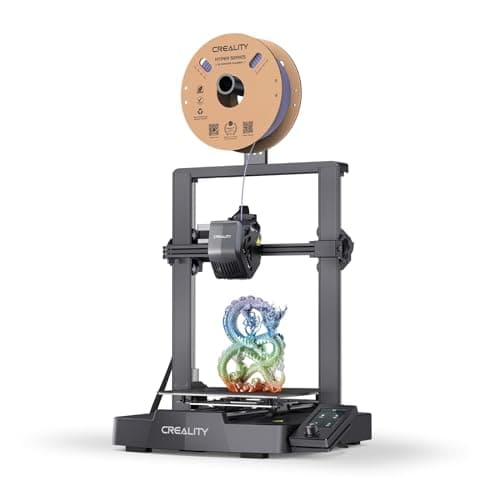
  4. Official Creality Ender-3 V3 SE 3D Printers Max 250mm/s

    Official Creality Ender-3 V3 SE 3D Printers Max 250mm/s

    Creality · Rating pending

    Buy on Amazon
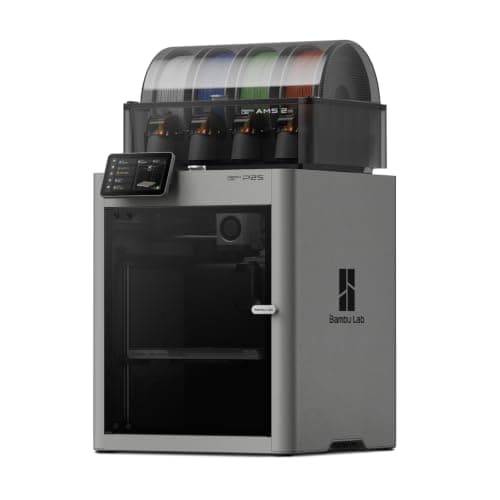
  5. Bambu Lab P2S Combo, P2S 3D Printer & AMS 2 Pro

    Bambu Lab P2S Combo

    Bambu Lab · Rating pending

    $779.00Buy on Amazon

The picks in detail

Five beginner-friendly 3D printers listed in a fixed order, from entry-level auto-leveling models to multi-color systems and professional resin printers.

Form 2 & 3 Rigid 10K 1L

Pick 1

Form 2 & 3 Rigid 10K 1L

Formlabs · Rating pending

$1,051.74Buy on Amazon

Why it ranked

This engineering-grade resin provides high stiffness for functional prototypes and tooling, serving beginners who enter 3D printing through SLA rather than filament systems.

ELEGOO Centauri Carbon 2 Combo 3D Printer, Multicolor

Pick 2

ELEGOO Centauri Carbon 2 Combo 3D Printer, Multicolor

ELEGOO · Rating pending

Why it ranked

The 500mm/s CoreXY motion and 350°C nozzle expand material and speed capabilities beyond entry-level printers, suited to beginners with near-term engineering-grade projects.

Strengths

  • 1-click auto leveling simplifies setup
  • Multicolor printing capability
Creality SPARKX i7

Pick 3

Creality SPARKX i7

Creality · Rating pending

Why it ranked

The 95% pre-assembled design and included multi-color system lower the entry barrier for beginners who want immediate access to multi-material printing and AI-assisted modeling.

Strengths

  • Auto-leveling bed simplifies calibration
  • Supports multi-color printing
Official Creality Ender-3 V3 SE 3D Printers Max 250mm/s

Pick 4

Official Creality Ender-3 V3 SE 3D Printers Max 250mm/s

Creality · Rating pending

Why it ranked

This printer combines auto-leveling capability with a direct extruder and dual Z-axis stability, addressing common setup and quality challenges for first-time users.

Strengths

  • Auto leveling capable
  • High maximum printing speed of 250mm/s
  • Dual Z-axis and Y-axis dual linear shafts provide stable printing
Bambu Lab P2S Combo, P2S 3D Printer & AMS 2 Pro

Pick 5

Bambu Lab P2S Combo, P2S 3D Printer & AMS 2 Pro

Bambu Lab · Rating pending

Why it ranked

The integrated AMS 2 Pro and AI error detection deliver a managed ecosystem that reduces manual tuning and failed prints, streamlining the learning curve for new users.

Strengths

  • Includes AMS 2 Pro for multi-color printing
  • High-speed CoreXY printer design
  • AI error detection

Compare all 5 picks

Fact
Form 2 & 3 Rigid 10K 1L
Pick 1Form 2 & 3 Rigid 10K 1LRating pendingBuy on Amazon
ELEGOO Centauri Carbon 2 Combo 3D Printer, Multicolor
Pick 2ELEGOO Centauri Carbon 2 Combo 3D PrinterRating pendingBuy on Amazon
Creality SPARKX i7
Pick 3Creality SPARKX i7Rating pendingBuy on Amazon
Official Creality Ender-3 V3 SE 3D Printers Max 250mm/s
Pick 4Official Creality Ender-3 V3 SE 3D Printers Max 250mm/sRating pendingBuy on Amazon
Bambu Lab P2S Combo, P2S 3D Printer & AMS 2 Pro
Pick 5Bambu Lab P2S ComboRating pendingBuy on Amazon
Price$1,051.74$434.99$349.00—$779.00
Standout strength—1-click auto leveling simplifies setupAuto-leveling bed simplifies calibrationAuto leveling capableIncludes AMS 2 Pro for multi-color printing
//The Method

Every rank is a composite, not an opinion.

The same five dimensions, the same weights, applied to every product in the category. The composite is recomputed whenever the data moves — and the rank order updates with it.

  1. 01
    Demand

    Not measured on any pick on this page — 5 pick(s) here carry no evidence for it.
  2. 02
    Trust

    Not measured on any pick on this page — 5 pick(s) here carry no evidence for it.
  3. 03
    Value

    Not measured on any pick on this page — 5 pick(s) here carry no evidence for it.
  4. 04
    Quality

    Not measured on any pick on this page — 5 pick(s) here carry no evidence for it.

  5. 05
    Durability

    Not measured on any pick on this page — 5 pick(s) here carry no evidence for it.

3D Printers FAQ

  1. How do I choose between filament and resin printing as a beginner?
    Filament printers handle larger parts and iterate quickly, making them practical for functional prototypes, household items, and mechanical assemblies. Resin printers excel at fine surface detail and small intricate models, suited to miniatures, jewelry, and dental or engineering applications where dimensional accuracy matters most. Filament systems generally cost less to run per print and require simpler post-processing, while resin demands washing and UV curing. Choose filament for versatility and learning breadth, or resin if your projects center on high-resolution detail and you are prepared for additional cleanup steps.
  2. Is it worth spending more for multi-color capability?
    Multi-color systems eliminate manual filament swaps and enable prints that blend materials or colors in a single job, useful for visual prototypes, artistic projects, and models with support interfaces that peel away cleanly. They add complexity to slicing workflows and increase upfront cost. If your projects benefit from color coding, multi-material supports, or aesthetic variety, the time savings and design flexibility justify the investment. For users focused on single-material functional parts or learning core printing skills first, a single-extruder system keeps cost and troubleshooting simpler.
  3. What does auto-leveling actually do for beginners?
    Auto-leveling probes the bed surface and compensates for uneven areas by adjusting the Z-height during the first layer, ensuring consistent nozzle distance across the entire build plate. This removes the manual tramming process, where users adjust bed screws while sliding paper under the nozzle. For beginners, it reduces setup time and eliminates a common source of first-layer adhesion failures. Auto-leveling does not guarantee perfect prints, but it narrows the variables you need to troubleshoot when diagnosing issues.
  4. Can CoreXY printers really print faster without quality loss?
    CoreXY kinematics keep the print head lighter by mounting motors on the frame, reducing the mass that accelerates during direction changes. This allows higher speeds and sharper corners with less ringing and ghosting compared to bed-slinger designs that move the entire bed. Quality at high speed still depends on proper slicer tuning, including acceleration limits, jerk settings, and retraction calibration. CoreXY enables faster prints when configured correctly, but beginners must invest time in learning those tuning steps to realize the speed advantage without introducing new artifacts.
  5. How long does it take to learn basic 3D printing?
    Most beginners produce successful prints within a few days of setup, starting with pre-sliced models and manufacturer-provided profiles. Learning to troubleshoot adhesion, stringing, and layer shifts typically takes a few weeks of regular use. Designing custom models in CAD or advanced slicer tuning extends the learning curve to several months. The initial skill floor is low if you follow included guides and use proven filament profiles, but mastering material swaps, print-in-place mechanisms, and multi-part assemblies requires sustained practice and iteration.
  6. Do I need special ventilation for engineering filaments?
    Engineering plastics like nylon, polycarbonate, and ABS emit fumes during printing that can irritate airways and contain volatile organic compounds. Printing in a well-ventilated space or using an enclosure with active filtration reduces exposure. PLA and PETG emit fewer fumes and are generally safe in typical indoor spaces with basic airflow. If you plan to print high-temperature materials regularly, invest in proper ventilation before scaling up usage.
  7. What is the real cost of resin printing beyond the printer?
    Resin printing requires isopropyl alcohol for washing prints, UV curing equipment or sunlight exposure for final hardening, nitrile gloves, and proper disposal of uncured resin waste. A liter of standard resin costs more per volume than filament, though resin prints use less material due to hollow or lattice infill. Plan for ongoing consumable costs and dedicated workspace with spill containment. The post-processing steps add time to each print but are necessary to achieve full mechanical properties and surface cure.

theRANKS may earn affiliate commissions from qualifying purchases. How that works