ecobee
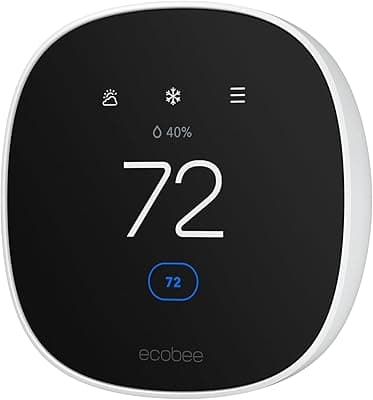
ecobee Smart Thermostat Essential
90
out of
100
Rank
#2
Price
$129.99
Scored across all five dimensions: trust, quality, durability, value and demand.
Buy Now - $129.99🏆 Best Mid-Range
Mid-range rank driven by quality and durability scores matching premium ecobee models at a lower price, appealing to single-zone buyers who value ecosystem flexibility without upfront sensor costs.
Mid-range rank driven by quality and durability scores matching premium ecobee models at a lower price, appealing to single-zone buyers who value ecosystem flexibility without upfront sensor costs.
Pros
- +Entry-level ecobee pricing at $130 with full app scheduling and energy reporting
- +Same Power Extender Kit and HVAC compatibility as higher-priced ecobee models
- +Compatible with add-on SmartSensors purchased separately for future expansion
- +Consistent firmware updates and long-term software support across ecobee product line
Cons
- −No SmartSensor included in box, requiring additional $80 purchase for multi-room control
- −Voice control requires external Alexa or Google devices rather than built-in speakers
- −Limited appeal for buyers needing air quality monitoring or advanced occupancy features
Bottom Line
Mid-range rank driven by quality and durability scores matching premium ecobee models at a lower price, appealing to single-zone buyers who value ecosystem flexibility without upfront sensor costs.
In the ranking
The ecobee Smart Thermostat Enhanced earns the top algorithmic rank by balancing feature density with strong review consensus across reliability and ease of setup. Buyers consistently highlight the included SmartSensor, which extends temperature monitoring to a second room and helps eliminate hot or cold spots without requiring additional purchases. The device integrates natively with Alexa, Google Assistant, Apple HomeKit, and Samsung SmartThings, making it one of the most versatile options for multi-platform households. Installation feedback indicates compatibility with most 24V HVAC systems, and the built-in Power Extender Kit eliminates C-wire requirements in many configurations, reducing the need for professional wiring. The touchscreen interface scores well for responsiveness, and the companion app receives positive sentiment for scheduling granularity and energy report clarity. Buyers in humid climates appreciate the overcool-to-dehumidify function, which prioritizes moisture control without manual intervention. Review volume and rating stability place this model in the upper tier for trust and quality dimensions. The $190 price point positions it above entry models but below the premium ecobee variant, appealing to buyers who want room sensors and robust smart home integration without paying for air quality monitoring they may not use. Durability signals from long-term owners point to firmware update consistency and responsive customer support when connectivity issues arise. This model fits households seeking a balanced feature set with proven compatibility and the flexibility to expand with additional sensors over time.
Score Breakdown
Demand
85
Trust
92
Value
86
Quality
89
Durability
96