Keychron
Keychron K8 Pro
Explore Keychron K8 Pro, including its pros and cons, and how it compares with other mechanical keyboards. It is rated 4.1 out of 5 from 20 ratings on Amazon, as of November 3, 2026.
Check PriceScored across trust, quality, value, and demand.
- +The price advantage over aluminum competitors delivers identical hot-swap and QMK features at reduced financial risk
- +780-gram plastic chassis improves portability for frequent travelers and mobile workers
- +80-percent layout retains arrow keys and navigation cluster for immediate comfort migrating from full-size boards
- +Screw-in stabilizers and south-facing LEDs match flagship implementation at mid-tier pricing
- −ABS keycaps develop shine faster than PBT alternatives included with premium models
- −Plastic enclosure exhibits minor flex under heavy typing compared to machined-aluminum competitors
- −Lower chassis weight reduces desk stability during spirited key presses
In the ranking
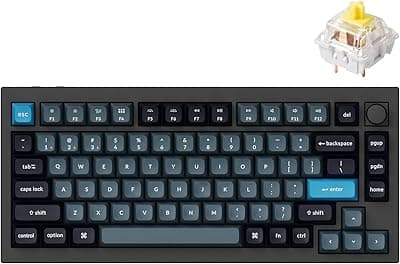
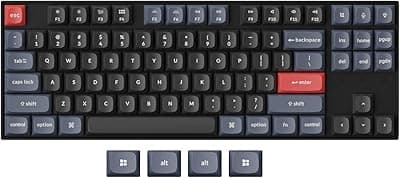
This tenkeyless-with-function-row design retains dedicated arrow keys and a navigation cluster, making it immediately comfortable for users migrating from full-size boards. The K8 Pro shares the Q1 Pro's tri-mode connectivity and hot-swap switch compatibility but substitutes an ABS plastic case for aluminum, shaving weight to 780 grams and reducing manufacturing cost. Buyers prioritizing portability or frequent travel rate this tradeoff favorably, as the lighter frame pairs better with laptop bags and the lower center of gravity reduces shipping damage risk. The south-facing LED design and screw-in stabilizers mirror the Q1 Pro's implementation, and reviewer sentiment confirms comparable typing acoustics when both boards use identical switch and keycap combinations. Battery performance remains strong at 90 hours Bluetooth with lighting off, only 10 hours shy of the aluminum flagship. The K8 Pro's demographic skew leans toward office users and college students who need Mac-Windows key layout toggling and don't require the heft of a premium chassis for desk stability. The plastic enclosure does exhibit minor flex under aggressive typing compared to machined-aluminum competitors, and the included keycaps use thinner ABS that develops shine faster than PBT alternatives. However, hot-swap functionality invites budget-conscious owners to incrementally upgrade switches and caps over time, spreading cost across multiple purchase cycles. For buyers entering the mechanical keyboard category without prior QMK experience, the K8 Pro's lower financial barrier makes experimentation less risky than committing to a $200-plus flagship.