REDTIGER
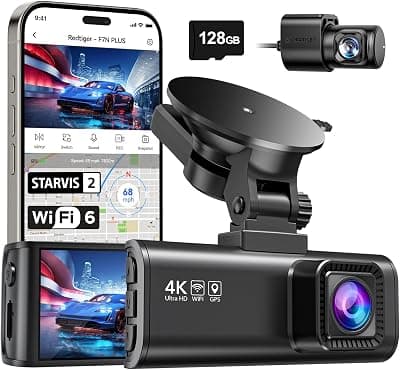
REDTIGER 4K Dash Cam Front Rear F7NP
Explore REDTIGER 4K Dash Cam Front Rear F7NP, including its pros and cons, and how it compares with other dash cams. It is rated 4.1 out of 5 from 26,275 ratings on Amazon, as of November 4, 2026.
Check PriceBudget rank earned through lowest per-feature cost while maintaining true front 4K resolution and dual-camera coverage for basic insurance documentation.
- +Dual 4K front and 1080p rear coverage at single-camera mid-tier pricing
- +Built-in GPS and WiFi eliminate need for add-on modules in base configuration
- +Included 32GB card and plug-and-play setup require no additional purchases for core functionality
- +Suction mount adheres reliably without adhesive commitment
- −Dynamic range compresses in mixed lighting with more night noise than Sony sensor systems
- −Capacitor reliability decreases in extreme heat after 18-24 months of continuous use
- −Rear camera detail drops beyond two car lengths following distance
In the ranking
The REDTIGER F7NP combines front 4K and rear 1080p capture with built-in GPS and WiFi at a price that competes with single-camera mid-tier models, making dual-direction coverage accessible without doubling a typical dashcam budget. The front sensor produces sharp daylight footage that captures readable plates and road signs, though dynamic range compresses in mixed lighting and night detail suffers more noise than systems using Sony sensors. The 3-inch display provides adequate preview during installation, and the suction mount adheres reliably to most windshields without requiring adhesive commitment. Loop recording operates smoothly with automatic file segmentation, and the G-sensor locks footage during impacts to prevent overwrite. Parking mode activates through hardwire kits sold separately, a common limitation at this price tier. The WiFi connection maintains reliability for clip downloads, though transfer speeds lag dual-band systems when moving large 4K files. The rear camera produces adequate coverage for basic rear-end documentation, resolving plates at close following distances but losing detail beyond two car lengths. This system fits drivers who need dual-camera insurance protection on tight budgets or those equipping multiple family vehicles without per-unit premium pricing. The trade-offs concentrate in sensor quality and long-term heat resilience rather than missing core features. The price positions this as the logical floor for buyers unwilling to drop below true 4K front resolution or sacrifice rear coverage entirely. The system works for suburban and rural drivers with predictable routes and moderate mileage who need basic incident documentation more than courtroom-grade low-light forensics.