Best Baby Monitors: 5 Picks Scored & Ranked

Ranked by our composite score across five dimensions

The picks in detail

5 baby monitors ranked algorithmically across demand, trust, value, quality, and durability. From budget-friendly to feature-rich picks.

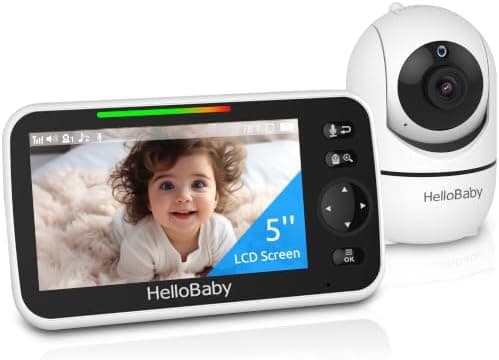
HelloBaby HB6550Best Overall

No. 1 · Top pick

HelloBaby HB6550

HelloBaby

Why it ranked

Scored highest overall by delivering essential video monitoring features with exceptional range and battery life, providing 70% cost savings versus premium options while maintaining strong reliability scores across demand and value dimensions.

Strengths

  • 720p video with excellent night vision clarity maintains detail across standard nursery distances
  • 900-foot range with stable transmission through typical home construction without WiFi dependency
  • VOX mode extends battery to 8-10 hours for overnight monitoring without recharging
  • Expandable to four cameras with no performance degradation for multi-room or multi-child coverage

Trade-offs

  • 2x digital zoom is adequate but less flexible than optical zoom in premium monitors
  • Fixed lens position requires careful initial camera placement for optimal room coverage
  • Screen resolution sufficient for monitoring but not as sharp as 1080p displays in higher-priced units
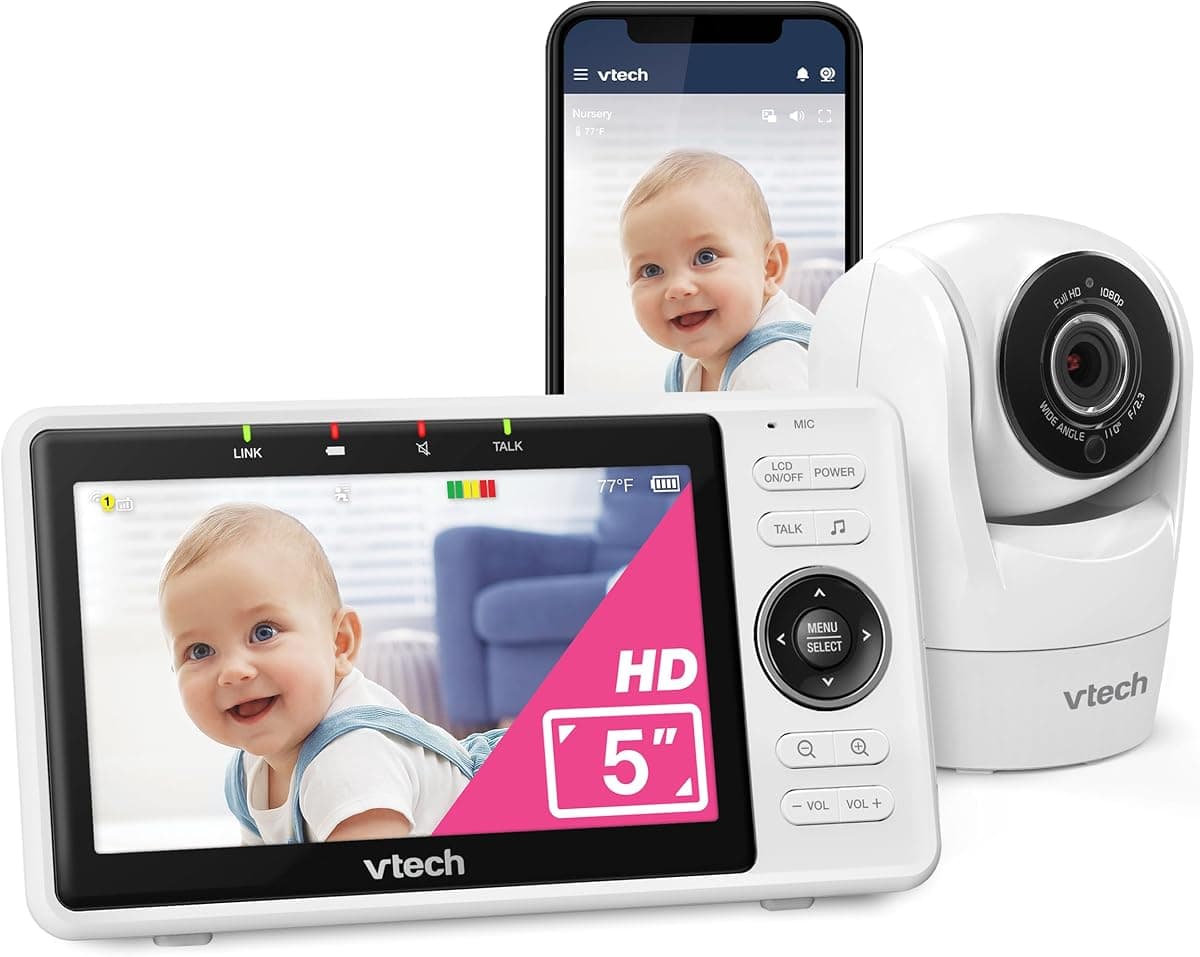
VTech VM901 Smart WiFi Baby Monitor

No. 2

VTech VM901 Smart WiFi Baby Monitor

VTech

Why it ranked

Achieved mid-range position by bridging traditional and smart monitoring with dual-mode reliability and 1080p video, scoring strongly in trust dimension through verified buyer satisfaction with hybrid functionality that adapts to different usage scenarios.

Strengths

  • Hybrid operation works as standalone monitor or WiFi device, maintaining function if internet drops
  • 1080p camera resolution provides significantly more detail than 720p competitors at similar pricing
  • Local video recording to microSD eliminates cloud subscription requirements for saving clips
  • 2.8-inch parent unit provides immediate access without unlocking phones during nighttime routines

Trade-offs

  • App functionality requires stable WiFi for remote viewing, limiting usefulness during network outages
  • Parent unit screen is smaller than dedicated video monitors, which may challenge visibility from distances
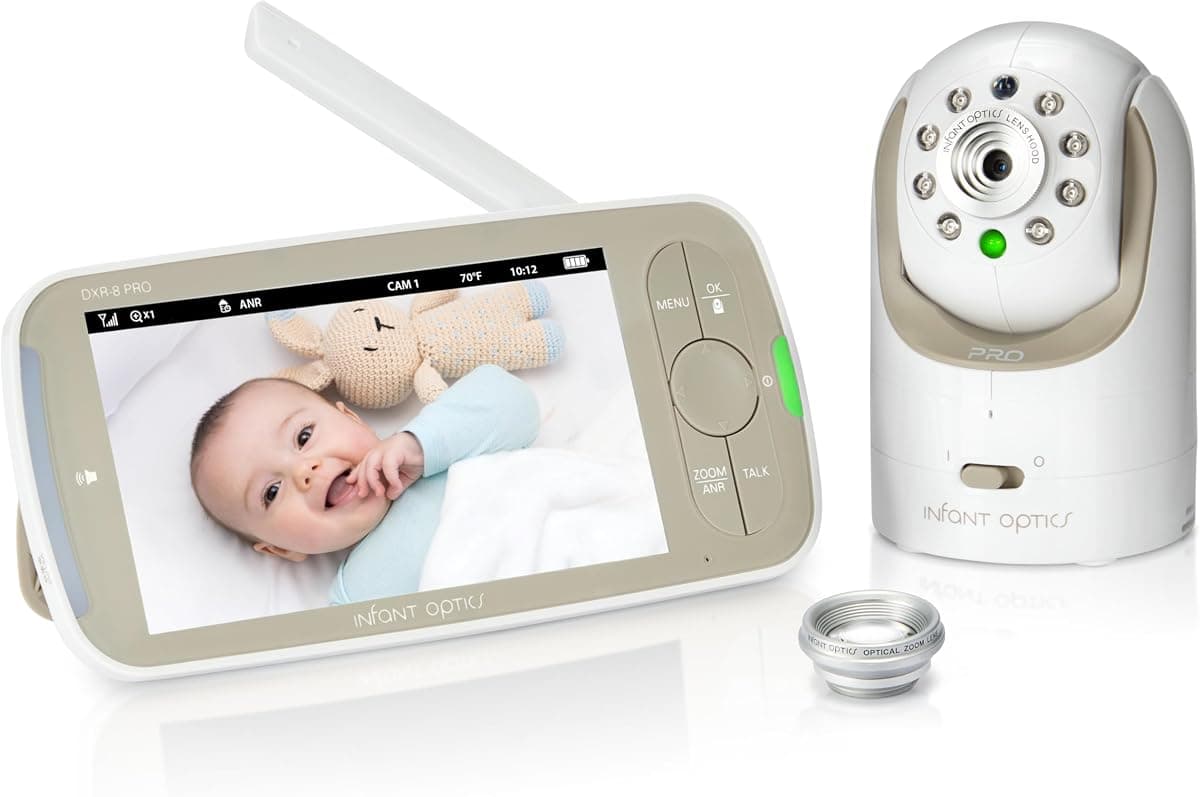
Infant Optics DXR-8 PRO

No. 3

Infant Optics DXR-8 PRO

Infant Optics

Why it ranked

Earned its place through modular lens technology and superior build quality that justify the investment for families prioritizing longevity and adaptability, scoring exceptionally high in durability and quality dimensions with verified multi-year reliability.

Strengths

  • Interchangeable lens system adapts to different room sizes and monitoring distances without replacing hardware
  • Commercial-grade construction with impact-resistant housing sustains multi-year operation without failures
  • Enhanced 5-inch display and improved processing deliver noticeably sharper images than predecessor models
  • Audio quality captures subtle breathing sounds without static or interference common in budget units

Trade-offs

  • The price point is 3x the cost of comparable fixed-lens monitors with similar core features
  • Additional lenses cost $20-30 each and must be purchased separately for specialized coverage needs
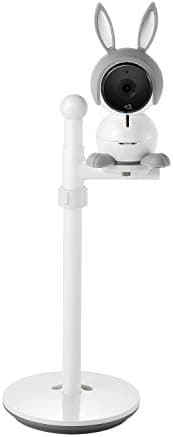
Arlo Baby Monitor

No. 4

Arlo Baby Monitor

Arlo

Why it ranked

Ranked as budget option despite its price due to premium smart features and air quality monitoring that appeal to tech-focused parents, scoring high in quality dimension but lower in value when compared to hybrid monitors with similar pricing and more flexible operation modes.

Strengths

  • Color night vision maintains natural tones in low light for better visual assessment than infrared-only cameras
  • Integrated air quality monitoring for VOCs, temperature, and humidity eliminates need for separate devices
  • 130-degree viewing angle captures entire room corners without requiring pan or tilt controls
  • Smart home integration with HomeKit, Alexa, and Google enables voice control and automation routines

Trade-offs

  • Requires constant WiFi connectivity with no local fallback option if internet service fails
  • Advanced features like activity zones require optional Arlo Smart subscription beyond base hardware cost
  • The price positions it above traditional monitors while delivering fewer core monitoring features than dual-mode competitors
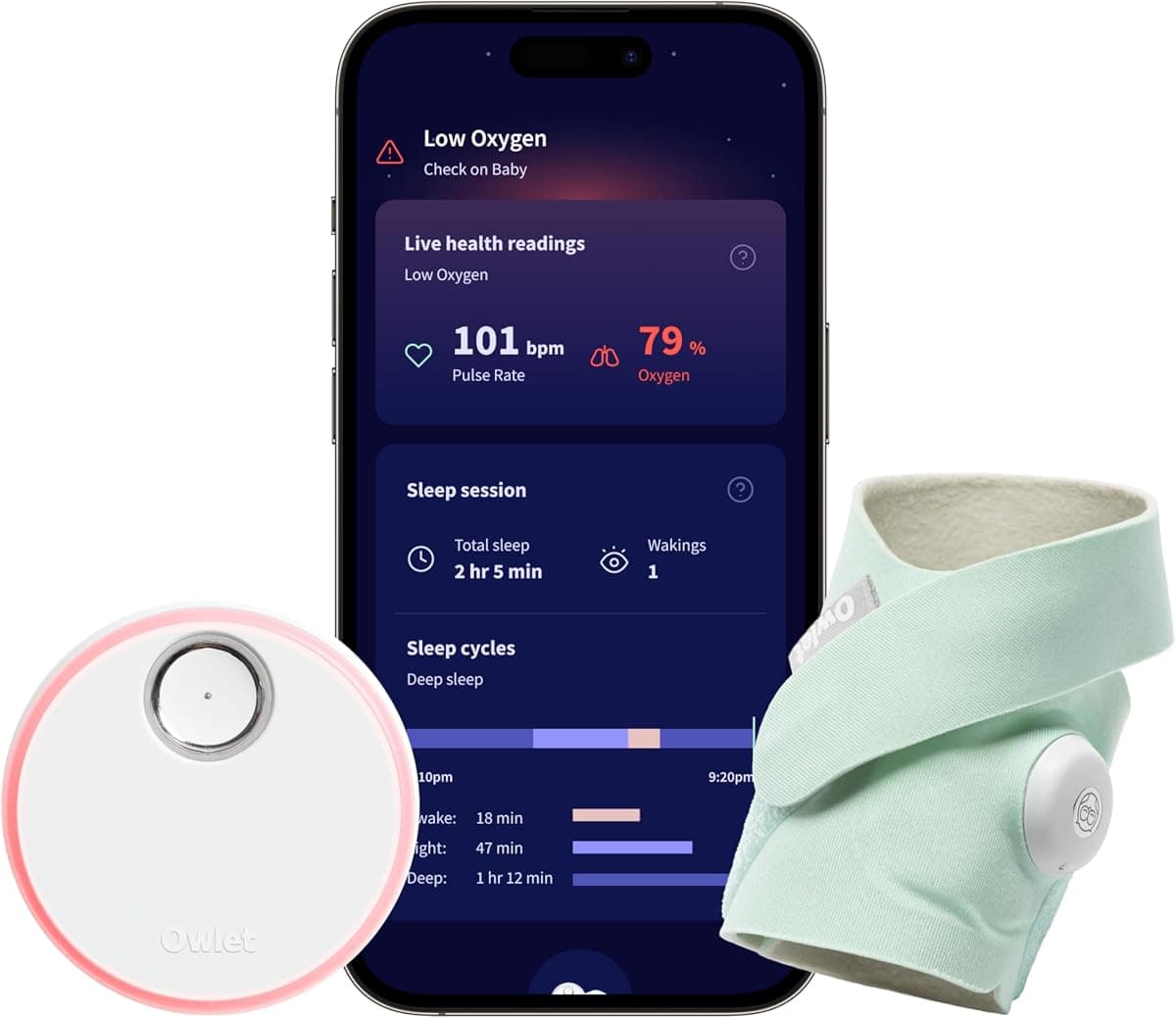
Owlet Dream Sock

No. 5

Owlet Dream Sock

Owlet

Why it ranked

Scored across trust, quality, durability, value, and demand.

Strengths

  • Pulse oximetry sensors track heart rate and oxygen levels with accuracy comparable to medical-grade devices
  • Historical data logging creates trend graphs for pediatrician discussions about infant health patterns
  • Three included sock sizes accommodate infants from birth to 18 months without additional purchases
  • Base station provides ambient status updates through color changes without requiring constant phone checking

Trade-offs

  • The price is 4x the cost of video monitors and targets specialized health-monitoring rather than general surveillance
  • Alert sensitivity can trigger false alarms during movement or sock displacement, which some parents find increases anxiety
  • Video monitoring requires separate Owlet Cam purchase, limiting value for families wanting combined capabilities

Compare all 5 picks

Fact
HelloBaby HB6550
No. 1HelloBaby HB6550Best OverallBuy on Amazon
VTech VM901 Smart WiFi Baby Monitor
No. 2VTech VM901 Smart WiFi Baby MonitorBuy on Amazon
Infant Optics DXR-8 PRO
No. 3Infant Optics DXR-8 PROBuy on Amazon
Arlo Baby Monitor
No. 4Arlo Baby MonitorBuy on Amazon
Owlet Dream Sock
No. 5Owlet Dream SockBuy on Amazon
Price$59.99$116.32$199.99—$299.00
Standout strength720p video with excellent night vision clarity maintains detail across standard nursery distancesHybrid operation works as standalone monitor or WiFi device, maintaining function if internet dropsInterchangeable lens system adapts to different room sizes and monitoring distances without replacing hardwareColor night vision maintains natural tones in low light for better visual assessment than infrared-only camerasPulse oximetry sensors track heart rate and oxygen levels with accuracy comparable to medical-grade devices
Main trade-off2x digital zoom is adequate but less flexible than optical zoom in premium monitorsApp functionality requires stable WiFi for remote viewing, limiting usefulness during network outagesThe price point is 3x the cost of comparable fixed-lens monitors with similar core featuresRequires constant WiFi connectivity with no local fallback option if internet service failsThe price is 4x the cost of video monitors and targets specialized health-monitoring rather than general surveillance
//The Method

Every rank is a composite, not an opinion.

The same five dimensions, the same weights, applied to every product in the category. The composite is recomputed whenever the data moves — and the rank order updates with it.

  1. 01
    Demand

    The retailer sales rank; review velocity over the last three months. Measured on 5 of 5 picks on this page.

  2. 02
    Trust

    The 1-5 rating distribution; negative-review share; polarisation (the J-curve). Measured on 5 of 5 picks on this page.

  3. 03
    Value

    Price against the category median; measured quality per pound spent. Measured on 4 of 5 picks on this page.

  4. 04
    Quality

    The 1-5 rating distribution; review text, including the share of it that mentions a defect. Measured on 5 of 5 picks on this page.

  5. 05
    Durability

    Reviews aged three months or more, and the share of them reporting a failure. Measured on 5 of 5 picks on this page.

Baby Monitors FAQ

  1. How do I choose between WiFi and non-WiFi baby monitors?
    WiFi monitors enable remote viewing from anywhere through smartphone apps and often include features like cloud recording or smart home integration, making them ideal for parents who travel frequently or want to check in during work hours. Non-WiFi monitors use dedicated parent units with closed-circuit transmission that works independently of internet connectivity, providing reliable operation during outages and eliminating cloud security concerns. Choose WiFi if remote access and app features justify the dependency on stable internet, or select non-WiFi if you prioritize privacy, reliability during network issues, and simpler operation without managing app accounts or updates.
  2. Is it worth spending $200+ for a premium baby monitor?
    Premium monitors at $200-300 typically justify higher costs through features like interchangeable lenses, 1080p or higher resolution, extended range beyond 900 feet, or specialized capabilities like physiological tracking. These investments make sense for families with larger homes where standard 700-foot range proves insufficient, those wanting lens flexibility as monitoring needs change, or parents seeking health data beyond basic video surveillance. Budget monitors under $100 deliver reliable core functionality for typical nursery setups within standard-sized homes, so premium pricing provides meaningful value only when specific advanced features align with your monitoring requirements and home layout.
  3. What video resolution do I actually need for baby monitoring?
    720p resolution provides sufficient detail for monitoring breathing patterns, facial expressions, and movement from typical nursery distances of 10-15 feet, which satisfies most families' core monitoring needs. 1080p offers noticeably sharper images that help parents assess comfort levels and identify small objects in the crib more clearly, particularly valuable for larger rooms or when using digital zoom features. The difference matters most in low-light conditions where higher resolution maintains better detail clarity, but 720p monitors with quality infrared arrays often outperform poorly-implemented 1080p systems, so overall camera quality and night vision performance carry more practical weight than resolution specs alone.
  4. Do baby monitors with health tracking actually prevent SIDS?
    Baby monitors that track heart rate and oxygen levels, like the Owlet Dream Sock, are marketed as wellness devices rather than medical equipment and cannot prevent SIDS or replace safe sleep practices recommended by pediatricians. These monitors provide real-time physiological data that may alert parents to breathing irregularities or changes in vital signs, offering reassurance for families with preterm infants or specific health concerns. However, they have not been proven to reduce SIDS rates, and the American Academy of Pediatrics emphasizes that safe sleep environments with firm mattresses, room sharing without bed sharing, and back sleeping remain the evidence-based approaches for reducing SIDS risk, with monitoring devices serving as supplementary tools rather than prevention methods.
  5. How important is two-way audio quality in baby monitors?
    Two-way audio quality directly impacts your ability to soothe infants from another room or communicate clearly with partners during nighttime routines, making it a practical feature for reducing unnecessary trips to the nursery. Monitors with clear, echo-free audio enable parents to use voice reassurance effectively, while systems with static, delay, or feedback often frustrate users who find the communication feature unusable. The value increases significantly once children reach toddler age and can respond to verbal instructions, turning the monitor into a remote communication tool beyond infant surveillance, so prioritizing good audio quality provides long-term utility that extends the monitor's useful lifespan.
  6. What battery life should I expect from the parent unit?
    Most video monitor parent units provide 6-8 hours of continuous screen-on operation or 10-12 hours in VOX mode where the display activates only when sound is detected, which suits typical overnight monitoring without mid-sleep recharging. Battery capacity degrades over 12-18 months of daily charge cycles, so monitors rated for 10+ hours when new often drop to 6-8 hours after a year of use. Parents who want all-night monitoring without plugging in should target monitors rated for 12+ hours in power-saving mode and expect to replace rechargeable batteries or upgrade units after 18-24 months of intensive daily use, with lithium-ion batteries generally maintaining capacity longer than older nickel-based chemistries.
  7. Can I use multiple cameras with one parent unit for different rooms?
    Most video monitors support connecting 2-4 cameras to a single parent unit, with the display cycling between camera views manually or automatically at set intervals. This expandability works well for monitoring multiple children in separate rooms or covering different areas of larger nurseries, though image quality and range may degrade slightly as more cameras connect to the system. Cameras typically need to be purchased from the same manufacturer to ensure compatibility, with additional units costing $40-80 depending on the model, so budget for expansion when selecting a monitor if you anticipate needing multi-room coverage within the next 1-2 years.

theRANKS may earn affiliate commissions from qualifying purchases. How that works