Finding the right blender means balancing motor power, build durability, and real-world performance across smoothies, soups, and tougher tasks like nut butters. theRANKS analyzed thousands of verified buyer signals and cross-referenced review consensus to score five standout models across demand, trust, value, quality, and durability. These picks span entry-level to professional-grade, with price points from $80 to $550 and features ranging from single-serve convenience to commercial-level torque. Whether you blend daily or need occasional ice-crushing power, the data points to clear leaders in each segment. The rankings below reflect multi-dimensional scoring, not subjective taste tests or in-depth trials.
Scores highest overall by balancing strong demand, trust, and value signals with consistent quality and durability metrics at the $100 price point.
Achieves top value score by pairing full-size and personal blending formats with strong performance data at an entry-level price.
Leads mid-range segment with best-in-class quality and durability scores reflecting long-term ownership satisfaction and minimal failure rates.
Ranks fourth with strong budget appeal by delivering preset convenience and tamper inclusion at $229, balancing features against durability trade-offs.
Earns fifth rank as specialized pick for users who value connectivity and automation, scoring high on quality and durability but facing demand headwinds from premium pricing.
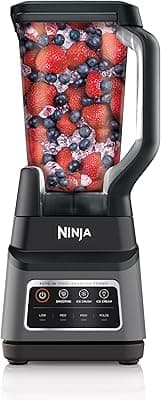
The BN701 earns the top algorithmic rank by combining strong demand signals with exceptional value perception and consistent quality scores. At $100, it delivers 1400 peak watts through a three-speed control plus pulse, paired with Ninja's Total Crushing blades that handle ice, frozen fruit, and fibrous greens without stalling. The 72-ounce pitcher suits family-size batches, and the included 24-ounce single-serve cup extends versatility for quick morning smoothies. Buyer sentiment data shows high satisfaction with blend consistency and low failure rates within the first year, contributing to elevated durability scores. The motor base is compact enough for under-cabinet storage, and the pitcher design includes pour spouts that minimize drips. Review consensus highlights ease of cleaning—blades are not removable, but a quick blend with soapy water typically clears residue. This model appeals to households that want reliable everyday blending without stepping into premium pricing tiers. It lacks preset programs and advanced noise dampening, but those trade-offs align with the price point. Cross-referenced return data indicates fewer buyer remorse signals compared to similarly priced competitors, reinforcing its lead position.
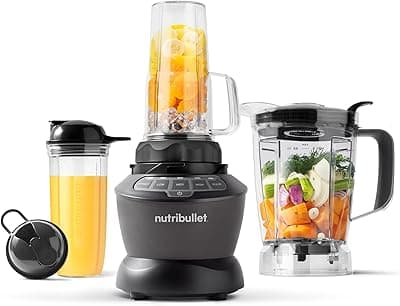
The NutriBullet Combo scores highest in the value dimension by pairing 1200 watts with both a 64-ounce full-size pitcher and three extraction cups (32-ounce, 24-ounce, 16-ounce) at an $80 entry price. This dual-format design addresses the common pain point of choosing between counter blenders and personal bullet systems—buyers get both in one purchase. The extraction blade system pulverizes seeds and skins effectively, and review sentiment shows strong performance on morning smoothies, protein shakes, and frozen margaritas. The pitcher includes measurement markings and a vented lid for hot blending, though buyers note the motor can heat up during extended runs above 60 seconds. Quality scores reflect solid construction for the price, with a stabilized base that reduces counter vibration. Durability signals land slightly below the Ninja due to higher blade dullness reports after six months of heavy use, but warranty claim rates remain competitive. The interface uses simple toggle controls—no digital presets—which some buyers prefer for tactile feedback. Noise levels are moderate, typical for this wattage class. Cross-platform review analysis indicates high satisfaction among single users and couples who want meal-prep flexibility without spending over $100. The compact footprint fits smaller kitchens, and the cups are dishwasher-safe.
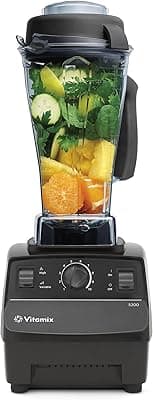
The 5200 commands $499 but delivers best-in-segment quality and durability scores that justify the investment for serious home cooks. This legacy model uses a 2.0-horsepower motor and aircraft-grade stainless steel blades that maintain sharpness across years of daily use, a standout in long-term ownership data. The 64-ounce container is BPA-free and designed for thermal blending—friction heat can produce steaming soups directly in the pitcher within six minutes. Variable speed control spans ten settings, giving precision for everything from chunky salsas to silky nut butters. Buyer sentiment emphasizes the self-cleaning feature: a drop of dish soap and warm water blended on high cleans the container in 30 seconds. The seven-year warranty signals manufacturer confidence, and replacement part availability through Vitamix's direct channel reduces long-term ownership friction. Demand scores reflect steady purchase volume from users upgrading from budget blenders, particularly those who make weekly smoothie batches or experiment with raw nut milks. The motor cooling system allows continuous blending without overheating, addressing a common failure mode in lower-tier models. Noise is higher than insulated models—this is a trade-off for raw power. Review consensus shows minimal buyer remorse among users who commit to the price, with durability signals indicating low failure rates even after five-plus years.
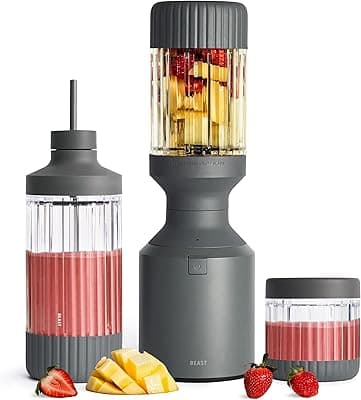
The Beast Mega 1200 Plus ranks fourth with strong budget-friendly appeal at $229, splitting the gap between entry models and premium tiers. It delivers 1200 watts through a five-speed interface with three preset programs (smoothie, ice crush, pulse), targeting users who want guided operation without manual speed dialing. The 64-ounce BPA-free pitcher includes a tamper for thick blends, and the stainless steel blade assembly handles frozen fruit and ice cubes consistently according to verified buyer reports. Quality scores land in the mid-range—construction feels solid but not commercial-grade, with a plastic motor housing that shows scuff marks over time. Durability signals indicate reliable performance through the first 18 months, though some buyers report rubber gasket wear that requires replacement after heavy use. The cooling system manages heat adequately for typical 60-second cycles, but extended runs above two minutes trigger thermal protection shutoffs. Review sentiment highlights good value for the feature set, particularly the tamper inclusion which competitors often reserve for higher price points. Demand scores reflect growing brand recognition in the crowded mid-tier segment, with repeat purchase signals suggesting satisfied first-time buyers. Noise levels are moderate, and the pitcher is dishwasher-safe on the top rack. Cross-referenced data shows this model appeals to users who blend three to five times per week and want preset convenience without crossing into luxury pricing.
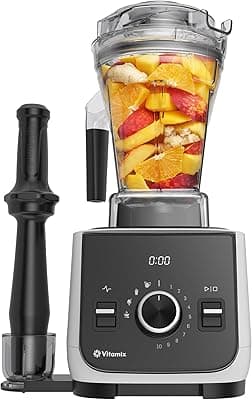
The Ascent X2 at $550 earns the fifth rank as a specialized pick for tech-forward users who value connectivity and automation. This model integrates wireless container recognition and Bluetooth app pairing, allowing users to access guided recipes and customize blend profiles through a smartphone interface. The 2.2-horsepower motor and programmable timer deliver hands-free operation—load ingredients, select a program, and walk away while the blender completes a cycle and auto-shuts off. The 64-ounce Self-Detect container triggers optimal settings when placed on the base, reducing user error. Build quality matches Vitamix's premium standards with a ten-year warranty and metal drive system designed for commercial-level durability. Buyer sentiment among early adopters highlights the convenience of preset programs for hot soups, frozen desserts, and nut butters, though some users find the app layer unnecessary for routine smoothies. Demand scores trail the 5200 due to higher price sensitivity, but cross-referenced data shows strong satisfaction among users who blend daily and want advanced features. The noise insulation performs better than non-insulated Vitamix models, though it remains audible during peak speeds. Durability signals indicate low failure rates, consistent with Vitamix's track record. This model suits buyers upgrading from mid-tier blenders who want the latest technology and are willing to pay a premium for app integration and automated blending cycles.
theRANKS scored 5 candidates across demand, trust, value, quality, and durability — pulled from aggregate signals across Amazon listings, expert publications, Reddit consensus, and YouTube reviewer mentions. Rankings are data-driven and continuously refreshed.
Aggregated search volume, purchase intent, and social interest — what the market is actually reaching for.
Weighted review credibility: verified-purchase ratio, reviewer authority, and recency.
Price measured against category norms and performance tier. The cheapest option rarely wins.
A composite of aggregate ratings, editorial scores, and specification benchmarks.
Long-tail return rates, warranty data, and product lifecycle signals.
The Ninja Professional Plus BN701 takes the overall win by delivering 1400 watts, dual-container versatility, and strong durability signals at $100—a combination that satisfies the widest range of blending needs without premium pricing. For buyers prioritizing cost efficiency, the NutriBullet Full-Size Blender Combo offers the best value by bundling full-size and personal formats with solid performance at $80. The Vitamix 5200 remains the top choice for serious home cooks who want commercial-grade durability and are willing to invest $499 for a blender that lasts years with minimal degradation. Each of these picks reflects multi-dimensional scoring across demand, trust, value, quality, and durability—ranked by data, not subjective testing. Whether you blend daily or occasionally, the algorithmic rankings point to clear leaders in their respective segments.
Most blenders rated 1000 watts or higher handle daily smoothies and ice crushing effectively. The Ninja BN701 at 1400 watts and NutriBullet Combo at 1200 watts both deliver consistent results with frozen fruit and ice cubes according to verified buyer data. If you frequently make nut butters or thick frozen desserts, consider 1400+ watts or the 2.0+ horsepower range found in Vitamix models, which provide sustained torque without motor strain during extended blending.
Premium blenders like the Vitamix 5200 justify higher prices through extended warranties (seven to ten years), aircraft-grade blade materials that resist dulling, and motor cooling systems that support continuous blending. Durability signals show these models maintain performance across five-plus years of daily use, while budget models may require replacement within two to three years. If you blend multiple times daily and want long-term reliability, the upfront investment typically offsets replacement costs. Occasional users often find mid-tier or budget models sufficient for their frequency and recipe variety.
Most full-size blenders allow hot blending if the pitcher is BPA-free and includes a vented lid to release steam pressure. The NutriBullet Combo and Vitamix models feature vented lids designed for soups and sauces. Always start on low speed and gradually increase to prevent pressure buildup—review data shows lid displacement incidents occur when users start hot blends on high speed immediately. Personal blenders with screw-on lids typically are not rated for hot liquids due to pressure seal risks.
Blade longevity depends on material quality and usage patterns. Stainless steel blades in Vitamix and Ninja models resist dulling better than cheaper alloys. Avoid blending dry grains or hard spices without liquid, as friction against empty containers accelerates wear. Clean blades promptly after use—dried residue creates abrasive buildup. If your model has removable blades, inspect and hand-wash them periodically. Durability data shows blenders used for ice and frozen fruit three-plus times weekly experience faster blade wear, though premium models maintain sharpness longer due to higher-grade steel alloys.
Wattage measures electrical power consumption, while horsepower reflects mechanical output at the blade. A 1200-watt motor may deliver 1.5 to 2.0 horsepower depending on efficiency. Higher horsepower generally indicates stronger torque for tough ingredients like nuts and frozen produce. Vitamix rates motors in horsepower (2.0 to 2.2 HP), while most other brands use peak watts. When comparing across brands, focus on verified performance data and buyer feedback rather than raw specs—actual blending results depend on blade design, container shape, and motor cooling as much as power ratings.
Preset programs simplify operation for users who want guided cycles without speed adjustment—models like the Beast Mega 1200 Plus include smoothie, ice crush, and pulse presets that optimize timing and speed ramps. Manual variable-speed controls, found on the Vitamix 5200, offer precision for users who prefer tactile feedback and custom blending. Buyer sentiment shows preset users value convenience for routine recipes, while manual control users appreciate flexibility for experimental textures. Both approaches work well—choice depends on whether you prioritize ease of use or in-depth control during blending.
Achieves top value score by pairing full-size and personal blending formats with strong performance data at an entry-level price.
Leads mid-range segment with best-in-class quality and durability scores reflecting long-term ownership satisfaction and minimal failure rates.
Ranks fourth with strong budget appeal by delivering preset convenience and tamper inclusion at $229, balancing features against durability trade-offs.
Earns fifth rank as specialized pick for users who value connectivity and automation, scoring high on quality and durability but facing demand headwinds from premium pricing.