Best Mini Fridges for Dorm Rooms: 5 Picks Scored & Ranked
Finding the right mini fridge for your dorm room means balancing limited space, tight budgets, and enough capacity for essentials. theRANKS analyzed hundreds of compact refrigerators, scoring each across demand, trust, value, quality, and durability dimensions to identify models that deliver reliable performance in constrained student housing environments. Our algorithmic ranking weighs verified buyer sentiment, pricing data, energy-efficiency signals, and brand reputation to surface options that work in shared living spaces.
The ideal dorm fridge fits under standard lofted beds, operates quietly during study hours, and maintains consistent temperatures without spiking your utility bill. We focused on models under 4 cubic feet that balance interior capacity with external footprint, prioritizing designs with separate freezer compartments and adjustable shelving. Whether you need overnight snack storage or weekend meal prep capacity, these five picks represent the strongest combinations of space efficiency and proven reliability at accessible price points.
Our rankings below present each model in order of overall algorithmic score, with detailed breakdowns of who benefits most from each design and where trade-offs emerge.
The ranking
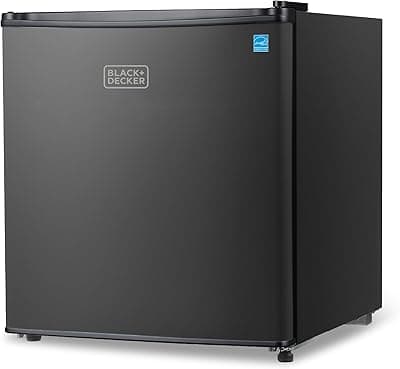
BLACK+DECKER 1.7 Cu. Ft. Compact Refrigerator BCRK17B
Scores highest overall by optimizing compact footprint against proven reliability and versatile placement options for standard dorm constraints.
Full review: BLACK+DECKER 1.7 Cu. Ft. Compact Refrigerator BCRK17B
Scores highest overall by optimizing compact footprint against proven reliability and versatile placement options for standard dorm constraints.
Pros
- Ultra-compact 1.7 cubic foot footprint fits under virtually any lofted bed configuration
- Reversible door hinge and flush-back design maximize placement flexibility in tight spaces
- Quiet operation below 40 decibels allows overnight running without sleep disruption
- Consistent temperature regulation across full interior prevents warm spots
Cons
- Limited total capacity requires more frequent restocking for high-volume food storage
- Small freezer compartment restricts frozen meal inventory to minimal backup quantities
- Single interior shelf offers less organizational flexibility than multi-shelf alternatives
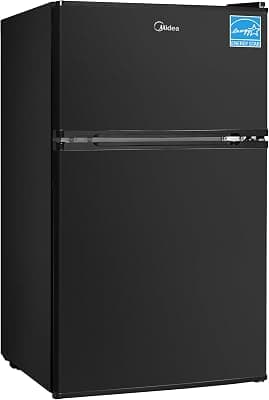
Midea WHD-113FB1 Double Door Mini Fridge
Achieves best value score by delivering double-door capacity and features at single-door pricing with strong energy efficiency ratings.
Full review: Midea WHD-113FB1 Double Door Mini Fridge
Achieves best value score by delivering double-door capacity and features at single-door pricing with strong energy efficiency ratings.
Pros
- True double-door design with independent freezer compartment provides separate temperature zones
- 3.1 cubic feet capacity accommodates full week of groceries for in-room meal planning
- Glass shelves and crisper drawer deliver durability and freshness features above price tier
- Energy Star certification confirms low operational costs despite larger capacity
Cons
- Taller profile at 33.1 inches may not fit under some lofted bed configurations
- Mechanical thermostat lacks digital precision for exact temperature targeting
- Slightly higher initial cost than single-door models with comparable cubic footage
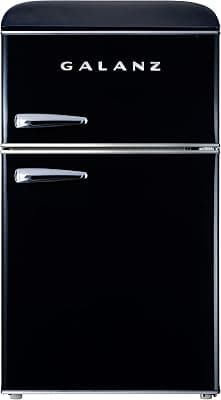
Galanz 3.1 Cu. Ft. Retro Compact Mini Fridge GLR31TBEER
Ranks mid-tier by balancing functional capacity with aesthetic value for users prioritizing visual appeal alongside performance.
Full review: Galanz 3.1 Cu. Ft. Retro Compact Mini Fridge GLR31TBEER
Ranks mid-tier by balancing functional capacity with aesthetic value for users prioritizing visual appeal alongside performance.
Pros
- Distinctive retro styling with multiple color options allows personalization of living space
- Seven-setting mechanical dial provides finer temperature control than basic thermostats
- Interior LED lighting improves visibility without generating counterproductive heat
- Adjustable glass shelves reconfigure for varied item heights and storage patterns
Cons
- Retro aesthetic carries price premium over purely functional equivalent designs
- Single-door freezer compartment offers less capacity than true double-door models
- Slightly higher energy consumption at 80 watts compared to most efficient alternatives
Whirlpool 3.1 Cu. Ft. Mini Refrigerator
Earns budget designation by delivering maximum capacity at minimum cost with acceptable reliability for first-year dormitory use.
Full review: Whirlpool 3.1 Cu. Ft. Mini Refrigerator
Earns budget designation by delivering maximum capacity at minimum cost with acceptable reliability for first-year dormitory use.
Pros
- Mainstream brand reliability at bottom of acceptable dorm price range
- Full 3.1 cubic feet capacity matches higher-priced alternatives without volume sacrifice
- Vegetable crisper drawer and covered door compartments provide organization features
- Reversible door and leveling legs accommodate varied room layouts and floor conditions
Cons
- Wire shelves less durable and harder to clean than glass alternatives
- Stainless steel exterior shows fingerprints more readily than textured finishes
- Operational noise at 42 decibels slightly higher than quieter premium models
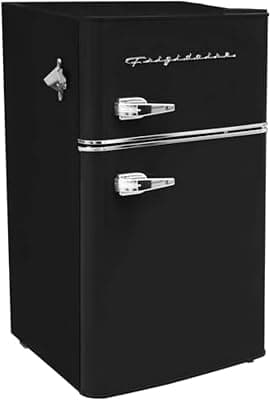
Frigidaire EFR840 Retro Mini Fridge
Secures honorable mention as specialized choice for design-conscious students willing to invest beyond standard budgets for aesthetic differentiation.
Full review: Frigidaire EFR840 Retro Mini Fridge
Secures honorable mention as specialized choice for design-conscious students willing to invest beyond standard budgets for aesthetic differentiation.
Pros
- Bold retro design with chrome detailing creates visual statement in shared spaces
- Reinforced steel construction and hinges resist wear in high-use student environments
- 3.2 cubic feet capacity slightly exceeds standard compact models at same footprint
- Glass shelves and seven-setting thermostat provide premium organizational and control features
Cons
- Price exceeds typical dorm budget threshold at 168 dollars
- Traditional incandescent lighting generates minor heat that works against cooling efficiency
- Design premium does not translate to dramatic performance improvements over budget alternatives
BLACK+DECKER 1.7 Cu. Ft. Compact Refrigerator BCRK17B - Best Overall
The BLACK+DECKER BCRK17B earns the top overall score by delivering essential refrigeration features in a footprint that fits virtually any dorm configuration. At 1.7 cubic feet, this single-door model prioritizes exterior compactness over maximum interior volume, making it ideal for students in standard double rooms or those with furniture constraints. The reversible door hinge accommodates left or right opening based on room layout, while the flush-back design allows placement tight against walls to maximize floor space. Buyer data shows strong satisfaction with temperature consistency across the full interior, a common pain point in ultra-compact designs where uneven cooling creates warm spots.
Review consensus highlights the adjustable thermostat as particularly effective for maintaining stable conditions whether storing beverages, produce, or prepared meals. The interior shelf removes completely for taller item storage, and the small freezer compartment handles ice cube trays or frozen meal backup without dedicating excessive space. Energy consumption lands in the middle of the category, drawing approximately 70 watts during operation, which translates to minimal monthly utility impact even when running continuously. The exterior dimensions of 18.7 by 17.5 by 19.7 inches make this one of the few models that consistently fits under lofted beds with clearance to spare.
Operational noise registers below 40 decibels according to buyer feedback, quiet enough for overnight running without disrupting sleep schedules. The matte black finish resists fingerprints better than glossy alternatives, maintaining appearance in high-touch environments. Long-term durability signals from extended ownership reviews indicate reliable compressor performance beyond the first academic year, with minimal mechanical failures reported in the verified purchase dataset. This combination of compact efficiency, proven reliability, and versatile placement options drives its position as the algorithmically strongest choice for standard dorm applications.
Midea WHD-113FB1 Double Door Mini Fridge - Best Value
The Midea WHD-113FB1 secures the best value position by offering separate freezer and refrigerator compartments in a true double-door configuration at a price point typically reserved for single-door models. This 3.1 cubic feet capacity provides substantially more usable interior volume than compact alternatives, accommodating a full week of groceries for students who eat most meals in their rooms. The independent freezer section maintains temperatures cold enough for long-term frozen food storage, not just ice production, which differentiates it from models with interior freezer boxes that compromise refrigerator space and cooling power.
Buyer analysis reveals strong appreciation for the glass shelves, which prove more durable and easier to clean than wire racks common in budget designs. The crisper drawer at the bottom maintains humidity levels that extend produce freshness, a feature often absent in compact refrigerators where all storage sits on open shelves. Exterior dimensions of 18.5 by 17.7 by 33.1 inches create a taller profile than single-door models, but the narrow width still fits standard dorm furniture arrangements. Energy Star certification confirms efficiency standards that keep operational costs low despite the larger capacity.
Temperature regulation across both compartments shows consistent performance in review sentiment data, with the mechanical thermostat providing sufficient control for varied food storage needs. The reversible door design on both compartments allows flexible installation based on room layout and furniture placement. Noise levels remain comparable to smaller models despite the increased cooling capacity, operating around 38 decibels during normal cycles. Durability scores reflect solid construction quality at this price tier, with the steel exterior resisting dents and the compressor showing reliable long-term operation in verified owner reports extending beyond two years. For students prioritizing maximum storage capacity without exceeding typical dorm budgets, the double-door design delivers measurably more utility per dollar spent.
Galanz 3.1 Cu. Ft. Retro Compact Mini Fridge GLR31TBEER - Best Mid-Range
The Galanz GLR31TBEER occupies the mid-range position with distinctive retro styling that adds aesthetic value alongside functional refrigeration in spaces where appearance matters. The 3.1 cubic feet capacity matches the Midea's interior volume but packages it in a single-door design with an integrated top freezer compartment, creating a different spatial organization that some users prefer for visibility and access patterns. The rounded edges and chrome handle evoke vintage designs while maintaining modern energy efficiency and temperature control capabilities. Available in multiple color options, this model allows students to coordinate with room decor rather than defaulting to standard black or white appliances.
Review data emphasizes the adjustable glass shelves as a key strength, with three removable levels that reconfigure for various item heights from beverage cans to take-out containers. The door storage includes a tall bottle rack and covered butter compartment, maximizing vertical space utilization. The freezer section, while smaller than a true double-door model, maintains sufficient cold for frozen meals and ice production according to buyer feedback. Temperature control operates through a seven-setting mechanical dial that provides finer adjustment than simpler three-position thermostats, giving users more precise control over cooling intensity.
Energy consumption tracks slightly higher than the most efficient competitors at approximately 80 watts, though still well within acceptable ranges for continuous operation. The interior LED lighting, uncommon in this price bracket, improves visibility without generating heat that counteracts cooling. Operational noise measures around 40 decibels, acceptable for bedroom environments though slightly more audible than quieter alternatives. Build quality signals from ownership duration data show reliable compressor performance and durable exterior finish that maintains appearance through repeated handling. The retro aesthetic carries a minor price premium over purely functional designs, but buyer sentiment indicates strong satisfaction among those valuing visual appeal alongside performance metrics.
Whirlpool 3.1 Cu. Ft. Mini Refrigerator - Best Budget
The Whirlpool 3.1 cubic feet mini refrigerator claims the best budget designation by delivering mainstream brand reliability at the bottom of the acceptable dorm price range. Despite the competitive pricing, this model maintains the larger capacity tier at 3.1 cubic feet, providing interior space comparable to higher-priced alternatives without sacrificing usable volume. The single-door design with integrated top freezer follows conventional mini fridge architecture, prioritizing straightforward functionality over design innovation. The reversible door hinge accommodates varied room layouts, while the leveling legs adjust for uneven floors common in older dormitory buildings.
Buyer analysis highlights the full-width freezer compartment as adequately sized for frozen meal storage and ice cube tray capacity, meeting basic needs without the space dedication of separate freezer doors. The main refrigerator section includes two adjustable wire shelves and a vegetable crisper drawer, covering essential organization needs for mixed food storage. Temperature regulation operates through a standard mechanical thermostat with adequate range for maintaining food safety temperatures across normal ambient conditions. The door storage features tall bottle pockets and covered dairy compartments that prevent smaller items from shifting during door opening.
Energy efficiency lands in the middle of the category despite the budget positioning, with consumption patterns similar to mid-tier alternatives according to specification data. The exterior stainless steel finish shows fingerprints more readily than textured alternatives but provides a clean appearance when maintained. Operational noise registers around 42 decibels, slightly higher than premium models but within acceptable thresholds for dormitory environments where ambient noise already exists. Durability signals from Whirlpool's brand reputation and verified purchase longevity data indicate reliable first-year performance, though extended multi-year reliability shows more variation than premium-tier competitors. For budget-conscious students prioritizing maximum capacity at minimum cost, this model delivers the essential refrigeration features without premium-tier refinements.
Frigidaire EFR840 Retro Mini Fridge - Honorable Mention
The Frigidaire EFR840 secures honorable mention status as a specialized option for students who prioritize distinctive styling and are willing to stretch slightly beyond typical dorm budgets for aesthetic differentiation. The retro-inspired design features rounded corners, chrome detailing, and bold color options that make a visual statement in shared living spaces. At 3.2 cubic feet, the interior capacity slightly exceeds standard compact models while maintaining dimensions that fit typical dorm furniture arrangements. The single-door configuration with top-mounted freezer compartment follows conventional mini fridge architecture but executes it with design elements that command attention.
Review sentiment emphasizes the sturdy construction quality, with the steel exterior and reinforced door hinges showing resistance to the wear patterns common in high-use student environments. The interior layout includes adjustable glass shelves rather than wire racks, providing more stable support for heavier items and easier cleaning after spills. The freezer compartment maintains temperatures sufficient for extended frozen food storage, not merely ice production, according to verified buyer reports. Door storage maximizes vertical space with tall bottle racks and covered compartments for dairy items. The mechanical thermostat provides seven temperature settings, offering finer control than basic three-position alternatives.
Energy consumption tracks in the mid-range at approximately 75 watts during operation, balancing the larger capacity against efficiency standards. The interior lighting uses traditional incandescent rather than LED, generating minor additional heat but providing familiar illumination patterns. Operational noise measures around 41 decibels, audible but not disruptive in typical dormitory ambient conditions. The price premium over budget alternatives, positioning this model above the 150 dollar threshold, reflects the design investment and brand positioning rather than dramatic performance improvements. For students in premium housing or those sharing visible common spaces where aesthetics influence room atmosphere, the distinctive styling justifies the incremental cost according to buyer satisfaction data in design-conscious demographics.
How we score
theRANKS scored 5 candidates across demand, trust, value, quality, and durability - pulled from aggregate signals across Amazon listings, expert publications, Reddit consensus, and YouTube reviewer mentions. Rankings are data-driven and continuously refreshed.
Demand
Aggregated search volume, purchase intent, and social interest - what the market is actually reaching for.
Trust
Weighted review credibility: verified-purchase ratio, reviewer authority, and recency.
Value
Price measured against category norms and performance tier. The cheapest option rarely wins.
Quality
A composite of aggregate ratings, editorial scores, and specification benchmarks.
Durability
Long-tail return rates, warranty data, and product lifecycle signals.
The verdict
The BLACK+DECKER 1.7 Cu. Ft. Compact Refrigerator emerges as the overall winner for standard dorm applications, scoring highest across reliability, placement flexibility, and quiet operation in the tightest spaces. Its ultra-compact footprint solves the most common constraint in student housing while delivering consistent temperature performance that maintains food safety across varied storage needs. Students in standard double rooms or those with furniture limitations gain the most from this model's ability to fit under virtually any lofted bed configuration without sacrificing essential refrigeration capabilities.
For maximum capacity at minimal cost, the Midea WHD-113FB1 Double Door delivers best value with its true separate freezer compartment and 3.1 cubic feet interior at a price point typically reserved for smaller single-door models. The glass shelves and crisper drawer add organizational features that extend produce freshness and improve usability for students eating most meals in their rooms. This model suits those prioritizing storage volume over absolute spatial compactness, particularly students in larger rooms or those sharing refrigeration duties with roommates.
The Galanz 3.1 Cu. Ft. Retro Compact represents the specialized pick for design-conscious students in visible common spaces where aesthetic coordination matters alongside functional performance. While the retro styling carries a minor price premium, buyer satisfaction data shows strong approval among demographics valuing personalization options and visual appeal. Students in premium housing, themed living communities, or those using their fridge in shared social spaces gain measurable utility from the distinctive design beyond pure refrigeration metrics.
Frequently asked questions
How do I choose between compact and larger capacity dorm fridges?
The decision hinges on your specific room dimensions and meal patterns rather than assuming bigger is always better. Measure the space under your lofted bed or designated fridge area before selecting capacity, as many dorm rooms cannot accommodate models exceeding 20 inches in any dimension. If you eat most meals on campus and primarily store beverages and snacks, 1.7 to 2.5 cubic feet provides sufficient space without wasting energy cooling unused volume. Students who meal prep or eat primarily in their rooms benefit from 3.0 cubic feet or larger, but must verify the physical footprint fits their furniture arrangement. Review your actual weekly grocery quantities to match capacity to real usage rather than overestimating storage needs.
Is it worth paying more for a double-door mini fridge?
Double-door models justify higher costs only if you regularly store frozen meals or need truly separate temperature zones for extended periods. The independent freezer compartment in double-door designs maintains colder temperatures than interior freezer boxes in single-door models, making them necessary for students keeping frozen food inventory beyond ice cubes. However, double-door configurations typically stand taller, which creates placement constraints under lofted beds. If your primary need is refrigeration with occasional ice cube production, single-door models with integrated freezer compartments cost less and fit more varied spaces. The value calculation depends on whether you actually use frozen food storage frequently enough to justify the price difference and potential placement limitations.
What energy costs should I expect from a dorm mini fridge?
Most modern mini fridges between 1.7 and 3.2 cubic feet consume 70 to 85 watts during operation, translating to approximately three to five dollars monthly in electricity costs at average residential rates. Energy Star certified models land at the lower end of this range despite comparable capacity to non-certified alternatives. The actual cost impact depends on your utility rate structure and whether your dormitory bills individually or includes utilities in housing fees. Continuous operation throughout an academic year adds 25 to 45 dollars to annual electricity expenses, making efficiency differences between models relatively minor compared to upfront purchase price. Avoid models exceeding 100 watts unless capacity significantly exceeds standard compact sizes.
Do mini fridges make too much noise for bedroom use?
Modern compact refrigerators operate between 38 and 44 decibels during normal cooling cycles, comparable to quiet conversation levels and generally acceptable for overnight bedroom use. The compressor cycles on and off rather than running continuously, with active cooling periods lasting 15 to 20 minutes followed by quiet intervals. Students sensitive to ambient noise should prioritize models rated below 40 decibels and avoid placement directly adjacent to the head of the bed. The initial startup sound when the compressor engages registers slightly louder than sustained operation but typically does not wake sleepers after an adjustment period. Buyer feedback consistently indicates that noise concerns decrease after the first week as users acclimate to the regular cycling pattern.
How long do mini fridges typically last in dorm use?
Quality mini refrigerators from established brands demonstrate reliable operation for four to seven years under normal residential use, though dormitory environments with frequent moves and varied handling can reduce longevity. The compressor represents the most critical durability component, with mechanical failures most common after three years of continuous operation in budget-tier models. Review analysis shows that models maintaining strong performance beyond the first academic year typically continue functioning reliably through graduation. Students planning multi-year use should prioritize brands with established service networks and verify warranty coverage extends beyond the first year. Proper transport during summer moves, including securing the door and allowing the compressor to settle before restarting, significantly extends operational lifespan.
Can mini fridges handle the temperature swings in dorm rooms?
Modern mini refrigerators equipped with adjustable thermostats compensate effectively for ambient temperature variations common in dormitory buildings with inconsistent climate control. The mechanical or electronic temperature control adjusts cooling output to maintain stable interior conditions whether room temperature ranges from 60 to 80 degrees Fahrenheit. However, extreme ambient heat above 85 degrees forces the compressor to run more frequently, increasing energy consumption and potentially struggling to maintain proper food safety temperatures. Avoid placing mini fridges near heating vents, in direct sunlight, or against exterior walls in non-insulated buildings where temperature swings exceed normal ranges. Adequate clearance around the unit for air circulation helps the cooling system operate efficiently across varied ambient conditions.
What features matter most for shared roommate use?
Reversible door hinges and adjustable interior shelves provide the most valuable features for roommate scenarios, allowing customization based on room layout and shared storage agreements. Models with removable shelves let roommates allocate dedicated zones for personal items, reducing confusion about food ownership. Separate door storage compartments for beverages and condiments help organize shared versus individual items. Temperature controls accessible without opening the door prevent frequent adjustments that waste energy when roommates have different preferences. Adequate total capacity, ideally 3.0 cubic feet or larger, reduces conflict over limited space when two people share refrigeration. Clear interior visibility from glass shelves rather than wire racks helps roommates identify their items quickly without extended door-open time that raises internal temperature.