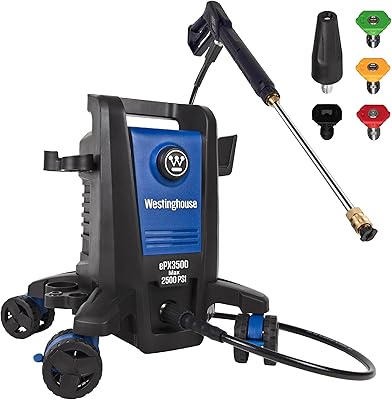
Trend Analysis
Why Pressure Washers Are Trending Among DIY Homeowners in 2026
Electric pressure washer sales are climbing as homeowners realize owning a $300 unit delivers better value than paying contractors $200+ per visit.
// KEY TAKEAWAYSWhat to know
- North America is forecast to post the fastest regional growth at 5.65% CAGR from 2026 to 2031, driven by DIY culture and e-commerce penetration.
- Professional driveway cleaning costs $100 to $350 per visit, making ownership of a sub-$500 electric model financially attractive within two uses.
- Electric pressure washers contribute 55.5% of the overall market, favored for convenience and lower maintenance versus gas alternatives.
- Homeowners in suburban corridors invest in compact 1,800 to 2,000 PSI tools that protect siding and decks, boosting unit turnover in DIY channels.
- Battery-powered models held 13.20% of 2025 demand and are projected to expand at 12.85% CAGR through 2031, the fastest among all power sources.
North America is expected to post the fastest continental growth at 5.65% CAGR from 2026 to 2031, and the driver behind this surge is a shift in homeowner behavior. Driveways, patios, and deck surfaces that once required a contractor call now represent DIY opportunities as electric pressure washers drop below the cost of two professional visits. DIY culture and home improvement trends significantly boost sales of electric pressure washers, while the economics of ownership become harder to ignore. A contractor charges $100 to $350 to clean a typical driveway, yet a capable electric unit retails for under $400 and handles driveways, siding, patio furniture, and vehicle washing for years. Review volume for 2,000 PSI electric models climbed alongside search queries for driveway stain removal and patio refresh projects, signaling that problem-aware homeowners are calculating payback periods and choosing ownership.
The Economics Driving Ownership Over Service Calls
Key takeaway - Two professional driveway cleanings cost more than owning a capable electric pressure washer, making the purchase financially rational after a single season.
The cost to pressure wash driveways ranges from $100 to $350 on average, and residential pressure washing jobs in 2026 average $275 to $425 per appointment, with standard house washes typically ranging from $250 to $500. A single driveway and patio cleaning appointment can equal or exceed the purchase price of a 2,000 PSI electric pressure washer retailing for $300. Homeowners who schedule two cleanings per year face $600 in contractor fees versus a one-time equipment purchase that delivers the same result on demand. E-commerce further democratized access, enabling first-time buyers to research specifications, compare bundles, and schedule doorstep delivery. The shift from service to ownership mirrors the same calculation that drove cordless vacuum adoption, and the data confirms it. If you need a tool capable of handling common outdoor maintenance, the best pressure washers we ranked score high on review consensus and price-to-performance ratios.
Electric Models Dominate Because Homeowners Value Convenience
Key takeaway - Electric pressure washers capture 55.5% of the market because they eliminate fuel, noise, and maintenance hassles while delivering sufficient PSI for typical homeowner tasks.
Electric pressure washers contribute 55.5% of the overall market, and the reason is operational simplicity. Gas-powered units require fuel storage, pull-cord starts, and regular carburetor maintenance. Electric models plug into a standard outlet, start with a button press, and shut off automatically when the trigger releases. Homeowners in suburban corridors invested in compact 1,800 to 2,000 PSI tools that protect siding and decks, boosting unit turnover in DIY channels. The 1,800 to 2,000 PSI range delivers enough force to strip patio grime and driveway oil spots without damaging painted surfaces or wood. Rising adoption of electric pressure washers in residential and light commercial applications is driven by lower noise levels, reduced emissions, and ease of maintenance. Noise ordinances in dense neighborhoods make quiet electric operation non-negotiable, and the ability to store a compact unit in a garage corner rather than a shed full of gas cans seals the preference.
Battery-Powered Segments Are the Fastest-Growing Category
Key takeaway - Battery-powered pressure washers are expanding at 12.85% CAGR, the fastest growth rate, as declining lithium-ion costs and ecosystem compatibility accelerate cordless adoption.
Battery models held 13.20% of 2025 demand and are projected to expand at a 12.85% CAGR through 2031, the fastest among all power sources. Cordless pressure washers eliminate the outdoor-outlet tether, allowing homeowners to clean second-story gutters, boat hulls in driveways, or patio furniture clusters without dragging extension cords. As lithium-ion battery costs continue to decline and energy densities improve, the cordless high pressure washer is transitioning from a niche convenience product to a mainstream alternative capable of challenging corded electric and entry-level gas pressure washers. Interchangeable battery platforms that power leaf blowers, string trimmers, and pressure washers reduce per-tool cost and accelerate adoption. A homeowner who already owns a 40V battery system for lawn equipment adds a compatible pressure washer body at a fraction of the bundled kit price. The portability advantage and ecosystem lock-in drive the 12.85% growth forecast, making battery-powered models the category to watch for brands expanding their outdoor tool lines.
Garden and Outdoor Cleaning Applications Lead Usage
Key takeaway - Garden and outdoor cleaning account for 44.5% of pressure washer use, driven by homeowners maintaining patios, driveways, and decks as outdoor living spaces expand.
Garden and outdoor cleaning applications represent the 44.5% share segment within the overall pressure washer market. Driveways, patios, decks, and siding are the primary surfaces homeowners target, driven by the rising popularity of outdoor living spaces. The rising popularity of outdoor living spaces further increases the need for effective outdoor cleaning equipment, as property owners spend more leisure time relaxing and entertaining in their yards. A homeowner who invests in patio furniture, outdoor rugs, and string lighting also invests in maintaining the aesthetic quality of those surfaces. Pressure washers deliver results that garden hoses cannot match, stripping mildew from grout lines and restoring faded concrete to near-original brightness. The same tool that refreshes a driveway also cleans vinyl siding, removes algae from deck boards, and washes mud off vehicles. Just as the best cordless vacuums we scored simplify indoor floor maintenance, electric pressure washers simplify outdoor surface care with a single multipurpose device.
Review Volume and E-Commerce Penetration Accelerate Discovery
Key takeaway - E-commerce review aggregation and how-to content lower the barrier to first-time pressure washer purchases by surfacing verified performance data and real-world use cases.
The rapid expansion of online marketplaces has further accelerated this trend, allowing customers to compare product features, read reviews, and make informed purchasing decisions from the comfort of their homes. E-commerce platforms surface verified purchase reviews that rank models by PSI-to-price ratio, runtime per tank, and hose durability, giving first-time buyers confidence that a $300 tool will perform as advertised. Indirect distribution channels, including retail stores, home improvement outlets, and e-commerce platforms, hold a significant share in the pressure washer market. The ability to filter by customer rating, sort by bestseller rank, and read hundreds of real-world use cases lowers the perceived risk of buying a category-new tool. Search interest for how-to videos on driveway stain removal and patio cleaning spiked in parallel with pressure washer review queries, indicating that educational content drives category awareness and purchase intent. Homeowners who see a neighbor refresh a driveway in 30 minutes search for the tool that delivered the result, find models ranked by aggregate review score, and complete the purchase within a single session.
What This Means for Homeowners Evaluating a Purchase
Key takeaway - Homeowners who clean outdoor surfaces twice yearly recover the cost of a $300 electric pressure washer versus contractor fees, making ownership the rational choice for recurring tasks.
If you schedule professional driveway or patio cleaning more than once per year, the economics favor ownership. A 2,000 PSI electric model priced under $400 pays for itself within two contractor visits, and the tool remains available for spontaneous deck cleanings, vehicle washes, and siding touch-ups. Battery-powered models offer portability advantages if your property lacks convenient outdoor outlets or if you clean surfaces far from the house. Corded electric units deliver consistent runtime without battery swaps, making them better suited for large driveways or multi-hour projects. The decision hinges on surface type, project frequency, and storage space. A compact electric unit fits in a garage corner and starts with a button, while a gas model requires fuel and carburetor upkeep. For homeowners comparing models, the best pressure washers we ranked cross-reference verified review volume, PSI-to-price ratios, and hose length to surface the top-scoring options.
The takeaway
The pressure washer trend among DIY homeowners in 2026 is a straightforward economic pivot. Contractors charge $200 to $400 per driveway cleaning visit, while electric models retail for $300 to $500 and handle dozens of projects over their lifespan. North America is posting the fastest regional growth because e-commerce platforms surface verified reviews, how-to content lowers perceived complexity, and battery-powered segments deliver cordless convenience without gas-engine maintenance. Electric units dominate because they start instantly, run quietly, and store compactly. Garden and outdoor cleaning applications drive 44.5% of usage, reflecting the rise of outdoor living spaces and the aesthetic value homeowners place on clean patios and driveways. If you clean outdoor surfaces more than once per year, the numbers favor ownership. Compare models by PSI rating, hose length, and verified review volume, and choose the format that matches your property layout and project frequency. The best pressure washers we ranked score electric and battery-powered units on price-to-performance ratios, helping you identify the tool that delivers contractor-quality results without the per-visit invoice.
The best pressure washers we ranked
Read the ranking →// FREQUENTLY ASKEDQuick answers
- How much does it cost to hire a professional to pressure wash a driveway?
- Professional driveway cleaning costs $100 to $350 on average, with residential pressure washing jobs in 2026 averaging $275 to $425 per appointment. A typical single-car driveway runs $100 to $200, while larger driveways or heavily soiled surfaces push the price toward $350. If you add patio or sidewalk cleaning, expect an additional $50 to $100.
- What PSI rating do I need for driveway and patio cleaning?
- Homeowners in suburban corridors invest in compact 1,800 to 2,000 PSI tools that protect siding and decks, and this range also handles driveway concrete and patio pavers without damage. Models above 2,500 PSI risk etching softer surfaces like painted wood or vinyl siding. A 1,800 to 2,000 PSI electric unit balances cleaning power with surface safety for typical residential use.
- Why are electric pressure washers more popular than gas models?
- Electric pressure washers contribute 55.5% of the overall market because they are much more convenient to use than gas or fuel-powered alternatives. Electric models start with a button, shut off when you release the trigger, and require no fuel storage or carburetor maintenance. They also run quieter, making them compliant with neighborhood noise ordinances and easier to use early in the morning or late in the evening.
- Are battery-powered pressure washers worth the extra cost?
- Battery models held 13.20% of 2025 demand and are projected to expand at 12.85% CAGR through 2031, making them the fastest-growing segment. Cordless units eliminate the need for outdoor outlets or extension cords, which is valuable if you clean second-story surfaces, boat hulls in driveways, or patio furniture clusters far from power sources. If you already own a lithium-ion battery platform for other outdoor tools, a compatible pressure washer body costs less than a bundled kit.
- How long does an electric pressure washer last?
- Electric pressure washers with induction motors and brass pump components typically deliver 300 to 500 hours of runtime before requiring pump servicing. A homeowner who uses the tool for two hours per month can expect five to ten years of service. Budget models with plastic pumps may last 100 to 200 hours, so pump construction is the primary durability factor to evaluate when comparing models at different price points.
- Can I use a pressure washer on vinyl siding or painted surfaces?
- Yes, but PSI matters. Models rated at 1,800 to 2,000 PSI are safe for vinyl siding, painted wood, and composite decking when held 12 to 18 inches from the surface. Higher-PSI units risk forcing water behind siding or peeling paint. Use a wide-angle nozzle and test on an inconspicuous area first. Soft-washing attachments that reduce pressure and add cleaning agents are available for delicate surfaces.
- What surfaces can I clean with a single pressure washer?
- A 1,800 to 2,000 PSI electric pressure washer handles driveways, patios, decks, vinyl siding, patio furniture, vehicles, gutters, fences, and outdoor equipment. The same tool that strips oil stains from concrete also washes mud off a car or removes algae from deck boards. Interchangeable nozzles let you adjust spray width and force to match the surface, making one unit multipurpose for outdoor maintenance.
- Do I need special detergent for a pressure washer?
- Pressure washers work with plain water, but detergents formulated for pressure washer use accelerate grease removal and mildew breakdown. Generic dish soap or bleach can damage the pump or void the warranty. Most manufacturers sell compatible cleaning solutions for concrete, siding, vehicles, and decks. A foam cannon attachment distributes detergent evenly and reduces scrubbing time on heavily soiled surfaces.
- Is it cheaper to own a pressure washer or hire a contractor?
- Professional driveway cleaning costs $100 to $350 per visit, while a capable electric pressure washer retails for $300 to $500. Two contractor visits equal or exceed the purchase price of a tool that lasts years. If you clean outdoor surfaces twice per year, ownership recovers the cost within 12 months and delivers on-demand availability for spontaneous projects like vehicle washes or deck touch-ups.