
//Air Quality MonitorsUpdated October 2026

Best Air Quality Monitors: 5 Picks Ranked

Five air quality monitors ranked by price, from compact wired units to premium multi-sensor systems tracking radon, PM2.5, CO2 and VOCs.

Top pickBest Budget
GoveeLife

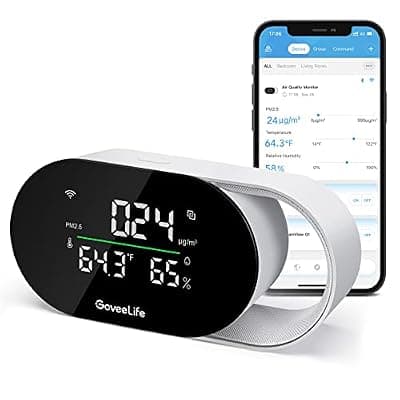
Ranked by price, this product occupies the entry-level position for buyers prioritizing particulate monitoring.
Typical$39.99
GoveeLife Smart Air Quality Monitor with PM2.5 H5106, LED
Buy on Amazon$39.99
//The full ranking

All 5, ranked

Ranked by price, lowest first

  1. GoveeLife Smart Air Quality Monitor with PM2.5 H5106, LED
    15
    Best Budget
    GoveeLife

    GoveeLife Smart Air Quality Monitor with PM2.5 H5106, LED

    Ranked by price, this product occupies the entry-level position for buyers prioritizing particulate monitoring.

    $39.99
    Buy
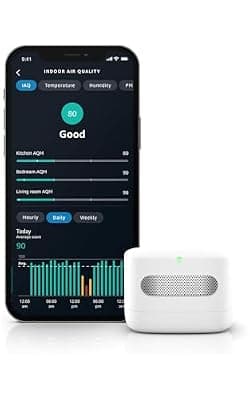
  2. Amazon Smart Air Quality Monitor
    25
    Amazon

    Amazon Smart Air Quality Monitor

    Ranked by price, this product sits in the mid-entry tier with multi-parameter sensing and smart home integration.
    $69.99
    Buy
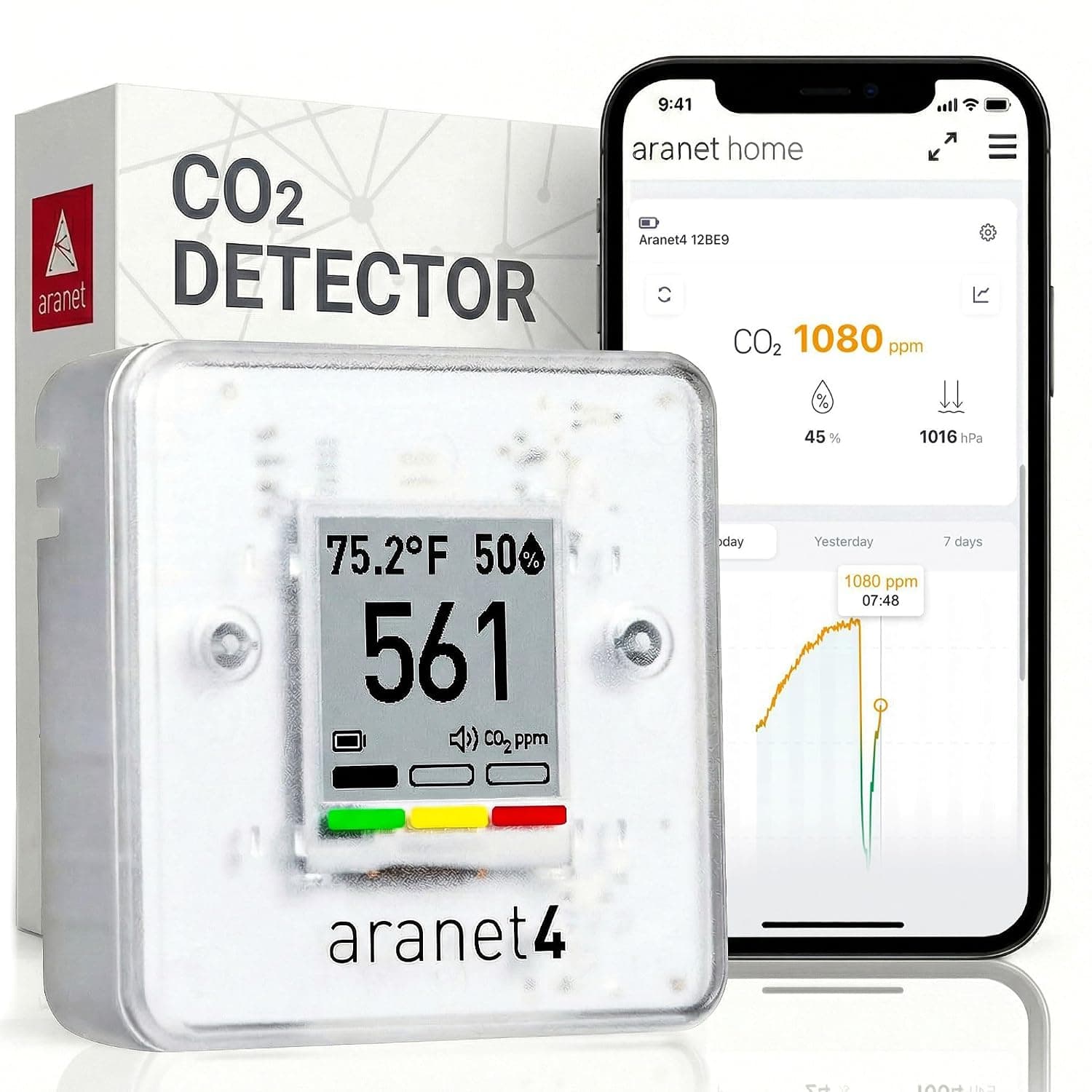
  3. Aranet4 Home
    35
    SAF

    Aranet4 Home

    Ranked by price, this product earns its place for buyers prioritizing CO2 and ventilation tracking.
    $189.00
    Buy
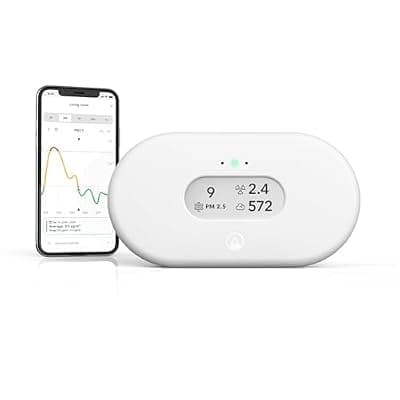
  4. Airthings 2960 View
    45
    Airthings

    Airthings 2960 View

    Ranked by price, this product sits in the upper-premium tier with radon monitoring and full-spectrum air quality tracking.
    $329.99
    Buy
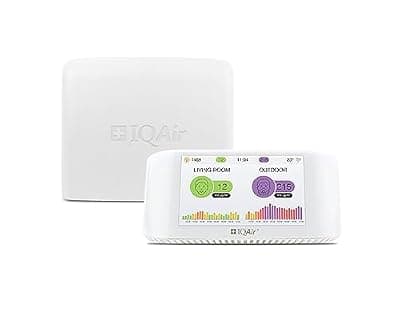
  5. IQAir AirVisual Air Quality Monitor Bundle, Swiss-Designed
    55
    Best Premium
    IQAir

    IQAir AirVisual Air Quality Monitor Bundle, Swiss-Designed

    Ranked by price, this product occupies the premium tier with dual indoor-outdoor sensor design.

    $599.99
    Buy

People also ask

  1. How do I choose between PM2.5 and CO2 monitoring?
    PM2.5 monitoring tracks fine particulate matter from dust, pollen, smoke and cooking, which affects respiratory comfort and air purifier performance. CO2 monitoring reveals ventilation adequacy and occupant density, telling you when fresh air exchange falls behind. If you're managing allergies, asthma or wildfire smoke infiltration, prioritize particulate tracking. If you work from home, teach or manage meeting spaces where stuffiness and cognitive fatigue are concerns, CO2 tracking gives you actionable ventilation data. Some monitors measure both, letting you address particle infiltration and ventilation adequacy simultaneously.
  2. Is it worth investing in radon detection?
    Radon detection matters most in homes with below-grade living spaces, in regions with known radon occurrence, or where family health history elevates lung cancer risk. Radon is invisible and odorless, so you cannot detect it without specialized sensors. Long-term radon exposure is the second-leading cause of lung cancer, making measurement valuable for households in radon-prone areas. Monitors with radon capability let you verify whether mitigation systems are working or whether seasonal soil conditions are raising concentrations. If your home has never been tested or you occupy a newly built below-grade space, radon monitoring brings visibility to a risk that standard air quality monitors cannot measure.
  3. Do air quality monitors need professional calibration?
    Most consumer air quality monitors arrive factory-calibrated and operate without user calibration throughout their service life. Sensors drift slowly over time, typically across years rather than months, and many units include automatic background calibration routines that adjust for sensor aging. Professional-grade units may offer manual calibration options or reference-gas calibration for lab-level accuracy, but household monitors are designed for maintenance-free operation. If readings seem inconsistent, check sensor vents for dust accumulation and ensure the monitor is positioned away from direct airflow, heating vents or windows that could skew measurements.
  4. Can I use one monitor for my entire home?
    Air quality varies significantly between rooms based on ventilation, proximity to pollution sources and occupant activity. A monitor placed in your living room won't capture the particulate spike from cooking in the kitchen or the elevated CO2 in a closed bedroom overnight. For whole-home awareness, you either need multiple monitors or you accept that a single unit reflects conditions only in its immediate area. Portable battery-powered monitors let you rotate between rooms to sample different spaces, while multi-unit setups give you continuous data from each zone simultaneously. If budget limits you to one monitor, place it in the room where you spend the most time or where air quality concerns are highest.
  5. What's the difference between indoor and outdoor sensors?
    Indoor sensors measure pollutants inside your home, telling you when to run air purifiers, open windows or adjust ventilation. Outdoor sensors measure ambient air quality, showing you whether external pollution from wildfires, traffic or industrial sources is higher or lower than your indoor environment. Monitors with both sensors let you compare the two in real time, helping you decide when outdoor air will improve your indoor conditions and when it's cleaner to keep windows closed and rely on filtration. This comparison is especially useful during wildfire season or in urban areas with variable traffic pollution.
  6. Do wired monitors perform better than battery-powered ones?
    Wired and battery-powered monitors perform equally well in measurement accuracy. The difference lies in placement flexibility and maintenance. Wired monitors require outlet proximity but never need battery swaps or charging, making them suitable for permanent installations near power sources. Battery-powered monitors let you position sensors in optimal locations regardless of outlet availability, useful for basement radon tracking or rotating between rooms. Battery life varies from months to years depending on sensor type and sampling frequency, so check runtime specifications if you prioritize low-maintenance operation.
  7. Can air quality monitors trigger my air purifier automatically?
    Some monitors integrate with smart home platforms or IFTTT to trigger compatible air purifiers, exhaust fans or HVAC systems when readings cross thresholds. This requires both the monitor and the appliance to support the same platform, whether that's Alexa, Google Home or a dedicated ecosystem. Monitors without smart home integration provide data for manual decision-making but won't control other devices automatically. If automatic responses matter to you, verify that both your monitor and your air quality appliances support the same platform before purchase.
//The Method

Every rank is a composite, not an opinion.

The same five dimensions, the same weights, applied to every product in the category. The composite is recomputed whenever the data moves — typically twice a month — and the rank order updates with it.

  1. 01
    Demand

    Not measured on any pick on this page — 5 pick(s) here carry no evidence for it.

  2. 02
    Trust

    Not measured on any pick on this page — 5 pick(s) here carry no evidence for it.

  3. 03
    Value

    Not measured on any pick on this page — 5 pick(s) here carry no evidence for it.

  4. 04
    Quality

    Not measured on any pick on this page — 5 pick(s) here carry no evidence for it.

  5. 05
    Durability

    Not measured on any pick on this page — 5 pick(s) here carry no evidence for it.