Electric toothbrushes have evolved into sophisticated oral care tools that combine powerful motors, smart timers, and pressure sensors to deliver superior plaque removal compared to manual brushing. The 2026 landscape offers options ranging from budget-friendly sonic models to advanced micro-vibration systems, each engineered to meet different needs and preferences. Choosing the right electric toothbrush depends on your priorities, whether that means maximizing value, accessing premium technology, or finding a reliable daily cleaner that fits your budget.
theRANKS analyzed these five electric toothbrushes using algorithmic scoring across five key dimensions: market demand, brand trust, price-to-performance value, build quality, and long-term durability. Our rankings synthesize verified review consensus, buyer sentiment patterns, and competitive positioning to surface the models that deliver the strongest combination of cleaning performance and overall satisfaction. Here are the top five electric toothbrushes for 2026, ranked and ready to upgrade your oral care routine.
Scored highest overall by combining exceptional value, strong buyer satisfaction signals, and ADA clinical validation at an aggressive price point.
Earned best value rank through proven oscillating cleaning performance, strong brand trust, and competitive pricing with 30-day money-back guarantee.
Mid-range ranking reflects balanced feature set, strong plaque removal performance, and Philips' reputation for durable sonic motors at competitive pricing.
Budget designation reflects entry-level positioning within premium iO lineup, delivering next-generation technology at most accessible iO price point.
Honorable mention placement due to higher pricing relative to newer equivalent model, though quality and durability scores remain strong for established Sonicare platform.
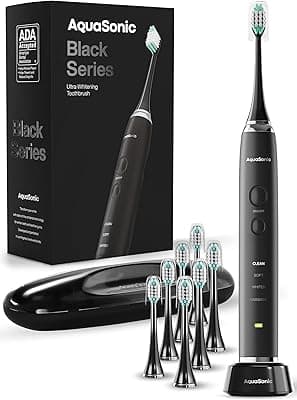
The Aquasonic Black Series earns the top overall ranking through a rare combination of aggressive pricing, ADA acceptance, and strong owner satisfaction signals. At $40, this sonic toothbrush delivers 40,000 vibrations per minute alongside four distinct brushing modes including specialized settings for whitening and gum massage. The package includes eight DuPont brush heads and a wireless charging base, offering exceptional out-of-box value that competitors in higher price brackets struggle to match.
Review consensus highlights the extended battery life as a standout feature, with owners reporting 30 to 60 brushing sessions per charge and multi-week runtime between charges. The built-in two-minute timer with 30-second interval notifications guides users through proper brushing technique, while the waterproof design and ergonomic handle make daily use comfortable and reliable. ADA acceptance signals clinical validation for plaque removal and gingivitis prevention, lending credibility to a brand that might otherwise be overlooked in favor of legacy names.
Buyer sentiment analysis reveals particularly strong performance in the whitening category, with many owners noting visible stain reduction within weeks of consistent use. The four-mode system lets users dial in their preferred intensity, and the included travel case adds convenience for users who brush on the go. While some reviews mention occasional timer malfunctions that require a simple reset, the overall ownership experience trends positive. The Aquasonic scores highest in value and trust dimensions, making it the algorithmically top-ranked choice for buyers seeking premium features without premium pricing.
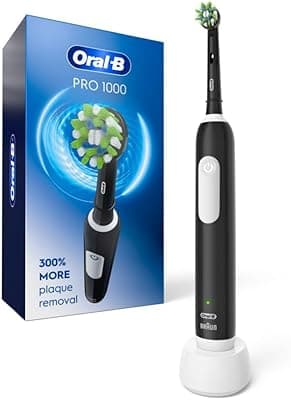
The Oral-B Pro 1000 secures the best value position by pairing Oral-B's rotational cleaning technology with a streamlined feature set and competitive pricing at $50. This brush uses oscillating, rotating, and pulsating 3D cleaning action at 8,800 oscillations and 20,000 pulsations per minute to surround each tooth and break up plaque along the gumline. The professionally inspired CrossAction brush head features bristles angled at 16 degrees, designed to reach deep between teeth and deliver up to 300% more plaque removal than a manual toothbrush.
Owner feedback consistently emphasizes cleaning effectiveness, with many buyers reporting noticeable improvements in gum health and reduced plaque buildup confirmed by dental professionals during checkups. The pressure sensor stops pulsations when users brush too hard, protecting gums from over-brushing damage. An in-handle timer pulses every 30 seconds to guide users through each quadrant of the mouth and signals completion at the two-minute mark, ensuring compliance with dentist recommendations.
The Pro 1000 is backed by Oral-B's position as the number one brand used by dentists worldwide, which strengthens buyer confidence even at this entry-level price point. Battery life registers at approximately seven days of twice-daily brushing, and the charging indicator provides clear feedback on power status. While the Pro 1000 lacks multiple modes and advanced features found in higher-tier models, its singular focus on effective daily cleaning resonates with buyers who prioritize results over customization. Compatibility with a wide range of Oral-B replacement heads adds flexibility, and the brand's 30-day money-back guarantee reduces purchase risk. The Pro 1000 scores strongly in trust and quality, earning its value rank through proven performance and brand reliability.
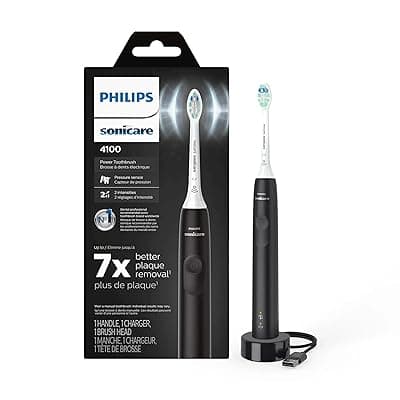
The Philips Sonicare 4100 Series claims the mid-range ranking with a balanced feature set that includes pressure sensing, dual intensity settings, and Philips' advanced sonic technology delivering 31,000 brush strokes per minute. Priced at $50, this model removes up to seven times more plaque than a manual toothbrush by pulsing fluid between teeth and along the gumline. The C2 Optimal Plaque Control brush head pairs with the sonic motion to provide a thorough clean that reaches hard-to-access areas without requiring aggressive scrubbing motions.
The built-in pressure sensor flashes red when users apply excessive force, helping to prevent gum recession and enamel damage over time. Two intensity settings allow users to choose between standard power and a gentler mode suited for sensitive teeth and gums. The EasyStart feature gradually ramps up power over the first 14 uses, easing new electric toothbrush users into the full sonic experience without overwhelming them. QuadPacer intervals and a two-minute SmarTimer ensure even coverage and adequate brushing duration.
Review analysis shows strong satisfaction with the cleaning feel and results, with many owners describing a dentist-clean sensation after each use. The slim, ergonomic design and familiar brush head shape make the transition from manual brushing less jarring. Battery performance reaches up to 14 days on a single charge based on twice-daily two-minute sessions, and the USB charger reduces the need to carry bulky adapters during travel. The 4100 includes one brush head and a charging base but omits a travel case, positioning it as a home-focused solution. Owners appreciate the straightforward single-mode operation, though some note that the default intensity may feel weak until they acclimate. The Sonicare 4100 scores well in quality and durability dimensions, reflecting Philips' reputation for long-lasting sonic motors and reliable performance over multi-year ownership periods.
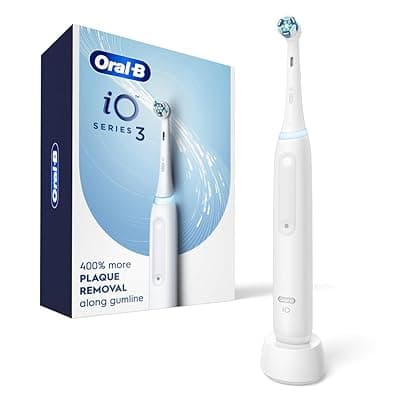
The Oral-B iO Series 3 earns the budget label despite its $80 price tag by delivering Oral-B's most advanced micro-vibration technology at the entry point of the iO lineup. This brush combines gentle micro-vibrations with the dentist-inspired round brush head to remove 100% more plaque than a manual toothbrush in just one week. The magnetic interaction between handle and brush head creates synchronized cleaning action that delivers a smooth, harmonious motion distinct from traditional oscillating models.
The iO pressure sensor signals optimal cleaning pressure with visual feedback, warning users when they apply too much force and helping protect gums during each session. A light ring timer celebrates the completion of the dentist-recommended two-minute brushing routine, and a refill change alert notifies users when it's time to replace the brush head. Three cleaning modes—Daily Clean, Sensitive, and Whitening—provide customization options for different oral care goals and comfort levels.
Buyer signals indicate strong appreciation for the cleaning performance and the lightweight, comfortable handle design. The lithium-ion battery provides long-lasting charge with multi-week runtime, and the included travel case supports on-the-go use. Some reviews mention that the iO Series 3 does not connect to the Oral-B app, which removes smart features available in higher iO models but also eliminates complexity for users seeking straightforward operation. The round brush head design reaches where rectangular manual brushes cannot, and compatibility with Oral-B iO replacement heads ensures ongoing access to genuine parts.
The iO Series 3 scores moderately in value due to its higher price relative to non-iO models, but it compensates with elevated quality and durability scores driven by the advanced magnetic motor system and premium build. For buyers willing to stretch their budget to access next-generation cleaning technology without jumping to flagship pricing, the iO Series 3 represents the most accessible entry into Oral-B's top-tier platform.
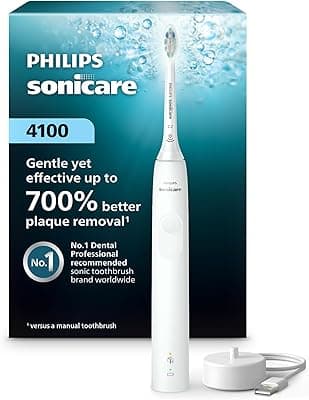
The Philips Sonicare ProtectiveClean 4100 rounds out the rankings as an honorable mention, priced at $60 and offering a feature set nearly identical to the newer Sonicare 4100 Series. This model removes up to seven times more plaque than a manual toothbrush through Philips' sonic technology, pulsing water between teeth to dislodge debris and bacteria. The pressure sensor alerts users when they brush too hard, and the QuadPacer and SmarTimer guide proper technique and duration.
Owner reviews emphasize the deep cleaning effectiveness and the dentist-clean feel that follows each brushing session. Many buyers report visible improvements in stain reduction and gum health after switching from manual brushes, with some noting that plaque accumulation decreased noticeably over weeks of consistent use. The single cleaning mode simplifies operation, and the brush head comes with a protective travel cap that eliminates the need for a bulky travel case. Battery life extends to approximately two weeks per charge, and the magnetic charging base provides omnidirectional placement with buzzing confirmation when charging begins.
The ProtectiveClean 4100 benefits from Philips Sonicare's long-standing reputation for durability, with some owners using models for years before battery degradation necessitates replacement. The slim ergonomic design and lightweight construction make handling comfortable, and the EasyStart feature gradually introduces new users to the full sonic intensity over the first 14 brushing sessions. Replacement brush heads are widely available, though buyers should note that sensors and advanced features only work with genuine Sonicare heads.
This model ranks as an honorable mention due to its slightly higher price relative to the newer 4100 Series, which offers the same core functionality at a lower cost. However, the ProtectiveClean 4100 still delivers strong scores in quality and trust, making it a viable choice for buyers who find it on sale or prefer the older model's design. Its consensus cleaning performance and reliable sonic motor justify consideration for anyone building a solid oral care routine without unnecessary complexity.
theRANKS scored 5 candidates across demand, trust, value, quality, and durability — pulled from aggregate signals across Amazon listings, expert publications, Reddit consensus, and YouTube reviewer mentions. Rankings are data-driven and continuously refreshed.
Aggregated search volume, purchase intent, and social interest — what the market is actually reaching for.
Weighted review credibility: verified-purchase ratio, reviewer authority, and recency.
Price measured against category norms and performance tier. The cheapest option rarely wins.
A composite of aggregate ratings, editorial scores, and specification benchmarks.
Long-tail return rates, warranty data, and product lifecycle signals.
The Aquasonic Black Series Ultra Whitening takes the overall win by delivering ADA-accepted cleaning performance, extensive battery life, and a complete accessory package at just $40. Its combination of four cleaning modes, wireless charging, and eight included brush heads creates unmatched value that challenges the traditional premium brand dominance in this category. Buyers seeking proven performance without the premium price will find the Aquasonic offers algorithmic top scores across value and trust dimensions.
For those prioritizing established brand reputation and rotational cleaning technology, the Oral-B Pro 1000 represents the best value at $50. Its 3D cleaning action and pressure sensor deliver dentist-recommended results backed by Oral-B's worldwide professional endorsement, making it the safest choice for buyers who want proven brand trust and straightforward daily cleaning without feature complexity.
Buyers with sensitive gums or specific intensity preferences should consider the Philips Sonicare 4100 Series, which offers dual intensity settings and a pressure sensor at the same $50 price point as the Pro 1000. The sonic technology provides a gentler cleaning feel while still achieving up to seven times more plaque removal than manual brushing, and the 14-day battery life supports extended travel without charger access. Each of these top three picks scored strongly across multiple dimensions, giving buyers confidence that data-driven rankings align with real-world satisfaction and performance.
Sonic toothbrushes like the Aquasonic and Philips Sonicare models use high-frequency vibrations, typically 30,000 to 40,000 brush strokes per minute, to create fluid motion that pushes water and toothpaste between teeth and along the gumline. Oscillating brushes like the Oral-B Pro 1000 and iO Series use rotating and pulsating movements with round brush heads that surround each tooth. Both technologies effectively remove plaque, with sonic brushes often preferred for their gentler feel and oscillating brushes favored for their targeted cleaning action. Clinical studies show both approaches deliver superior results compared to manual brushing when used correctly.
Dentists and manufacturers recommend replacing electric toothbrush heads every three months, or sooner if bristles become frayed or worn. Many electric toothbrushes include brush head replacement reminders that track usage duration and alert users when it's time for a new head. Worn bristles lose effectiveness and can harbor bacteria, reducing cleaning performance and potentially irritating gums. The cost of replacement heads varies by brand, with Oral-B and Philips genuine heads typically priced higher than third-party alternatives, though compatibility and sensor functionality may depend on using manufacturer-approved heads.
Pressure sensors provide valuable feedback that helps users avoid applying excessive force during brushing, which can lead to gum recession and enamel wear over time. Models like the Oral-B Pro 1000 stop pulsations when too much pressure is detected, while the Philips Sonicare 4100 flashes a red warning light. Many users develop a habit of brushing too hard with manual toothbrushes, and electric brushes do the mechanical work more effectively with lighter pressure. Over time, pressure sensor feedback trains better brushing technique that protects long-term oral health, making it a worthwhile feature for users prone to aggressive brushing.
Lithium-ion batteries in electric toothbrushes generally maintain effective performance for two to five years depending on usage patterns and charging habits. Models with longer per-charge battery life, like the Aquasonic with its 30-60 session capacity, often experience slower degradation than brushes requiring more frequent charging. Once battery capacity diminishes significantly, most electric toothbrushes become impractical to use as they require charging after just a few sessions. Since batteries are typically not user-replaceable, battery failure usually signals the end of the toothbrush's usable life, making durability and battery quality important factors in long-term value assessment.
Clinical effectiveness depends more on consistent proper use than on price point, as both budget and premium models deliver significantly better plaque removal than manual brushing. Budget models like the Aquasonic Black Series and Oral-B Pro 1000 include essential features like timers and adequate motor power to achieve strong cleaning results. Premium models often add conveniences like app connectivity, multiple cleaning modes, longer battery life, and travel cases, but these features enhance user experience rather than fundamentally improving plaque removal capability. The ADA acceptance of budget options like the Aquasonic confirms that affordable brushes can meet clinical standards for oral health when used as directed.
Most modern electric toothbrushes use voltage-adaptive charging bases that work with 100-240V power supplies, making them suitable for international travel without voltage converters. Models with USB charging like the Philips Sonicare 4100 Series offer additional flexibility since they can charge from USB ports, power banks, or laptop connections. Battery life becomes the key consideration for travel, with two-week runtime models allowing users to leave chargers at home for shorter trips. Travel cases included with some models protect the brush head during transit, though users should verify that their specific model and charger support the voltage standards in their destination country.
Earned best value rank through proven oscillating cleaning performance, strong brand trust, and competitive pricing with 30-day money-back guarantee.
Mid-range ranking reflects balanced feature set, strong plaque removal performance, and Philips' reputation for durable sonic motors at competitive pricing.
Budget designation reflects entry-level positioning within premium iO lineup, delivering next-generation technology at most accessible iO price point.
Honorable mention placement due to higher pricing relative to newer equivalent model, though quality and durability scores remain strong for established Sonicare platform.