Best Dash Cams: 5 Picks Scored & Ranked

Ranked by our composite score across five dimensions

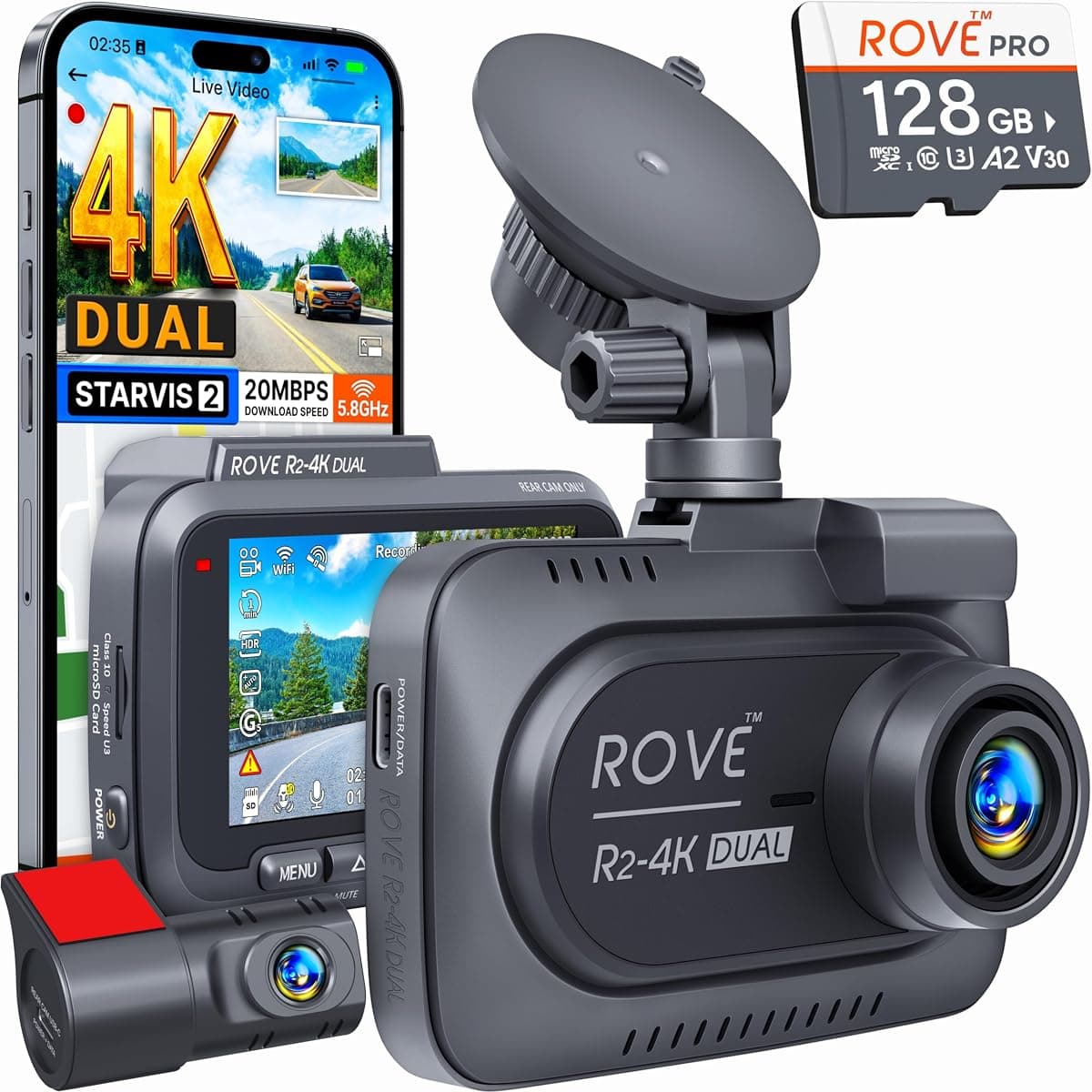
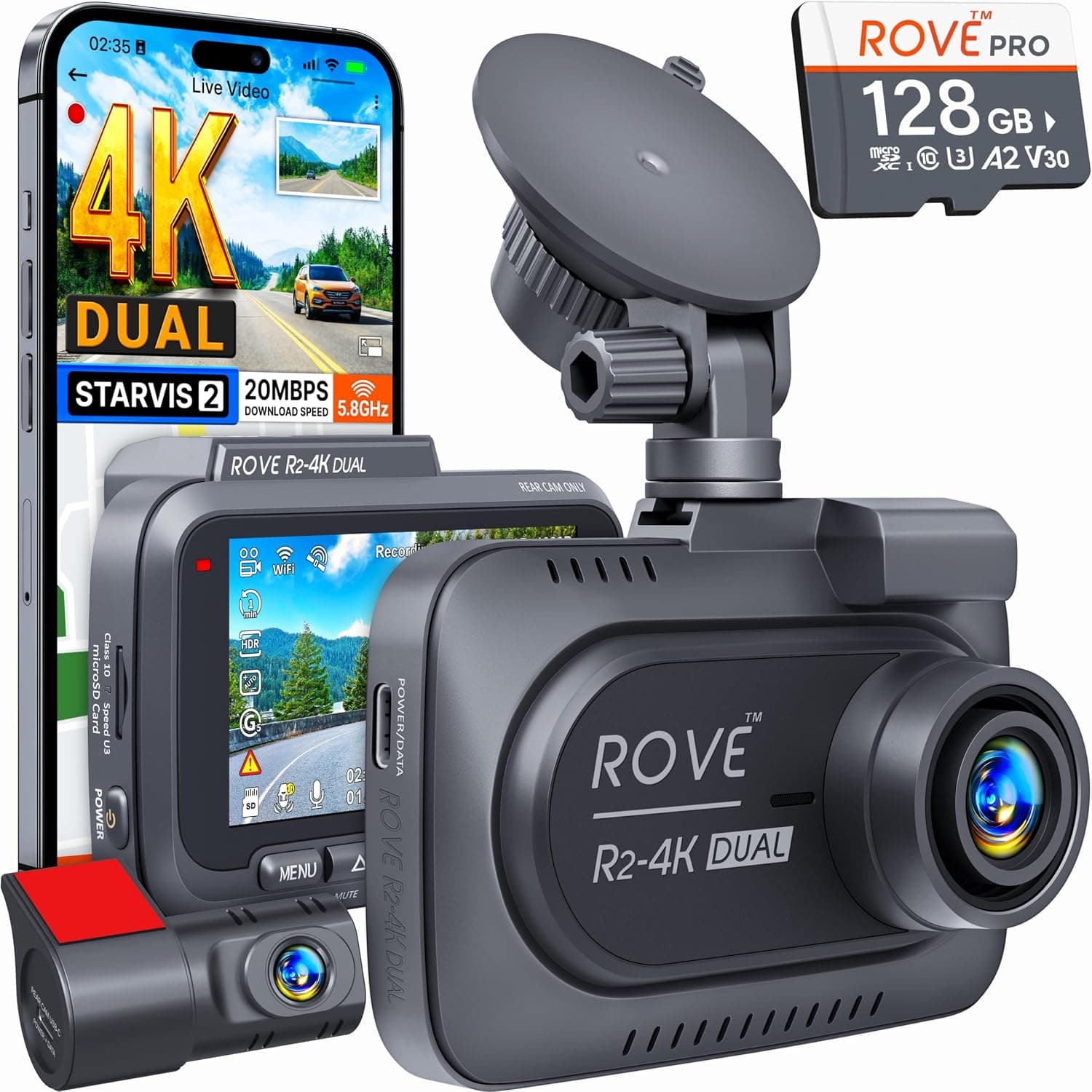
  1. Rove R2-4K Dual Dash Cam

    Rove R2-4K Dual Dash Cam

    Best Overall

    $149.99Buy on Amazon
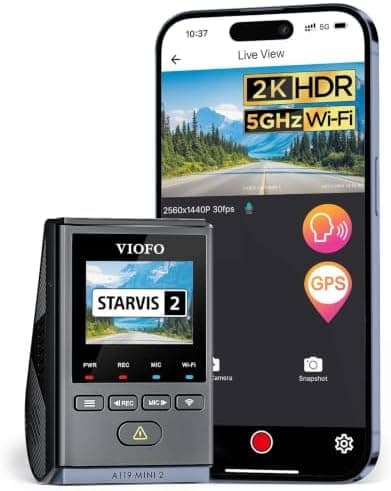
  2. Viofo A119 Mini 2

    Viofo A119 Mini 2

    Best Budget

    $119.98Buy on Amazon
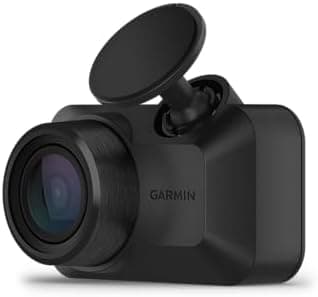
  3. Garmin Dash Cam Mini 3

    Garmin Dash Cam Mini 3

    Garmin

    $149.99Buy on Amazon
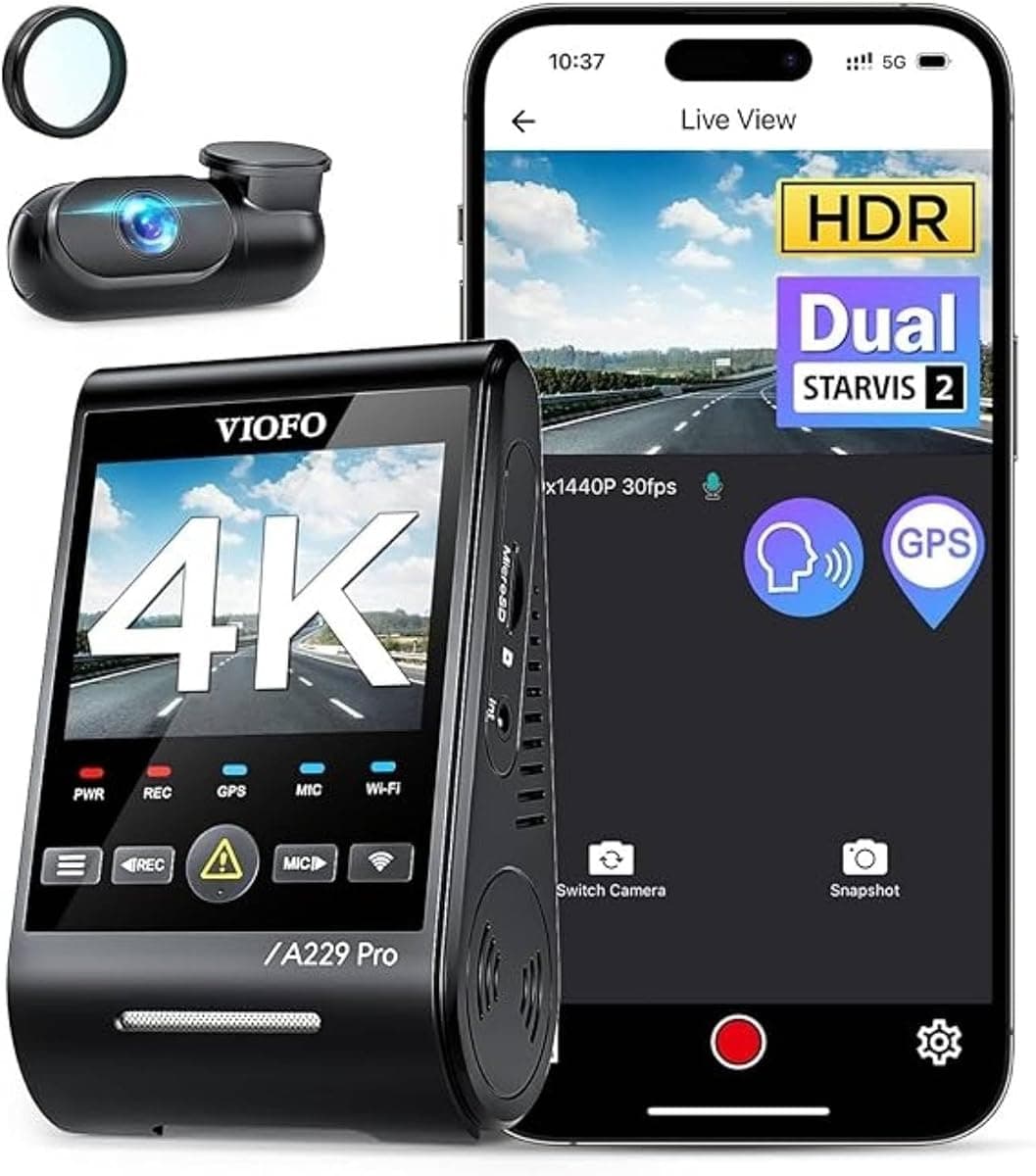
  4. Viofo A229 Pro

    Viofo A229 Pro

    Best Premium

    $279.99Buy on Amazon
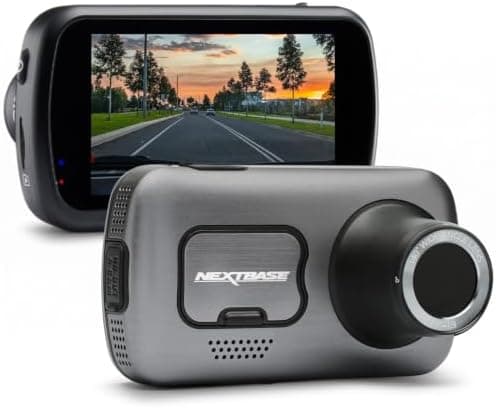
  5. Nextbase 622GW

    Nextbase 622GW

    Nextbase

    $249.00Buy on Amazon

The picks in detail

5 dash cams ranked by demand, trust, value, quality & durability. Data-driven scoring across front/rear coverage, resolution & reliability.

Rove R2-4K Dual Dash CamBest Overall

No. 1 · Top pick

Rove R2-4K Dual Dash Cam

Rove

Why it ranked

Earns its place through balanced scoring across all five dimensions, delivering dual-camera coverage and parking surveillance where feature completeness meets accessible pricing for typical buyer needs.

Strengths

  • Dual-camera 4K front and 1080p rear coverage captures comprehensive incident angles
  • Built-in GPS tracks speed and location data for insurance documentation
  • Parking mode with motion detection provides 24-hour vehicle monitoring when hardwired
  • Sony STARVIS sensors improve low-light performance compared to budget alternatives

Trade-offs

  • Night vision performance inconsistent on unlit rural roads
  • Parking mode requires hardwire installation for battery management
  • Rear camera resolution lower than front reduces license plate clarity at distance
Viofo A119 Mini 2Best Budget

No. 2

Viofo A119 Mini 2

Viofo

Why it ranked

Ranks as budget choice through pricing while maintaining quality scores above entry-level offerings, delivering heat-resistant durability and 2K recording for cost-conscious buyers.

Strengths

  • 2K resolution front recording surpasses typical budget-tier quality
  • Supercapacitor withstands temperature extremes without battery degradation
  • Compact 3.4-inch design fits discreetly behind mirrors
  • Loop recording and G-sensor protection work reliably for basic needs

Trade-offs

  • Single front camera provides no rear coverage
  • Night performance lacks license plate clarity of premium sensors
  • Parking mode requires hardwire installation and uses time-lapse recording
Garmin Dash Cam Mini 3

No. 3

Garmin Dash Cam Mini 3

Garmin

Why it ranked

Scores as mid-range pick through compact design and brand trust metrics, optimizing for buyers who prioritize discretion and cloud connectivity over dual-camera coverage.

Strengths

  • Ultra-compact form factor remains nearly invisible behind rearview mirror
  • Vault cloud service automatically uploads incident footage to secure servers
  • Voice control enables hands-free footage saving during driving
  • Garmin ecosystem integration provides unified incident management with GPS devices

Trade-offs

  • Single front camera lacks rear coverage for comprehensive protection
  • Vault subscription requires ongoing monthly fees affecting total cost
  • Night performance adequate but trails dedicated low-light models
Viofo A229 ProBest Premium

No. 4

Viofo A229 Pro

Viofo

Why it ranked

Achieves value rank through exceptional quality and durability scores, delivering premium-tier image sensors and thermal reliability typically found in $400-plus systems.

Strengths

  • 5MP Sony STARVIS 2 sensor delivers superior image quality and night performance
  • Supercapacitor design eliminates battery swelling and heat degradation issues
  • Three-channel capability supports optional interior camera for rideshare drivers
  • Included CPL filter reduces windshield glare for improved footage clarity

Trade-offs

  • Higher price point requires greater upfront investment
  • Hardwiring installation more complex than plug-and-play alternatives
  • Interior camera module sold separately increases total system cost
Nextbase 622GW

No. 5

Nextbase 622GW

Nextbase

Why it ranked

Earns honorable mention through specialized emergency response features and premium interface design that serve specific buyer segments prioritizing safety integration over broader value propositions.

Strengths

  • 4K recording with image stabilization delivers premium footage quality
  • Emergency SOS feature automatically alerts services and contacts during impacts
  • Large 3-inch touchscreen simplifies menu navigation and footage review
  • Alexa integration and What3Words provide advanced connectivity features

Trade-offs

  • The base price increases significantly with rear and interior camera modules
  • Larger screen and body occupy more dashboard space than compact models
  • Cloud service subscription required for automatic incident upload

Compare all 5 picks

Fact
Rove R2-4K Dual Dash Cam
No. 1Rove R2-4K Dual Dash CamBest OverallBuy on Amazon
Viofo A119 Mini 2
No. 2Viofo A119 Mini 2Best BudgetBuy on Amazon
Garmin Dash Cam Mini 3
No. 3Garmin Dash Cam Mini 3Buy on Amazon
Viofo A229 Pro
No. 4Viofo A229 ProBest PremiumBuy on Amazon
Nextbase 622GW
No. 5Nextbase 622GWBuy on Amazon
Price$149.99$119.98$149.99$279.99$249.00
Standout strengthDual-camera 4K front and 1080p rear coverage captures comprehensive incident angles2K resolution front recording surpasses typical budget-tier qualityUltra-compact form factor remains nearly invisible behind rearview mirror5MP Sony STARVIS 2 sensor delivers superior image quality and night performance4K recording with image stabilization delivers premium footage quality
Main trade-offNight vision performance inconsistent on unlit rural roadsSingle front camera provides no rear coverageSingle front camera lacks rear coverage for comprehensive protectionHigher price point requires greater upfront investmentThe base price increases significantly with rear and interior camera modules
//The Method

Every rank is a composite, not an opinion.

The same five dimensions, the same weights, applied to every product in the category. The composite is recomputed whenever the data moves — and the rank order updates with it.

  1. 01
    Demand

    The retailer sales rank; review velocity over the last three months. Measured on 5 of 5 picks on this page.

  2. 02
    Trust

    The 1-5 rating distribution; negative-review share; polarisation (the J-curve). Measured on 5 of 5 picks on this page.

  3. 03
    Value

    Price against the category median; measured quality per pound spent. Measured on 5 of 5 picks on this page.

  4. 04
    Quality

    The 1-5 rating distribution; review text, including the share of it that mentions a defect. Measured on 5 of 5 picks on this page.

  5. 05
    Durability

    Reviews aged three months or more, and the share of them reporting a failure. Measured on 5 of 5 picks on this page.

Dash Cams FAQ

  1. How do I choose between single and dual-camera dash cams?
    Single-camera dash cams like the Garmin Mini 3 or Viofo A119 Mini 2 focus exclusively on forward recording, capturing frontal collisions and traffic situations but missing rear-end impacts or tailgating documentation. Dual-camera systems like the Rove R2-4K add rear coverage, providing comprehensive incident angles that prove valuable for insurance claims involving multi-vehicle scenarios or parking lot incidents. The coverage trade-off typically adds $20-50 to system cost but doubles the documented evidence during incidents.
  2. Is spending more for 4K resolution worth it over 1080p?
    Resolution upgrades from 1080p to 4K primarily improve license plate legibility at distances beyond 15-20 feet, which becomes critical when documenting hit-and-run incidents or capturing details from vehicles several car lengths ahead. Daytime 4K footage from models like the Rove R2-4K or Nextbase 622GW provides clearer zoom capability during post-incident review, though 1080p remains adequate for close-range collision documentation where vehicle positions matter more than distant details. The value calculation depends on typical driving conditions—buyers navigating dense urban traffic with frequent lane changes benefit more from 4K's detail retention than rural drivers experiencing primarily head-on collision risks. Storage consumption increases proportionally with resolution, with 4K footage requiring approximately 6GB per hour versus 3GB for 1080p on equivalent quality settings.
  3. Do supercapacitors really perform better than batteries in dash cams?
    Supercapacitor dash cams like the Viofo A229 Pro and A119 Mini 2 demonstrate measurably longer operational lifespans in temperature extremes, with verified owner data showing 3-5 year functional periods versus 12-24 months for battery-powered equivalents in hot climates. Lithium batteries degrade rapidly when exposed to dashboard temperatures exceeding 140°F during summer months, causing capacity loss, swelling, and eventual failure that supercapacitors avoid through fundamentally different energy storage chemistry. The trade-off involves reduced parking mode duration—supercapacitors provide only seconds of post-impact recording versus hours from batteries—requiring hardwire installation for extended parking surveillance. Buyers in moderate climates see minimal practical difference, while those in southern states or desert regions experience significantly higher reliability from supercapacitor designs.
  4. Can dash cams actually prevent insurance fraud effectively?
    Dash cam footage provides objective third-party documentation during disputed liability scenarios, particularly effective against staged accident fraud and false injury claims that rely on conflicting verbal testimonies. The effectiveness depends on camera positioning and resolution—frontal collisions benefit most from forward-facing cameras, while side-swipe and rear-end scenarios require dual-camera coverage to capture relevant angles. Parking mode surveillance addresses hit-and-run protection when vehicles are unattended, though this requires hardwire installation and sufficient storage capacity to maintain continuous or motion-activated recording during extended parking periods.
  5. How much storage capacity do I actually need for dash cams?
    Storage requirements scale with resolution, recording channels, and desired loop recording duration before footage overwrites. A 64GB card provides approximately 8 hours of dual-channel 1080p recording or 4-5 hours of 4K front plus 1080p rear coverage, sufficient for full-day commutes with automatic overwriting of oldest non-incident footage. Higher capacities up to 256GB extend loop periods to multiple days, reducing the risk of overwriting unreviewed footage from minor incidents that drivers don't immediately notice. Cards rated A2 or V30 speed class prevent recording interruptions and frame drops during high-resolution capture, with slower cards causing gaps in footage during critical moments.
  6. Do parking mode features justify the hardwire installation complexity?
    Parking mode surveillance captures motion-activated or impact-triggered footage during vehicle-off periods, documenting hit-and-run incidents, vandalism, and parking lot collisions that occur when drivers are absent. Hardwire installation connects the dash cam directly to the vehicle's fuse box, providing continuous low-power operation without draining the battery beyond safe starting thresholds through voltage cutoff protections. Installation complexity typically requires 1-2 hours for DIY-capable owners or $50-150 for professional installation, with the investment justified for buyers parking in high-risk areas or those experiencing previous unwitnessed damage. Models like the Rove R2-4K and Viofo A229 Pro include voltage monitoring to prevent battery depletion, though owners of older vehicles with marginal battery health should consider this trade-off carefully before enabling 24-hour surveillance features.
  7. Which dash cam works best for rideshare and commercial drivers?
    Rideshare and commercial drivers benefit most from three-channel systems like the Viofo A229 Pro with optional interior cameras, documenting both road incidents and cabin interactions that may result in passenger disputes or false complaints. Interior footage provides protection against damage claims, theft accusations, and behavioral disputes that single-direction road cameras cannot address, though privacy considerations require visible signage in many jurisdictions informing passengers of recording. The Nextbase 622GW's Emergency SOS feature offers additional value for commercial use through automatic incident reporting that reduces response delays during serious collisions. Cloud connectivity becomes particularly valuable for fleet management scenarios where footage needs centralized access, though subscription costs must factor into per-vehicle operating expenses for commercial deployments.

theRANKS may earn affiliate commissions from qualifying purchases. How that works