//Outdoor Pizza OvensUpdated October 2026

Best Outdoor Pizza Ovens: 5 Picks Scored & Ranked

Five outdoor pizza ovens ranked by demand, trust, value, quality & durability. From portable gas to dual-fuel options, find your ideal backyard oven.

94
theRANKS Score5 dimensions
//Top pickBest Overall
Gozney

Earns its place for delivering professional-grade insulation and fuel versatility at a price point reflecting genuine value engineering rather than feature compromise.

Typical$400
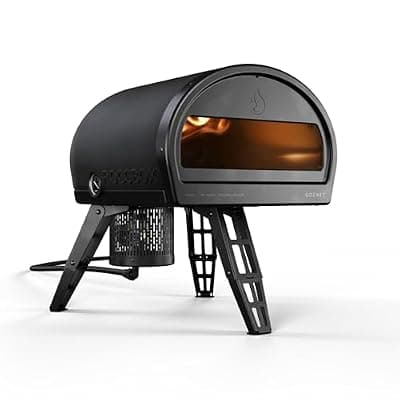
Gozney Roccbox Outdoor Pizza Oven, Black, Portable, Gas
Demand
78
Trust
95
Value
90
Quality
96
Durability
96
Buy on Amazon$400
//The full ranking

All 5, scored

Picks scored on fewer than 3 ratings are listed last, whatever their score.

  1. Gozney Roccbox Outdoor Pizza Oven, Black, Portable, Gas
    15
    Best Overall
    Gozney

    Gozney Roccbox Outdoor Pizza Oven, Black, Portable, Gas

    Earns its place for delivering professional-grade insulation and fuel versatility at a price point reflecting genuine value engineering rather than feature compromise.

    Demand
    78
    Trust
    95
    Value
    90
    Quality
    96
    Durability
    96
    94
    Score
    $399.99
    Buy
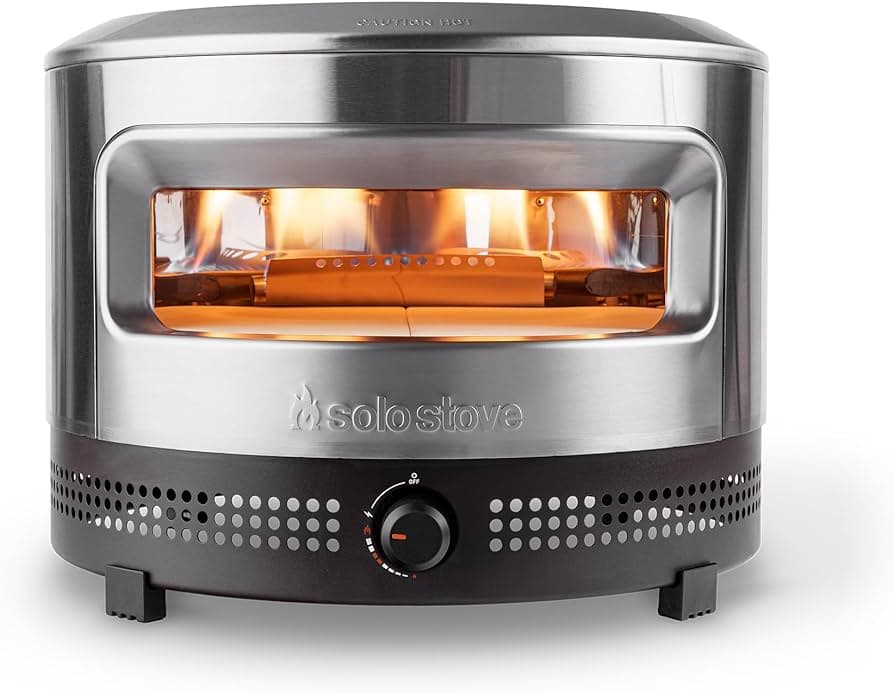
  2. Solo Stove Pi Prime Pizza Oven Outdoor - Gas,Propane
    25
    Solo

    Solo Stove Pi Prime Pizza Oven Outdoor - Gas,Propane

    Scores highest across the demand dimension for combining portane convenience with professional-grade heat performance in a genuinely portable form factor.

    Demand
    78
    Trust
    92
    Value
    90
    Quality
    96
    Durability
    96
    93
    Score
    $399.99
    Buy
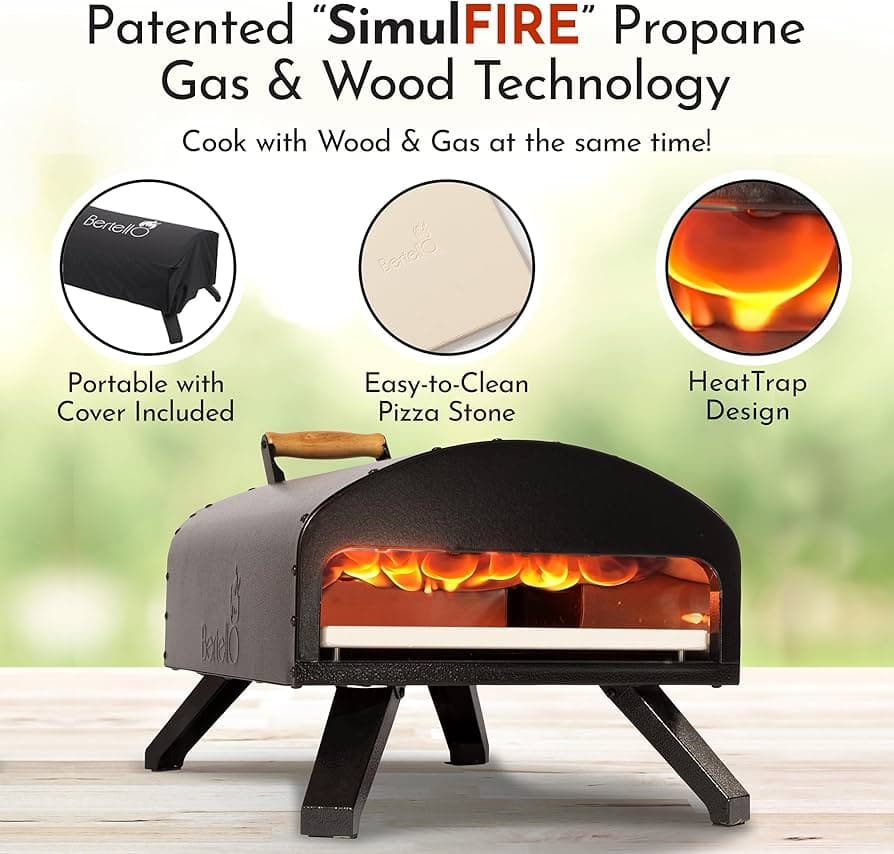
  3. Bertello SimulFIRE Outdoor Pizza Oven Bundle - Wood Fire
    35
    Bertello

    Bertello SimulFIRE Outdoor Pizza Oven Bundle - Wood Fire

    Occupies mid-range position by balancing authentic wood-fired capability with optional gas assist at a price reflecting material quality against feature breadth.

    Demand
    73
    Trust
    94
    Quality
    92
    Durability
    96
    92
    Score
    Buy
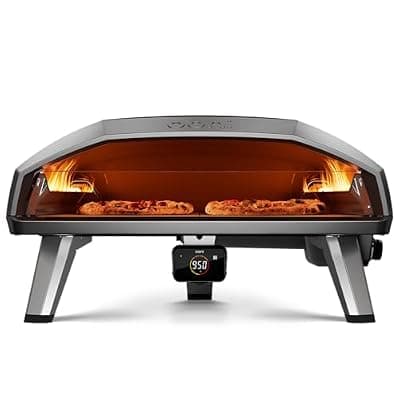
  4. Ooni Koda 2 Max Propane Gas Pizza Oven – 24" Propane
    45
    Ooni

    Ooni Koda 2 Max Propane Gas Pizza Oven – 24" Propane

    Scores fourth for addressing high-capacity use cases that justify premium investment through dual-pizza simultaneous cooking and commercial-grade temperature control.

    Demand
    74
    Value
    61
    Quality
    90
    Durability
    96
    84
    Score
    $1298.94
    Buy
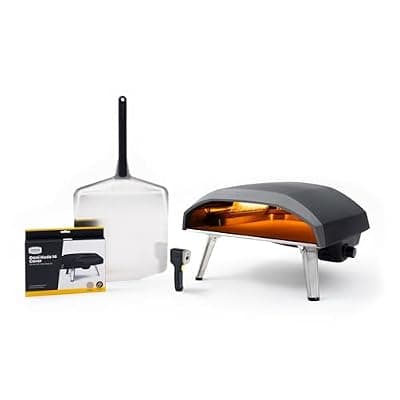
  5. Ooni Koda 16 Propane Gas Pizza Oven - Includes 14" Pizza
    55
    Ooni

    Ooni Koda 16 Propane Gas Pizza Oven - Includes 14" Pizza

    Completes rankings as honorable mention for balancing cook surface capacity and portability at a price reflecting Ooni brand premium without reaching Koda 2 Max investment level.

    Demand
    73
    Value
    72
    Quality
    90
    82
    Score
    $681.00
    Buy
//Compare

All 5, scored across the same specs

ProductScoreFuel typegas / wood / wood-pellet / electricCooking surface (in)Largest pizza the stone fits, in inchesPortabilityportable / countertop / built-in
1
GozneyGozney Roccbox Outdoor Pizza Oven, Black, Portable, GasBuy$400
94/ 100Gas (propane)12 inPortable (44 lb)
2
SoloSolo Stove Pi Prime Pizza Oven Outdoor - Gas,PropaneBuy$400
93/ 100Gas (propane)12 inPortable (30 lb)
3
BertelloBertello SimulFIRE Outdoor Pizza Oven Bundle - Wood FireBuy
92/ 100Multi-fuel (wood + gas)12 inPortable (42 lb)
4
OoniOoni Koda 2 Max Propane Gas Pizza Oven – 24" PropaneBuy$1299
84/ 100Gas (propane)20 inStationary (95 lb)
5
OoniOoni Koda 16 Propane Gas Pizza Oven - Includes 14" Pizza
82/ 100Gas (propane)16 inPortable (40 lb)

All five ovens reach roughly 900-950 deg F stone temperature - hot enough to blister a Neapolitan crust in about a minute. That peak is effectively uniform across the lineup (relative spread ~0.056), so it is stated here once rather than shown as a comparison column.

People also ask

  1. How do I choose between gas and wood-fired outdoor pizza ovens?
    Gas ovens deliver faster preheat times, consistent temperature control, and minimal learning curve, making them ideal for weeknight cooking and beginners prioritizing convenience. Wood-fired models produce authentic smoky flavor and traditional leopard-spot char but require 25-30 minute preheats, active flame management, and practice to maintain target temperatures. Dual-fuel options like the Gozney Roccbox provide both capabilities in one unit, allowing you to match fuel type to occasion and flavor preferences.
  2. Is it worth spending more for a premium outdoor pizza oven?
    Premium models justify higher prices through better insulation that maintains temperature stability, dual-burner systems that eliminate cold spots, and commercial-grade materials that resist corrosion and heat warping. Budget ovens often require longer preheats, manual rotation to compensate for uneven heating, and show faster degradation of stones and burner assemblies. The difference matters most for frequent users cooking multiple pizzas per session, where recovery time and consistency directly impact results and total cook time.
  3. What temperature should an outdoor pizza oven reach for authentic results?
    Neapolitan-style pizza requires 800-900 degrees for the 60-90 second cook time that produces proper crust spring and leopard spotting without drying toppings. New York-style works at lower 650-750 degrees for 4-6 minute cooks that develop crispy bottom without burning cheese. All five ranked ovens reach the 900-degree threshold, but dual-burner models like the Solo Stove Pi Prime maintain that temperature more consistently during back-to-back launches compared to single-burner alternatives.
  4. Do portable outdoor pizza ovens actually cook as well as built-in models?
    Modern portable ovens with proper insulation and burner design achieve identical temperature capability and heat retention as permanent installations, with the trade-off being smaller cook surfaces rather than performance compromise. The ceramic fiber insulation in units like the Gozney Roccbox and Ooni models matches built-in oven efficiency, and review consensus confirms comparable crust quality and cook times. Portability primarily affects capacity and wind resistance rather than fundamental cooking ability when comparing quality portable units to masonry alternatives.
  5. How long do pizza oven stones last before needing replacement?
    Cordierite and ceramic stones typically develop hairline cracks after 40-100 high-heat cycles due to thermal expansion stress, though most remain functional with cosmetic cracks for 150-200 uses before requiring replacement. Proper care extends longevity significantly, including gradual preheating rather than rapid temperature ramping, allowing complete cooldown before cleaning, and avoiding water contact when hot. Thicker stones like those in the Bertello SimulFIRE show better crack resistance than thinner competitor stones, and replacement costs range from 40-80 dollars across major brands.
  6. Can outdoor pizza ovens handle other foods besides pizza?
    High-temperature ovens excel at flatbreads, naan, roasted vegetables, and seared steaks, with the intense radiant heat creating char and caramelization impossible in standard grills. Lower-temperature cooking for baked dishes and casseroles works but requires learning temperature control on models without precise numeric displays. The 16-inch and 24-inch Ooni models provide sufficient space for cast-iron pans and baking dishes, while 12-inch models limit non-pizza cooking to smaller vessels that fit the opening and stone dimensions.
  7. What is the learning curve for first-time pizza oven users?
    Gas models like the Solo Stove Pi Prime typically require 3-4 cook sessions to master dough launching, rotation timing, and recognizing visual doneness cues at high temperatures. Wood-fired ovens demand additional practice managing flame intensity and wood placement for consistent heat, with most buyers reporting competence after 6-8 sessions. Common beginner issues include burnt edges from insufficient rotation, undercooked centers from launching too early in preheat, and stuck dough from inadequate peel preparation with flour or semolina.
//The Method

Every rank is a composite, not an opinion.

The same five dimensions, the same weights, applied to every product in the category. The composite is recomputed whenever the data moves — typically twice a month — and the rank order updates with it.

  1. 01
    Demand

    The retailer sales rank; review velocity over the last three months. Measured on 5 of 5 picks on this page.

  2. 02
    Trust

    The 1-5 rating distribution; negative-review share; polarisation (the J-curve). Measured on 3 of 5 picks on this page.

  3. 03
    Value

    Price against the category median; measured quality per pound spent. Measured on 4 of 5 picks on this page.

  4. 04
    Quality

    The 1-5 rating distribution; review text, including the share of it that mentions a defect. Measured on 5 of 5 picks on this page.

  5. 05
    Durability

    Reviews aged three months or more, and the share of them reporting a failure. Measured on 4 of 5 picks on this page.