Head-to-Head
GPS Pet Tracker vs Apple AirTag: Which Is Right for Your Dog
One tracker reports your dog's position from anywhere with cell coverage. The other only reports when a stranger's iPhone happens to walk by.
// KEY TAKEAWAYSWhat to know
- An AirTag has no GPS or cellular connection, so it only updates when a nearby Apple device detects it.
- A cellular GPS tracker sends live location over LTE and works anywhere the dog has cell coverage.
- GPS trackers need a subscription; an AirTag does not, and its replaceable battery lasts about a year.
- AirTag fits city and suburban dogs that rarely escape; GPS fits escape artists, hikers and rural dogs.
- For most dog owners, the GPS tracker wins because it shows where the dog is now, not where it was last seen.
Your dog slips the leash at a trailhead and bolts into the trees. You open your phone. What you see next depends entirely on which tracker is on the collar.
The Apple AirTag costs little, needs no monthly plan and clips on with a holder. A cellular GPS pet tracker costs more up front and adds a subscription. Both promise to show you a dot on a map, but they get that dot in completely different ways, and that difference decides whether you find your dog in five minutes or not at all.
This comparison covers how each device locates a dog, where each one works and fails, what each costs to own, and which dog owners should pick which. It ends with a clear winner and a path into our ranked GPS tracker lists.
How Apple AirTag finds a dog: the Find My network
Key takeaway - AirTag is excellent at finding a nearby object and dependent on passing Apple devices once your dog is out of Bluetooth range.
Apple AirTag is a Bluetooth item finder, not a GPS device. One pet-focused review explains that it has no conventional GPS receiver and no cellular connection of its own. Instead, it sends a Bluetooth signal, and any nearby iPhone, iPad or Mac that detects it relays the position to Apple's Find My network in the background.
Up close, it works well. Compatible iPhones can use Ultra Wideband Precision Finding to show direction and distance to a nearby tag. AppleInsider puts the Precision Finding range at about 15 to 30 feet. Beyond that, you depend on strangers' devices passing close enough.
The pros are real: Apple's own listing shows IP67 water resistance, and a CR2032 battery that lasts about a year and is replaceable. The core limit is that Apple has said AirTag is meant for items, not pets.
Where an AirTag fails a loose dog
Key takeaway - AirTag shows where your dog was last detected, with no live movement map and no escape alert.
AirTag's biggest weakness is that it reports a last-seen location, not a live one. Tractive's comparison (a GPS maker, so read it as an interested party) lists no real-time tracking, no escape alerts and no built-in activity tracking. The first two points are consistent with independent descriptions of how Find My works.
The practical scenario: your dog bolts across a field at 10:00 and no iPhone passes within Bluetooth range. Your map shows nothing new. One explainer notes that in isolated countryside or mountains the tag has nobody to report its position to.
Find My separation alerts fire when your phone moves away from the tag, not when the dog leaves a yard. That means no geofence-style escape warning. Add that it is not fully waterproof in the sense of chew-proof or swallow-proof, and a tag on a determined chewer is a hazard, not a safety device.
How a cellular GPS pet tracker works and what it adds
Key takeaway - A GPS tracker delivers live location and escape alerts anywhere with cell coverage, in exchange for charging and a plan.
A cellular GPS pet tracker carries its own satellite receiver and SIM card. Tractive's help page describes the process: the GPS module calculates position from satellites, then the SIM sends it over local cell networks to your app. It adds that default mode updates roughly every 10 minutes on the move, while LIVE mode refreshes every 2 to 3 seconds.
That design is why trackers in this class offer virtual fences and instant escape alerts. PetSafe describes unlimited custom safe zones and an alert the moment the dog leaves one. Many also add activity and sleep monitoring.
The limits: cell coverage is required, so a dead zone means no live location. Battery runs days to weeks, not a year, and you recharge it. For the models worth shortlisting, see the best GPS pet trackers we ranked, or narrow to GPS trackers for active dogs.
Cost of ownership: one-time tag vs ongoing plan
Key takeaway - AirTag is the cheap, no-subscription option; a GPS tracker costs more up front and every month after.
Price is where AirTag wins outright. In relative terms, an AirTag costs far less than a GPS tracker to buy, and it has no monthly bill. Its coin-cell battery is user-replaceable and cheap to swap about once a year.
A cellular tracker costs more up front and then needs a plan. One comparison explains that the subscription pays for cellular data, which is why no cellular tracker is subscription-free. Treeline Review reports plans ranging from $60 to $200 per year, with monthly, yearly and multi-year options, so check the current terms on any model you shortlist.
There are middle paths. Radio-based systems from Garmin and Dogtra skip the monthly fee but trade it for a range limit, and Garmin's needs a separately sold handheld, according to Thomas Acres. Over several years, a tracker with escape alerts costs meaningfully more than an AirTag. Whether that is worth it depends on how likely your dog is to get loose.
Which dog owners should pick which
Key takeaway - City dogs that rarely roam can get by on an AirTag; escape artists, hikers and rural dogs need GPS.
Pick the AirTag if your dog lives in a city or populated suburb, rarely gets off leash, and you carry an iPhone. It works as a low-cost backup, especially for finding a dog or collar close by with Precision Finding. It does not work on Android, and the original-generation tag has been discontinued in favor of a 2026 model that costs the same, according to Airpinpoint. That model's longer Precision Finding reach needs a recent iPhone and does not change how the tag reaches the Find My network.
Pick a GPS tracker if your dog has escaped before, hikes, hunts, or lives near farmland or woods. The same pet-focused review lists scent hounds, rural dogs and owners who want rapid escape notifications among the cases for GPS.
If cell coverage is the problem, GPS-plus-radio collars such as the Garmin Alpha T 20 work without cell service, with a range of up to nine miles per Thomas Acres. Compare options in our ranked GPS pet trackers.
Using both: AirTag as a supplement, not a substitute
Key takeaway - An AirTag works best as a cheap add-on to a GPS tracker or microchip, never as the only safeguard.
Some owners run an AirTag alongside a GPS tracker or microchip, and that pairing makes sense. One comparison table lists the AirTag-style role as an urban supplement or a way to find a dropped collar, and a microchip as permanent identification that helps get the dog home once found.
The logic is layered. A microchip identifies the dog when someone scans it. A tracker locates the dog before anyone finds it. An AirTag adds a cheap backup in busy areas. None of these replaces the others, and no tracker guarantees recovery.
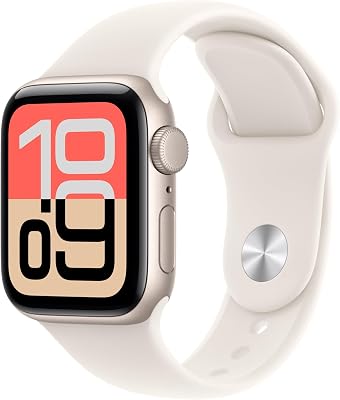
One safety note applies to every collar-mounted tag: use a secure holder that sits flush against the collar. Tractive flags that a chewed or swallowed tag is a health hazard, so a dangling tag is the worst fit for a dog that plays rough. If your dog is also an Apple Watch wearer's companion on runs, see the best Apple Watches for the other half of that setup.
The takeaway
The GPS pet tracker wins for most dog owners. It reports where the dog is now, sends an alert when the dog leaves a safe zone, and keeps working anywhere the dog has cell coverage. The AirTag only reports when someone else's Apple device happens to detect it, so it cannot do the one job that matters most when a dog bolts.
The AirTag is still the right pick for a narrow group: iPhone owners with a dog that stays on leash in a dense area, who want a low-cost backup with no monthly fee. If that is you, buy the AirTag and a flush-fitting holder, and keep the dog's microchip registration current.
Everyone else should shortlist a GPS tracker. Start with our ranking of the best GPS pet trackers and pick the one that matches your dog's size, your coverage area and the plan you are willing to pay for.
our ranking of the best GPS pet trackers
Read the ranking// FREQUENTLY ASKEDQuick answers
- Does an Apple AirTag work as a GPS tracker for dogs?
- No. An AirTag has no GPS receiver and no cellular connection; it uses Bluetooth and Apple's Find My network. If your dog runs past an iPhone, the location updates. If no Apple device is nearby, you get no update, so it shows a last-seen position rather than live tracking.
- How much does a GPS dog tracker cost compared with an AirTag?
- A GPS dog tracker costs more than an AirTag to buy and adds a subscription for cellular data. An AirTag has no monthly fee and uses a replaceable CR2032 battery. Treeline Review reports GPS collar plans running $60 to $200 per year, so check the current plan before buying.
- Is a GPS dog tracker worth the subscription?
- A subscription is worth it if your dog escapes, hikes or lives near open land. The plan pays for cellular data that delivers live location and escape alerts, such as PetSafe's alert when a dog leaves a safe zone. For a leashed city dog, an AirTag may cover your needs.
- Can an AirTag find my dog in the countryside?
- Rarely. In remote areas with few people, the tag has no Apple devices to relay its position, so Find My cannot update the map. A dog loose on farmland or a forest trail is the exact case where a cellular or radio GPS collar outperforms an AirTag.
- Does an AirTag send an alert when my dog leaves the yard?
- No. Find My separation alerts trigger when your phone moves away from the tag, not when the tag leaves an area. A GPS tracker with a virtual fence sends an alert the moment your dog crosses the boundary, such as PetSafe's safe-zone alerts.
- How long does an AirTag battery last compared with a GPS tracker?
- An AirTag runs about a year on a replaceable CR2032 battery. Cellular GPS trackers run days to weeks and recharge, and live-tracking mode drains the battery faster than the default update interval. Battery life is the AirTag's clearest advantage.
- Can I use a GPS tracker without cell service?
- Cellular trackers need coverage for live location. Radio-based GPS collars like the Garmin Alpha T 20 work without cell service, with a stated range of up to nine miles with a compatible handheld sold separately. That makes them the pick for backcountry hiking.