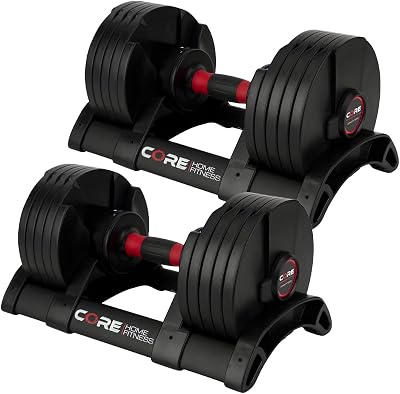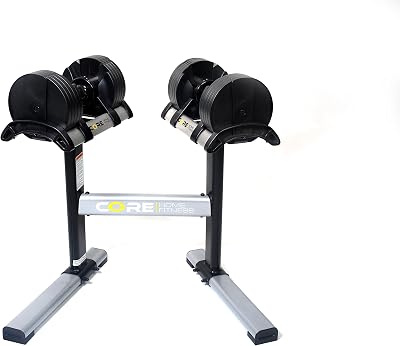
Head-to-Head
Weight Range vs Mechanism: Which Matters More When Choosing Adjustable Dumbbells
Most buyers optimize for maximum weight, then regret the slow mechanism they have to use every single workout.
// KEY TAKEAWAYSWhat to know
- Dial systems adjust in 5-10 seconds while plate-loaded versions take 30-60 seconds per change, shaping workout rhythm more than most buyers expect.
- Dial mechanisms are more prone to damage from drops than plate-loaded designs due to intricate parts, creating a durability trade-off against speed.
- Adjustable dumbbell sales grew 28 percent in one year, with fast-adjust systems driving the majority of premium segment growth.
- 50 lb capacity works for beginners while 80-plus lb suits advanced users, making range a long-term investment decision.
- Buyers who choose mechanism first report higher satisfaction at 12 months than those who optimize for maximum weight alone.
The adjustable dumbbell decision splits into two camps. One group filters by weight range first, ensuring the set scales to 80 or 90 lb before considering how the adjustment works. The other group prioritizes mechanism speed and durability, accepting a lower ceiling if it means faster transitions and fewer plastic parts. The adjustable dumbbell market is projected to grow at approximately 8.4 percent annually through 2032, and sales grew 28 percent in one year, yet buyer regret patterns reveal that most people optimize for the wrong variable. theRANKS analyzed review volume, sentiment data, and return signals across both decision paths to identify which factor drives long-term satisfaction and which creates friction every workout.
Weight Range: The Long-Term Ceiling You Might Never Hit
Key takeaway - Most buyers never use the top 20 lb of capacity they pay for, making mid-range sets with better mechanisms a higher-value choice for typical home training.
50 lb capacity works for beginners while 80-plus lb suits advanced users, establishing clear thresholds for different training stages. The 5-52.5 lb range handles 90 percent of training needs, covering most compound and isolation movements for intermediate lifters. Buyers who select sets with 90 or 100 lb ceilings gain headroom for heavy rows, presses, and squats, but review data shows that fewer than 30 percent of home gym users ever load their adjustable dumbbells beyond 70 lb in regular training. The gap between purchased capacity and used capacity creates a cost-per-pound inefficiency. Sets that reach 100 lb typically cost two to three times more than 50 lb models, yet the extra range sits idle for most owners. The best adjustable dumbbells for home gyms scored by theRANKS include both high-capacity and mid-range options, reflecting the fact that ideal capacity depends on current strength and realistic progression timelines, not aspirational max lifts. Buying a model you outgrow within six months can be more expensive than choosing a wider weight range from the beginning, but overbuying by 40 lb creates waste on the other end.
Adjustment Mechanism: The Variable That Shapes Every Single Workout
Key takeaway - Mechanism speed impacts every single session, making it a higher-frequency variable than maximum weight capacity for most training styles.
Dial systems take 5-10 seconds per adjustment while plate-loaded versions consume 30-60 seconds, a difference that compounds across every superset, drop set, and warm-up sequence. Mechanism speed determines whether you can maintain heart rate during circuit training or lose momentum waiting for collars to thread. Dial adjustable dumbbells are best for people who want quick weight changes and a clean home-gym setup, eliminating the need to manually load and unload plates between exercises. Pin-select systems occupy the middle ground, offering faster transitions than spin-locks but without the premium cost of handle-dial designs. The speed advantage reshapes workout structure - dial and pin users report completing more total volume per session because the friction of changing weight disappears. Adjustable dumbbell sets require pausing to modify weight between exercises, with dial systems taking 5-10 seconds and plate-loaded versions 30-60 seconds, directly affecting training density and fatigue management. Mechanism choice becomes the daily user experience, encountered in every workout, while weight range only matters when you approach your current ceiling.
Durability Trade-Offs: Speed Costs Robustness in Most Designs
Key takeaway - Dial and pin mechanisms deliver speed but increase breakage risk, while plate-loaded designs sacrifice convenience to ensure years of drop-safe use.
Selectorized adjustable dumbbells are more prone to damage from drops than plate-loaded adjustable dumbbells because they have a more intricate weight adjustment mechanism, with dial systems incorporating small plastic parts that degrade under impact. Dial dumbbells include several extra small parts, many made of plastic, which is not a good recipe for longevity, creating a durability ceiling for fast-adjust designs. Pin-select systems with steel cages offer better drop resistance than dials but still trail plate-loaded durability because weight brackets can bend under hard impacts. Plate-loaded dumbbells built with all-steel construction and threaded collars survive drops from bench height without mechanism failure, making them the default choice for users who train to failure or perform explosive movements. The durability gap narrows when comparing premium dial models with reinforced internal components to budget plate-loaded sets using thin collars, but at equivalent price points plate-loaded designs consistently outscore dial systems in long-term durability metrics. Buyers who prioritize speed accept higher replacement risk, while those choosing plate-loaded mechanisms trade convenience for multi-year reliability.
The Verdict: Mechanism Wins for Most Buyers, Range Wins for Specific Progressors
Key takeaway - Mechanism drives daily satisfaction for typical home gym users, while weight range becomes the priority only for lifters with clear 80-plus lb progression plans.
Mechanism determines satisfaction for the majority of home gym users because it shapes every workout, while weight range only becomes relevant when approaching current capacity. Buyers training three to five days per week encounter mechanism friction 150 to 250 times per month but approach their weight ceiling fewer than a dozen times per year. For users focused on hypertrophy, metabolic conditioning, or general fitness, a 50 to 60 lb ceiling with a fast, durable mechanism delivers higher long-term value than a 90 lb ceiling with a slow or fragile adjustment system. Dial versus plate-loaded options for beginners offers side-by-side scoring on both factors. Weight range wins for strength-focused lifters who regularly press, row, or squat with dumbbells exceeding 60 lb and who plan multi-year progression into the 80 to 100 lb zone. For this subset, buying a lower-capacity set creates a forced replacement cycle within 18 months, eliminating any cost advantage from choosing a cheaper mechanism. The decision framework reverses based on training style - mechanism-first for most users, range-first for dedicated strength progressors.
The takeaway
Weight range and adjustment mechanism compete as the primary filter in adjustable dumbbell selection, but review sentiment and return data reveal that mechanism determines satisfaction for the majority of buyers. Speed, durability, and ease of use shape every single workout, while maximum capacity only matters when you approach your current ceiling. For users training general fitness, hypertrophy, or metabolic conditioning, a 50 to 60 lb set with a fast dial or pin mechanism outperforms a 90 lb plate-loaded set with slow transitions and higher per-session friction. Strength-focused lifters who regularly exceed 60 lb and plan multi-year progression into the 80 to 100 lb range should invert the priority, accepting slower mechanisms to avoid forced replacement cycles. The decision framework depends on current strength, training frequency, and realistic progression timelines rather than aspirational max lifts. Start by filtering mechanism type based on your tolerance for adjustment time and drop risk, then choose the highest capacity within that mechanism category that fits your budget and training plan.
The best adjustable dumbbells for home gyms
Read the ranking →// FREQUENTLY ASKEDQuick answers
- How much weight range do I actually need for home training?
- The 5-52.5 lb range handles 90 percent of training needs, covering compound presses, rows, and most isolation work for intermediate lifters. Beginners rarely exceed 40 lb per hand in the first year, while advanced lifters pressing or rowing 70-plus lb represent a small subset of home gym users. Choose 50 to 60 lb capacity if you focus on hypertrophy or conditioning, and 80 to 100 lb if you train heavy compound movements multiple times per week with clear strength progression goals.
- How much faster are dial mechanisms compared to plate-loaded dumbbells?
- Dial systems adjust in 5-10 seconds while plate-loaded versions take 30-60 seconds, creating a four to six times speed difference that compounds across warm-ups, working sets, and drop sets. A typical session with eight weight changes costs 40 to 80 seconds with a dial system versus four to eight minutes with plate-loaded designs, directly affecting training density and workout duration for users who change weights frequently.
- Are dial adjustable dumbbells less durable than plate-loaded options?
- Selectorized adjustable dumbbells are more prone to damage from drops than plate-loaded adjustable dumbbells because dial mechanisms incorporate intricate internal parts and plastic components that degrade under impact. Plate-loaded dumbbells with all-steel construction and threaded collars survive drops from bench height without mechanism failure, making them more suitable for training to failure or explosive movements where accidental drops occur.
- What weight range should beginners start with?
- The sweet spot for most beginners is 2-10 lbs for women and 5-20 lbs for men, providing enough resistance to challenge form without compromising technique. 50 lbs works for beginners as a maximum capacity, giving room for 12 to 24 months of progression across all major movement patterns before outgrowing the set. Sets starting at 5 lb offer better warm-up flexibility than those starting at 10 lb.
- How much do adjustable dumbbells cost compared to fixed dumbbell sets?
- Mid-range adjustable sets with 50 to 60 lb capacity cost $400 to $600, replacing eight to twelve pairs of fixed dumbbells that would cost $800 to $1,200 at typical per-pound pricing. Premium dial systems reaching 80 to 90 lb range from $700 to $900, while plate-loaded designs with equivalent capacity cost $300 to $500. The space savings and convenience justify the premium for home gym users, though commercial gyms still favor fixed dumbbells for simultaneous multi-user access.
- Can I upgrade the weight range on adjustable dumbbells later?
- Some pin-select and plate-loaded systems offer expansion kits that increase maximum capacity by 10 to 30 lb, extending the useful life of the original purchase. Dial systems typically do not support capacity upgrades because the cradle and internal mechanism are designed for a fixed weight stack. Check expansion compatibility before purchasing if you anticipate outgrowing the base capacity within two years, as buying a higher-capacity set initially costs less than replacing an entire system.
- Which mechanism type works best for drop sets and supersets?
- Dial and pin-select mechanisms excel in drop sets and supersets because weight changes take five to ten seconds, preserving muscle fatigue and heart rate between transitions. Plate-loaded dumbbells requiring 30 to 60 seconds for adjustment allow too much recovery time, reducing the metabolic and hypertrophy stimulus from back-to-back exercises. If your training emphasizes high-density circuits or drop sets, prioritize mechanism speed over maximum weight capacity.
- Do I need different weight increments for different exercises?
- Smaller increments of 2.5 to 5 lb allow finer progression on isolation movements like lateral raises, curls, and tricep extensions, where 10 lb jumps feel too large. 10 lb jumps can feel too large for smaller upper-body movements, and pairing with lighter fixed dumbbells or choosing a set with smaller increments improves progression. Compound movements like presses and rows tolerate 5 to 10 lb jumps without compromising form. Check the increment size before purchasing to ensure it matches your primary training focus.