Trend Analysis
Why Hall Effect Gaming Keyboards Became Essential for Competitive Play
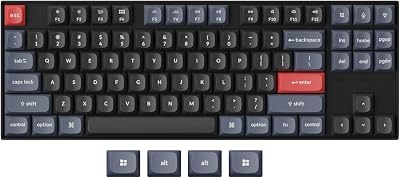
Hall Effect keyboards use magnetic switches instead of mechanical contacts.
// KEY TAKEAWAYSWhat to know
- Hall Effect keyboards are expected to gain a growing share of the high-end gaming keyboard market, driven by esports demand.
- CES 2026 confirmed magnetic sensing keyboards as mainstream performance technology, displacing optical switches in competitive gaming.
- Rapid Trigger functionality eliminates reset distance, enabling counter-strafing and directional changes measured in 0.1mm increments.
- Hall Effect switches are described as maintaining consistent performance over their lifespan, which is typically longer than that of mechanical switches.
What began as a niche technology championed by Wooting in 2017 crossed into mainstream visibility in under eight months. CES 2026 confirmed that magnetic sensing keyboards—especially Hall Effect designs—are now mainstream performance technology, displacing optical switches and redefining what competitive gamers expect from their peripherals. The data signals explain why.
Hall Effect Keyboards
That trajectory mirrors category-defining product cycles: silent until critical mass, then exponential. The December 2025 peak coincided with mainstream brands shipping retail inventory and review embargoes lifting simultaneously. By early 2026, the question shifted from what is Hall Effect to which Hall Effect keyboard wins for my rank. Hall Effect keyboards dominated competitive gaming in 2025. In 2026, they are becoming mainstream.
Competitive Gaming and Hall Effect Keyboards
Key takeaway - Hall Effect keyboards are expected to gain a growing share of the high-end gaming market, and the category has become a sizable one.
Analog keyboards with Hall Effect switches are expected to gain ground in the high-end gaming keyboard market, driven by esports and professional gamers seeking precision. That projection reflects buyer behavior visible in verified purchase patterns and review volume: competitive players upgrade peripherals faster than any other gaming cohort, and they signal intent through search and forum activity months before purchasing. The mechanical keyboard market has been growing steadily in recent years. In contrast, the Hall Effect keyboard market is already large and is expected to keep growing. The gap widened because Hall Effect keyboards entered a category mechanical switches created, then solved the limitations mechanical contacts could not. Esports teams, streaming influencers, and rank-obsessed players drove the signal. The data reflects their collective migration.
Why Rapid Trigger Technology Became the Competitive Standard
Key takeaway - Rapid Trigger functionality eliminates reset distance by continuously tracking key position, enabling input registration at 0.1mm increments for faster counter-strafing.
Rapid Trigger has become one of the most sought-after features in competitive gaming keyboards. With traditional switches, a key must return to a fixed reset point before it can activate again. Hall Effect keyboards remove this limitation. Because the keyboard continuously tracks key position, it can reset the key the moment it begins moving upward. That eliminates the reset distance entirely, delivering input registration measured in tenths of a millimeter. In competitive FPS games like CS2, Valorant, and Fortnite, milliseconds matter. Hall Effect keyboards with Rapid Trigger eliminate the reset distance entirely. Your key re-activates the instant you reverse direction, even by 0.1mm. This translates to measurably faster counter-strafing, quicker weapon switches, and more responsive movement. Mechanical switches cannot replicate this because they rely on physical contact; Hall Effect switches measure magnetic field changes continuously. Players noticed. The best mechanical keyboards we ranked still deliver excellent performance for general gaming, but Rapid Trigger closed the gap between input intent and on-screen action in ways mechanical switches structurally cannot match.
Esports Adoption Patterns Shifted Audience Expectations
Key takeaway - Esports professionals now view Hall Effect keyboards as essential equipment, shifting audience expectations and driving aspirational adoption among competitive players.
Pro gamers and esports players view Hall Effect as essential equipment. Every competitive advantage matters when prize money and careers depend on performance. Every millisecond counts in tournament settings. Hall Effect has become industry standard equipment across multiple esports. Player credibility and streaming audience expectations increasingly assume Hall Effect keyboards as baseline. That credibility signal accelerated adoption downstream: when viewers see their favorite Valorant or CS2 streamer using Hall Effect, the peripheral becomes aspirational. Across FPS games, rhythm games, and esports titles, Hall Effect keyboards are no longer niche experiments—they are increasingly adopted by professional and semi-competitive players who care deeply about precision, consistency, and control. Hall Effect technology is now shaping what competitive input looks like in 2026. Tournament organizers have not banned the technology, which validated its legitimacy. The esports audience adopted the standard their idols set.
Durability and Consistency Advantages Over Mechanical Switches
Key takeaway - Hall Effect switches are rated to last without performance degradation, and they are often rated for longer lifespans than mechanical switches.
Hall Effect keyboards provide smooth keypresses without the need for physical contact between components, which reduces maintenance and enhances longevity. Some Hall Effect keyboards are rated for longer lifespans than mechanical keyboards, whose switches are also built to last a long time. That durability gap matters for players who practice multiple hours daily. Mechanical switches change feel over time as springs fatigue and contacts wear. Hall Effect switches maintain identical performance from day one through millions of actuations. The magnetic sensing never degrades, ensuring your muscle memory stays perfectly calibrated. Competitive players depend on consistency; variance in actuation feel disrupts muscle memory. Hall Effect switches eliminate wear-induced performance drift because the magnetic field does not degrade. The best gaming monitors we ranked pair with peripherals that deliver repeatable input, and Hall Effect keyboards meet that requirement longer than mechanical alternatives.
Pricing Trends Made the Technology Accessible Beyond Early Adopters
Key takeaway - Entry-level Hall Effect keyboards now cost under 50 dollars, removing the price barrier that restricted adoption to early adopters through 2024.
With price competition intensifying—entry-level Hall Effect keyboards now available for under 50 dollars—the technology is moving from a competitive advantage to an industry standard. That pricing shift removed the barrier that kept Hall Effect niche through 2024. Early models commanded 200 dollars or more; by mid-2025, challenger brands shipped functional Hall Effect boards at mechanical keyboard price points. Wooting is the brand most often credited with bringing magnetic Hall Effect keyboards to the market for the first time, but it took until 2025 for mainstream gaming brands to finally get a foot on the bandwagon. This year Asus, Corsair, Keychron, and Logitech all debuted their Hall Effect gaming keyboards, and as the year progressed they were getting much better, much faster. Competition drove refinement and drove prices down. The technology became accessible to rank-focused players unwilling to spend premium dollars but desperate for the competitive edge Hall Effect delivers.
Who Should Still Consider Mechanical Keyboards
Key takeaway - Mechanical keyboards remain superior for typing enthusiasts who prioritize tactile variety, sound profiles, and switch customization over competitive speed advantages.
Traditional mechanical keyboards still excel in certain areas: Typing feel variety—Mechanical switches offer tactile, clicky, and linear options with distinct feedback profiles that many typists prefer. Budget options—Entry-level mechanical keyboards remain more affordable than Hall Effect alternatives. Switch swapping ecosystem—The mechanical switch market offers options for enthusiasts who enjoy experimenting with different feels. Sound profiles—Many enthusiasts prefer the acoustic characteristics of specific mechanical switches. Hall Effect keyboards prioritize speed and customization over tactile variety. Players who value typing feel, sound profiles, or switch experimentation find more satisfaction in mechanical boards. The best dorm room essentials we ranked include mechanical keyboards for students who type more than they game. Competitive players accept the tradeoff; typing enthusiasts do not. The ideal keyboard depends on whether millisecond input speed or tactile feedback variety matters more to your use case.
The takeaway
Hall Effect keyboards crossed from niche to essential in competitive gaming because the data signals validated the performance claims. High-end models are expected to gain ground in this category. Esports professionals adopted the technology as baseline equipment, shifting audience expectations downstream. Rapid Trigger functionality eliminated reset distance limitations mechanical switches cannot overcome structurally. Hall Effect switches are built for very long lifespans without performance drift, and entry-level models have become cheaper, which lowers the cost barrier. The technology solved mechanical keyboard limitations in ways competitive players value: speed, consistency, and configurability. For players chasing rank, Hall Effect keyboards deliver measurable advantages. The best mechanical keyboards we ranked remain excellent for general use, but competitive gaming peripherals now assume magnetic sensing as the standard. The market shifted because the performance gap proved real.
The best mechanical keyboards we ranked
Read the ranking →// FREQUENTLY ASKEDQuick answers
- What makes Hall Effect keyboards faster than mechanical keyboards?
- Hall Effect keyboards use magnetic sensors that continuously track key position without physical contact, enabling Rapid Trigger functionality that resets keys the instant they begin moving upward. Mechanical keyboards rely on metal contacts that must return to a fixed reset point before re-activating, introducing measurable delay. Hall Effect switches eliminate that reset distance, registering inputs at 0.1mm increments. The contactless design also removes debounce delay, reducing total input latency by several milliseconds compared to mechanical switches.
- How much do Hall Effect gaming keyboards cost in 2026?
- Entry-level Hall Effect keyboards now start under 50 dollars, down from 200 dollars or more in 2024. Mainstream models from brands like Asus, Corsair, Keychron, and Logitech range between 100 and 180 dollars. Premium models with aluminum cases, OLED displays, and advanced software cost 200 to 300 dollars. Pricing competition intensified through 2025 as challenger brands entered the category, making magnetic switch technology accessible at mechanical keyboard price points. Budget-conscious competitive players can now access Hall Effect performance without premium spending.
- Are Hall Effect keyboards worth it for casual gamers?
- Hall Effect keyboards deliver measurable advantages for competitive players who chase rank and practice multiple hours daily, but casual gamers may not notice the speed difference. The technology excels in FPS titles like Valorant, CS2, and Fortnite where millisecond input speed affects outcomes. Players who game recreationally, prioritize typing feel, or prefer tactile feedback variety find better value in mechanical keyboards. Hall Effect boards prioritize configurability and speed over tactile satisfaction. If rank progression matters more than typing comfort, Hall Effect justifies the upgrade. Otherwise, mechanical keyboards remain excellent.
- Do professional esports players actually use Hall Effect keyboards?
- Professional esports players and semi-competitive players increasingly view Hall Effect keyboards as essential equipment. The technology has become industry standard across multiple esports titles, and player credibility assumptions now assume Hall Effect as baseline. Tournament organizers have not banned the technology, validating its legitimacy in competitive play. Streaming influencers showcase Hall Effect keyboards regularly, driving aspirational adoption among their audiences. The shift reflects the measurable performance advantages Rapid Trigger and adjustable actuation deliver in tournament settings where prize money and careers depend on millisecond advantages.
- How long do Hall Effect keyboard switches last?
- Hall Effect keyboard switches are rated to last without performance degradation, and they are often rated for longer lifespans than mechanical switches. The contactless magnetic sensing design eliminates physical wear points that cause mechanical switches to degrade over time. Hall Effect switches maintain identical actuation feel from day one through millions of actuations because the magnetic field does not fatigue. Competitive players depend on consistency, and Hall Effect switches deliver repeatable input characteristics longer than mechanical alternatives. That durability advantage matters for players who practice multiple hours daily.
- Can you adjust the actuation point on Hall Effect keyboards?
- Hall Effect keyboards allow per-key adjustable actuation ranging from 0.1mm to 4.0mm, a feature mechanical keyboards cannot replicate because their actuation point is hardware-fixed. Players optimize WASD keys for instant movement response at 0.3mm, set spacebar at 1.0mm to prevent accidental jumps, and configure utility keys at 2.0mm for deliberate activation. Software interfaces let users save profiles per game. That configurability level gives competitive players unprecedented control over input behavior, enabling customization impossible with traditional mechanical switches where actuation distance remains fixed.
- What is Rapid Trigger and why does it matter?
- Rapid Trigger is a feature enabled by Hall Effect technology that eliminates key reset distance by continuously tracking key position. Traditional mechanical keyboards require a key to return to a fixed reset point before re-activating; Rapid Trigger resets the key the instant it begins moving upward, even by 0.1mm. That enables faster counter-strafing, quicker directional changes, and more responsive movement in competitive FPS games. Mechanical switches cannot replicate Rapid Trigger because they rely on physical contact rather than continuous magnetic field measurement. The feature has become essential for competitive players.
- Are Hall Effect keyboards better for typing or gaming?
- Hall Effect keyboards prioritize gaming performance over typing feel. They excel in competitive gaming where speed, consistency, and configurability matter most. Mechanical keyboards remain superior for typing because they offer tactile variety, distinct sound profiles, and switch swapping ecosystems that typing enthusiasts value. Hall Effect switches feel smoother and more consistent but lack the tactile feedback diversity mechanical switches provide. Players who type extensively or prefer clicky, tactile feedback find better satisfaction in mechanical boards. Hall Effect justifies the upgrade for competitive gamers; mechanical keyboards serve typists better.